


The NBA Finals represent the absolute pinnacle of professional basketball, a high-octane environment where legacies are forged under blinding lights and the thinnest margins separate historic triumph from devastating heartbreak. For the New York Knicks, this intense reality hit home with brutal clarity following their narrow 115-111 Game 3 defeat at the hands of a relentless San Antonio Spurs squad, narrowing the Knicks’ series lead to 2-1 and snapping their spectacular thirteen-game postseason winning streak. Under the suffocating pressure of the playoff stage, the immediate aftermath of such a loss is never merely a matter of mechanical statistics on a stat sheet; it quickly transforms into a deeply emotional, strategically charged narrative struggle where every spoken word carries immense psychological weight. Inside the locker room, the air was heavy with the exhausting physical toll of the game and the quiet, burning frustration of a missed opportunity to take a commanding three-games-to-none stranglehold on the series. For a passionate New York fanbase that has hungered for a championship ring through decades of near-misses and disappointing rebuilding years, the sudden stumble felt like a cold splash of reality. In the face of this adversity, two opposing and deeply human philosophies emerged from the Knicks’ leadership, painting a vivid picture of a championship-caliber roster attempting to navigate the emotional turbulence of a championship series.
Knicks coach Mike Brown chose a tactical and protective path, immediately pivoting to shield his roster from the crushing weight of public blame by focusing his post-game remarks squarely on the game’s officiating. In his formal interactions with reporters, Brown spoke with raw candor about a glaring statistical disparity during the pivotal third quarter, where the Spurs managed to outshoot the Knicks by a staggering fourteen to three from the free-throw line. To Brown, the primary issue was not a fundamental lack of discipline from his players, but rather a perceived inconsistency in how the game was called—a shift in officiating that disrupted New York’s defensive aggressiveness and allowed San Antonio to constantly halt the game’s momentum at the charity stripe. “I talked to the officials. They outshot us 14-3 in the third quarter from the free throw line. I talked to them, and they said, well, this is a foul, this is a foul,” Brown shared, detailing his frustration with a system that seemed to penalize his team’s natural physicality while ignoring similar contact on the other end of the floor. “That’s the question I had with them is, you’re right. Maybe we did foul. But they fouled, too.” By publicly challenging the integrity of the whistle, Brown engaged in a calculated bit of playoff gamesmanship, willingly accepting the inevitable league fines and media scrutiny to shift the pressure away from his players’ psychology and plant a subtle seed of doubt in the officials’ minds ahead of Game 4.
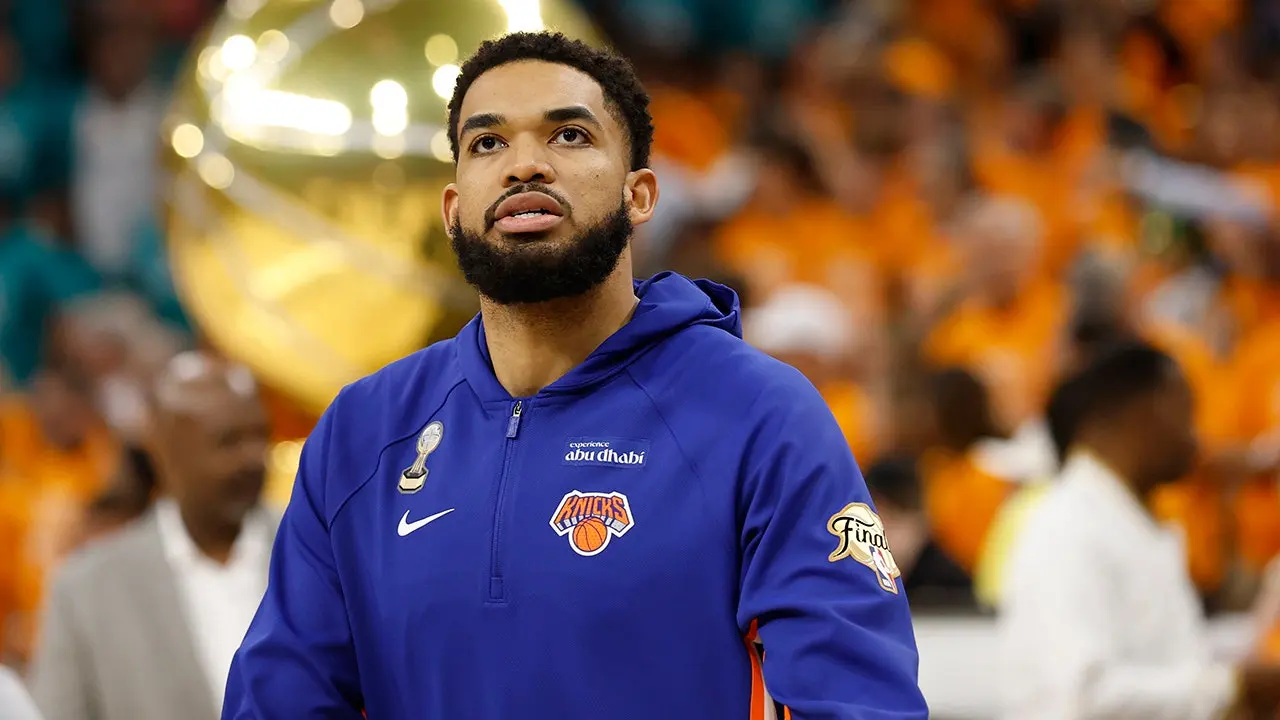
However, the post-game narrative took a fascinating and humanizing turn when star big man Karl-Anthony Towns rejected his coach’s protective shield, choosing instead to deliver a refreshing dose of extreme self-accountability. Rather than deflecting blame or aligning with his coach’s complaints about the referees, Towns met the media with unfiltered honesty, pointing the finger directly at the Knicks’ own self-inflicted wounds and mental lapses on the court. “Naw, that ain’t cost us the game,” Towns asserted with quiet authority, refuse to search for external excuses when his team had simply abandoned the core principles that had powered their historic run of thirteen straight victories. Towns made it clear that sloppy turnovers, unforced errors, and a fundamental breakdown in execution were the true culprits behind the Game 3 disappointment, emphasizing that playing careless basketball in the postseason is a guaranteed recipe for failure. “Turned the ball over. Didn’t execute. Didn’t do what got us 13 straight wins in a row. That’s how you lose a game. We didn’t do what we’ve been doing for 13. We decided to do something different… And throwing the ball away is a clear indication of how you’re going to lose the game, especially in the playoffs.” This stark, mature perspective highlighted Towns’ evolution as a leader, reflecting an understanding that championship glory cannot be built on excuses, but must instead be forged through the painful process of internal evaluation.
The technical and statistical breakdown of Monday’s matchup illustrates a captivating division where both Brown’s complaints and Towns’ self-criticism held profound truth. On one hand, the cold numbers of the box score overwhelmingly supported Brown’s frustration, revealing that the Spurs attempted three times as many free throws as the Knicks during a grueling second half that saw New York whistled into the penalty for the vast majority of the fourth quarter. This constant whistle prevented the Knicks from establishing their signature transition game and allowed San Antonio to slow the game down to a methodical, defensive grind. On the other hand, the analytics validated Towns’ focus on offensive execution, as a cold-shooting second half saw the Knicks connect on a dismal thirty-six percent of their field-goal attempts, repeatedly settling for highly contested looks rather than moving the ball. This offensive stagnation went unrewarded despite a stellar, heroic performance from Jalen Brunson, who carried the offensive load with a game-high thirty-two points through sheer force of will. In contrast, Towns experienced a frustratingly quiet offensive night, finishing with just eleven points and eight rebounds—a sharp decline from his highly dominant twenty-one-point performance that had secured New York’s victory back in Game 2.
As the series shifts its focus to the highly anticipated Game 4 at Madison Square Garden, the psychological warfare between these two fierce competitors has reached a boiling point. Coach Mike Brown was fully aware of the media firestorm his comments would ignite, acknowledging that his critique would inevitably dominate the headlines and create an intense, hyper-focused spotlight on how the next game is called. “It’s going to be that because I said it. The story is going to be there,” Brown admitted, acknowledging that his strategic remarks had firmly established the media narrative for the days leading up to Wednesday night’s tip-off. Yet, even as he leaned into the controversy, Brown demonstrated the humility of a veteran coach by conceding that his team had surrendered control over critical, actionable areas of the game by allowing the Spurs to dominate the physical tone early on. “But there are some controllables that we did not do a good job of doing. We allowed them to hit first at the beginning of the game. We allowed them to hit first in the beginning of the second half.” This dual admission serves as a fascinating bridge between Brown’s external tactical defenses and Towns’ internal standard of accountability, highlighting a collective realization that New York must rediscover their trademark aggression to survive.
With the emotional stakes of the series poised on a knife’s edge, Wednesday night’s Game 4 at Madison Square Garden promises to be an epic, unforgettable chapter in this basketball rivalry, fueled by a roaring home crowd and intense human drama. The Knicks find themselves standing at a critical psychological crossroads: they can either carry the lingering resentment of Game 3’s whistle into the arena, or they can embrace Karl-Anthony Towns’ call for discipline, control their turnovers, and recapture the physical identity that originally set them on their historic winning path. As the clock ticks down toward the 8:30 p.m. EDT tip-off, the pressure on both squads is immense, particularly with the daunting reality of Game 5 returning to San Antonio on Saturday, where the hostile Texas crowd awaits. Ultimately, the destiny of this Knicks team will not be decided by how the referees whistle the game, but by how New York responds to the pain of their first postseason setback in weeks. In the legendary theater of the NBA Finals, a championship is not merely won by the team with the most talent, but by the group that possesses the mental resilience to look in the mirror, eliminate their own mistakes, and execute their game plan when the lights of the world are shining brightest.