


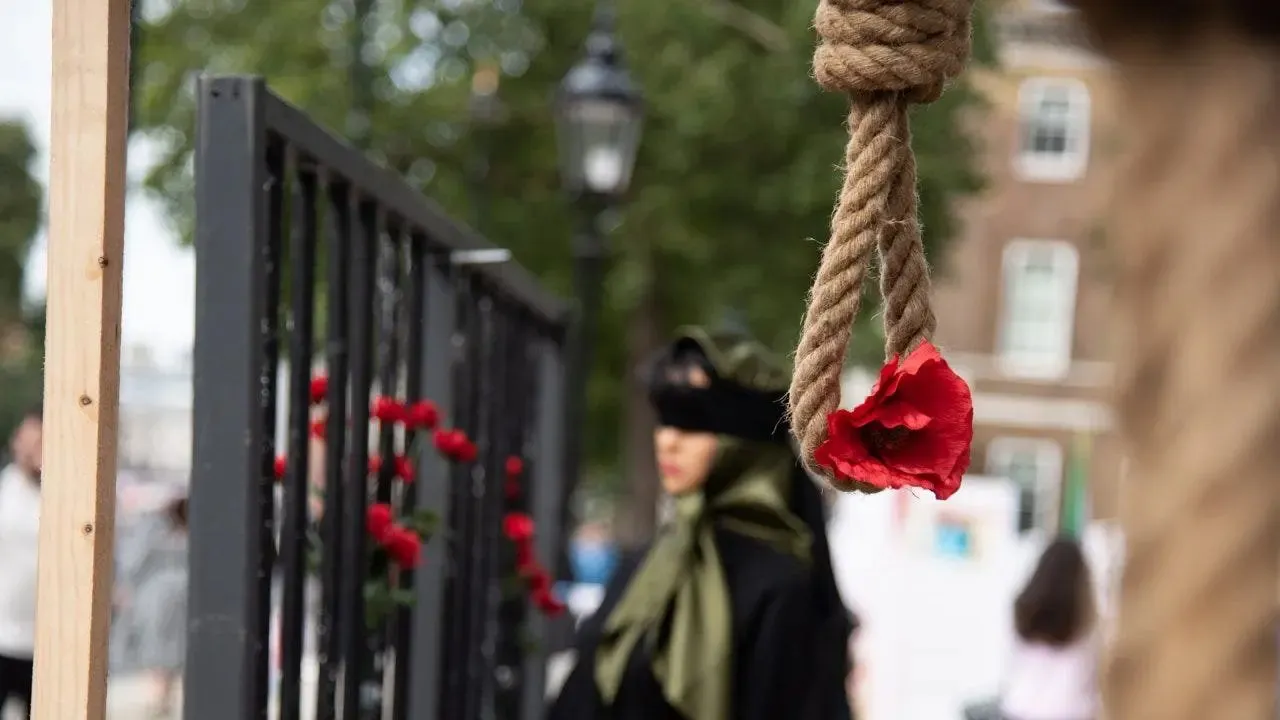
Behind the sterile statistics of geopolitics lies a deeply harrowing human crisis in the Islamic Republic of Iran, where a desperate regime has dramatically accelerated its campaign of state-sanctioned killings to quiet the voices of its own people. Following the passionate nationwide uprisings of January 2026, the clerical government in Tehran has unleashed an unprecedented wave of violence against dissidents, activists, and ordinary citizens who dared to dream of a better life. This year alone, the Iran Human Rights Society has documented at least 784 executions—a staggering, heartbreaking figure that represents a thirty-seven-year high in the execution of political prisoners. Each of these numbers represents a vibrant life cut short: a teacher, a student, a parent, or an activist whose only crime was demanding basic human dignity. Yet, because of the regime’s meticulous efforts to shroud its actions in secrecy, human rights advocates fear that this official death toll is only the tip of a much larger, more tragic iceberg.
The path to the gallows in Iran is paved with systemic cruelty, characterized by sham trials, psychological torture, and confessions extracted under extreme physical duress. A United States State Department official recently condemned these agonizing practices, noting that for decades, the Iranian regime has used executions to punish its citizens for exercising basic human rights under the guise of legal proceedings where coerced confessions serve as the sole evidence. The sheer speed of this judicial violence is breathtaking; in a single forty-eight-hour window between May 31 and June 1, the regime executed eighteen prisoners. Twelve individuals were hanged in silence on the last day of May, while six more were put to death the following morning, including one victim who was publicly hanged with what witnesses described as utmost brutality. This calculated public cruelty is not merely about punishment; it is a deliberate psychological weapon designed to terrorize local communities and break the collective spirit of a population yearning for self-determination.
Among those currently caught in this nightmare are five political prisoners in the notorious Sheiban Prison, located in the city of Ahvaz, who are facing an imminent threat of execution. Four of these individuals stand accused of belonging to the dissident organization People’s Mojahedin Organization of Iran (PMOI/MEK), a label that carries an automatic death sentence in the eyes of the regime’s hardline courts. The agonizing uncertainty of their fate has sparked desperate, high-stakes pleas from their families and international advocates alike. Maryam Rajavi, the President-elect of the National Council of Resistance of Iran (NCRI), has issued urgent appeals on social media, calling on the United Nations Security Council, the European Union, and the broader international community to intervene decisively. For these five prisoners, every tick of the clock is a battle for survival, highlighting the terrifying reality of a legal system that treats political dissent as capital treason and human lives as disposable political capital.
To carry out this bloody purge without global domestic interference, the Iranian regime has weaponized digital darkness, isolating its citizens from each other and the outside world. According to NetBlocks director Alp Toker, while internet connectivity is technically restored in parts of the country, it remains severely crippled by intentional throttling, slow international access, and aggressive parental filtering that specifically targets messaging applications used to document human rights abuses. This digital blockade is a calculated strategy to kill in silence, preventing the screams of the condemned from reaching the international stage. Yet, despite these formidable digital walls, a courageous underground network of prison whistleblowers, grieving families, defense lawyers, and local contacts continuously risks everything to smuggle proof of these executions out of the country. Their dangerous, painstaking work ensures that even in the face of total state censorship, the names and stories of the regime’s victims are not entirely erased from human memory.
Tragically, the true scale of the slaughter remains hidden in the vast, remote provinces of Iran, far from the watchful eyes of international monitors. Human rights organizations frankly admit that their documented figures are consistently lower than the actual number of deaths because the regime frequently conducts secret executions in provincial facilities and simply refuses to announce them. For families living in these isolated regions, the grief is compounded by a terrifying silence; many discover that their loved ones have been killed only after the sentence has already been carried out, leaving them to mourn in secret for fear of government retaliation. This agonizing domestic isolation is further exacerbated by the slow, bureaucratic response of global institutions, as highlighted by the silence of the United Nations Special Rapporteur on the situation of human rights in Iran, Dr. Mai Sato, leaving the victims and their families feeling profoundly abandoned by the very global bodies established to protect them.
In response to this deepening vacuum of justice, the global Iranian diaspora is preparing to stage a historic show of solidarity and defiance on the streets of Paris on June 20th. Organizers expect up to 100,000 Iranian expatriates from both sides of the Atlantic to gather alongside more than one hundred international lawmakers, former heads of state, and foreign ministers to demand an immediate end to the executions. This massive mobilization is a powerful testament to the resilience of the human spirit, demonstrating that while the regime can cut off the internet and silence individual lives within Iran, it cannot extinguish the global clamor for freedom. The upcoming rally is more than a political protest; it is a lifeline of hope for those waiting in the dark cells of Sheiban Prison, sending a clear and roaring message to the tyrants in Tehran that the world is watching, and the sacrifice of the fallen will never be forgotten.