


Behind the polished veneer of state administration, a deeply troubling story of systemic negligence and compromised public trust has emerged from the heartland of Minnesota. A sweeping, 205-page final staff report from the House Oversight Committee has cast a harsh light on Governor Tim Walz and his top officials, accusing them of a multi-year failure to address blatant warning signs of massive fraud within the state’s most vital social safety nets. During a time of unprecedented global crisis, when low-income families and vulnerable children relied on government lifelines for basic nutrition and healthcare, hundreds of millions of dollars were instead diverted into an expansive web of criminal greed. The congressional investigation paints a grim picture of administrative paralysis, asserting that the Walz administration possessed the necessary legal and administrative authority to cut off funding to high-risk entities receiving federal nutrition and Medicaid dollars, yet repeatedly chose to look the other way. This was not a victimless bureaucratic oversight; it was a profound human failure that left hungry children without food and needy patients without proper care, all while taxpayer funds were funneled into a massive black hole of corruption. For the citizens who rely on these vital welfare systems, and the hard-working taxpayers who fund them, the revelations represent a heartbreaking betrayal of the fundamental contract between the government and the governed. It displays a stark, tragic irony: the very safety nets designed to protect the weakest members of society were left unguarded, allowing unscrupulous actors to siphon off public wealth on an unprecedented scale while those entrusted with oversight simply watched it happen. The committee’s findings suggest that senior leadership was fully aware of the bleeding but failed to stop it, raising serious questions about the ethical responsibilities of state executives during times of public emergency.
Perhaps the most human and heartbreaking aspect of this sprawling investigation is the plight of the whistleblowers—ordinary civil servants who found themselves trapped in a toxic culture of silence and systemic intimidation. Congressional investigators interviewed nearly thirty courageous individuals who stepped forward to sound the alarm on the highly suspicious flow of state funds to unverified organizations. Instead of being hailed as protective guardians of the public purse, many of these state employees faced swift and severe professional retaliation from the Walz administration, which effectively silenced the very voices trying to expose the internal bleeding of resources. The report reveals a chilling bureaucratic environment where self-preservation was prioritized over ethical duty, and where employees who questioned irregular payments were marginalized, ignored, or actively punished. Shockingly, investigators discovered that the administration’s deep reluctance to halt payments to corrupt organizations was heavily influenced by an intense fear of facing public accusations of racial discrimination, rather than any actual, hard legal constraints. In trying to navigate the highly sensitive social and racial politics of the state, top officials apparently chose the path of least resistance, allowing massive fraud to plague the system rather than risking high-profile, controversial public relations battles. This deeply flawed hierarchy of priorities inadvertently created a perfect shield for criminals, leaving honest state workers isolated and punished for simply trying to enforce standard compliance and protect public resources. By prioritizing administrative optics and political comfort over the rule of law, the state leadership fostered an environment of fear that actively suppressed the truth, leaving those who cared about systemic integrity to suffer the career-damaging consequences of their honesty.
The sheer mechanics and astronomical scale of the fraud schemes uncovered are nothing short of staggering, focusing primarily on two pillars of essential social support: pandemic-era nutritional assistance and Medicaid. The now-defunct nonprofit organization known as “Feeding Our Future” stood at the absolute center of this crisis, acting as a fraudulent front for a sprawling constellation of entirely fake meal distribution sites. Rather than distributing healthy breakfasts and lunches to hungry children isolated at home during the heights of the pandemic, the organization was siphoning off an estimated $300 million in federal funds, creating paper trails for thousands of children who simply did not exist. The stark reality of this scheme became apparent when federal prosecutors charged more than 110 individuals, revealing that the stolen money was used to purchase luxury real estate, high-end sports cars, and lavish international travel. Many of the defendants involved in this particular cash grab have been identified as members of Minnesota’s Somali immigrant community, and state officials have launched serious investigations into whether a portion of these stolen taxpayer dollars was funneled overseas to aid terrorist organizations like Al-Shabaab in East Africa and other extremist groups in the Middle East. Beyond the nutritional program, the oversight report points to an even larger, potentially catastrophic vulnerability within Minnesota’s Medicaid billing system, where up to an estimated $9 billion may have been fraudulently billed—a staggering figure calculated by federal prosecutors, though contested by Walz administration officials. This dual-front assault on public resources reveals a system so fragile and poorly monitored that it essentially invited opportunistic actors to treat critical welfare programs as a private ATM, completely divorcing the funds from their intended purpose of providing healthcare and nourishment to society’s most vulnerable.
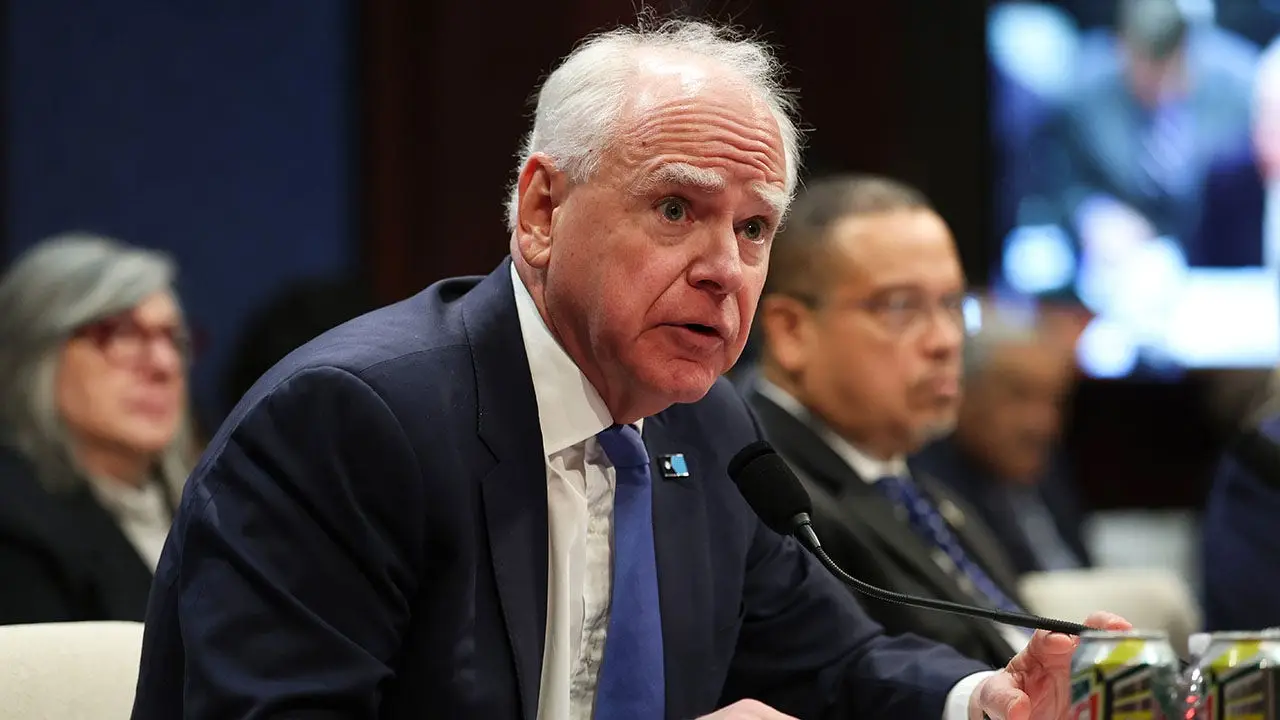
As the scandal unfolded, the spotlight turned directly onto Governor Walz’s personal awareness and leadership, prompting critical questions about when he first discovered the deep-seated rot within his administration’s programs. House Oversight Committee Chairman James Comer did not mince words, accusing Governor Walz and Minnesota Attorney General Keith Ellison of presiding over one of the most stunning oversight failures in the committee’s history, claiming the administration chose to protect the political system rather than the taxpayers. While Walz has offered conflicting timelines regarding exactly when he was made aware of the rampant meal fraud at Feeding Our Future—with evidence suggesting warning signals reached his office as early as 2020—payments continued to flow to the fraudulent nonprofit for nearly two more years. This agonizing delay in halting the funds allowed millions of additional dollars to escape before the organization was finally shut down by federal law enforcement. Throughout a months-long investigation, which included tense transcribed interviews with nine current and former state officials and testimonies from state legislators, the Walz administration consistently sought to downplay the extent of the negligence, shifting blame to legal complexities and administrative bottlenecks. Yet, the committee’s findings paint a narrative of administrative paralysis where senior leaders, insulated by executive privilege and political defense teams, focused on damage control and narrative management rather than launching an immediate, aggressive crackdown on corruption. By dragging their feet and offering contradictory accounts, the state’s executive leadership demonstrated a profound disconnect between the empathetic rhetoric of public service and the cold reality of administrative inaction when the public’s money was being systematically stolen, leaving many to wonder if political comfort was prioritized over basic governance.
The ramifications of Minnesota’s oversight failures have inevitably reverberated far beyond state borders, capturing the attention of the highest levels of federal policymaking and sparking a coordinated, nationwide “war on fraud” led by federal lawmakers. In response to the oversight committee’s devastating report, congressional leaders have reached out directly to Vice President JD Vance, urging a comprehensive federal audit of all Minnesota social service programs to identify lingering vulnerabilities and prevent further hemorrhaging of tax dollars. This aligns with the broader, aggressive strategy initiated by the Trump administration, which previously took the dramatic step of suspending nearly $260 million in federal Medicaid funding to Minnesota as a direct consequence of the state’s failure to properly police its own programs. Under this intensified federal pressure, states are now being handed strict ultimatums: they must prove they are aggressively probing and prosecuting Medicaid fraud, or risk losing their vital federal funding pipelines entirely—a policy shift designed to enforce accountability through financial consequence. Furthermore, Vance’s own specialized anti-fraud task force has already begun yielding tangible results, leading to the dramatic arrest of multiple individuals involved in medical scams and the freezing of some $1.3 billion in payments to hospice and home healthcare providers across the nation. The legislative branch is also gearing up for rapid action, with the House preparing to vote on a series of robust, state-level fraud-prevention bills designed to provide investigators with advanced tracking tools and mandate swift intervention when financial irregularities arise. As the Government Accountability Office estimates that the federal government loses an astronomical $233 billion to $521 billion annually to rampant fraud, this Minnesota crisis has transcended regional politics, evolving into a major catalyst for a sweeping national reckoning on federal expenditure containment and transparency.
Ultimately, the tragedy of the Minnesota fraud scandal goes far beyond the staggering dollar amounts lost, the dramatic congressional reports, or the heated political skirmishes in Washington; it serves as a sobering reminder of the vital importance of human empathy, functional governance, and systemic accountability. When leaders fail to oversee the distribution of public funds diligently, the real losers are not the abstract state ledger books, but the real-life vulnerable children, struggling families, and sick individuals who were left in the cold while millions of taxpayer dollars were spent on private mansions and high-end luxury cars. Moving forward, the painful lessons of this multi-million dollar crisis must lead to more than dry bureaucratic recommendations; they must spark a profound cultural transformation in how governments view their sacred duty to protect the public trust. Restoring faith in these vital social safety net programs requires a renewed, uncompromising commitment to institutional transparency, where courageous whistleblowers are celebrated and protected rather than silenced, and where administrative convenience is never prioritized over the rule of law. It demands that leaders at every level of government embrace a culture of active stewardship, recognizing that every single dollar lost to fraud is a direct, cruel theft from a citizen who genuinely needs medical assistance or nutritional support. By learning from the profound oversight failures of the Walz administration and committing to stronger, more secure, and highly transparent safeguards, we can begin the slow and necessary process of rebuilding a system of social support that is not only deeply compassionate in its intent but robust and unyielding in its defense of public resources. Only then can we guarantee that the safety nets we build to support the marginalized remain strong, secure, and truly capable of offering genuine hope and survival to those who need it most.