



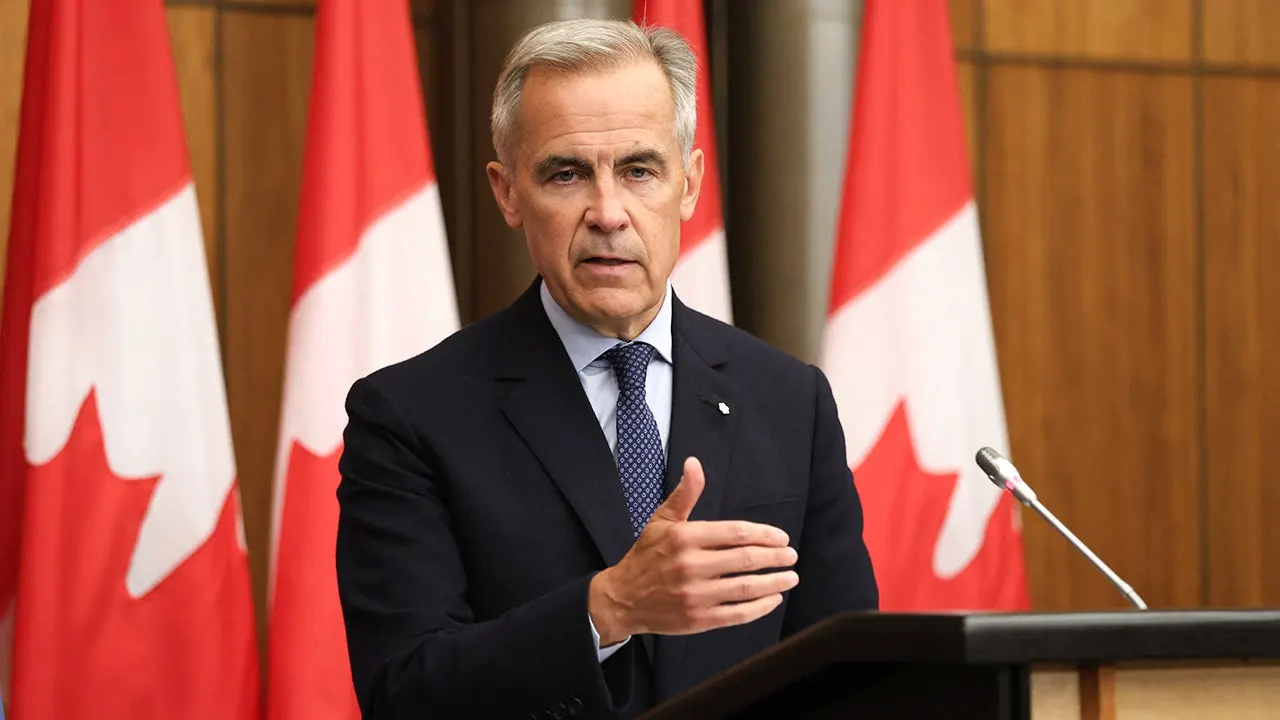
In a nation that has long prided itself on multicultural harmony and mutual respect, Jewish Canadians are currently navigating an unprecedented storm of hostility and fear, a distressing reality that has now reached the highest levels of government. Prime Minister Mark Carney brought this crisis to the forefront of national conversation when he issued a stark warning that Jewish citizens are being “brutally targeted” across the country, a vulnerability backed up by chilling data from B’nai Brith Canada’s League for Human Rights. According to their annual findings, Canada witnessed an astonishing 6,800 antisemitic incidents in 2025, marking a sharp 9.4% increase from the previous year. This translates to an average of nearly nineteen acts of aggression, harassment, or vandalism directed at Jewish individuals and institutions every single day, representing the highest volume of hate the organization has ever recorded. Determined to show a federal commitment to addressing this rising wave of bigotry, Prime Minister Carney announced the establishment of the new Special Advisory Council on Rights, Equality and Inclusion. However, what was intended to be a reassuring federal intervention has instead ignited a firestorm of community outrage and skepticism, as critics quickly discovered that the council includes two figures whose past actions and public positions are seen as deeply hostile to the Jewish community and its security.
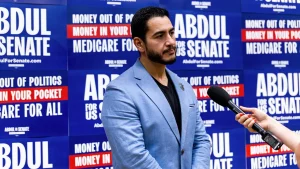
At the very center of this political crisis is the appointment of Omar Alghabra, a former Liberal cabinet minister and Member of Parliament whose long public record of controversial geopolitical stances has left many Jewish Canadians feeling betrayed. Alghabra has faced intense scrutiny for publicly mourning the death of former Palestinian leader Yasser Arafat, a leader widely condemned by security organizations like the Foundation for Defense of Democracies as the pioneer of modern international terrorism. This historical grievance resurfaced with renewed intensity in the painful days following the October 7 Hamas terror attacks in Israel, during which Alghabra reportedly declined a direct opportunity to condemn the horrific violence when questioned by independent media. Furthermore, his past criticisms of Israel have long drawn the ire of Jewish advocacy groups, notably his 2005 opposition to Toronto’s police chief participating in a “Walk with Israel” event, which Alghabra dismissed as an inappropriate show of solidarity for what he termed a brutal military occupation. The political opposition, led by Pierre Poilievre, immediately seized on these red flags, with Poilievre recalling instances where Alghabra allegedly lobbied to keep Hezbollah legal before entering formal politics. While defenders point out that Alghabra did formally classify Hamas as a terrorist organization during a parliamentary debate in 2016, his inclusion on an anti-racism panel meant to protect Jewish citizens has struck many as a tone-deaf and counterproductive decision.
Equally polarizing is the appointment of Avnish Nanda, a prominent lawyer whose recent professional endeavors have placed him at the heart of the intense cultural and political battles taking place on Canadian university campuses. Nanda represented activists attempting to legally block the removal of a pro-Palestinian protest encampment at the University of Alberta. For many Jewish students, staff, and community members, these encampments were far from peaceful demonstrations; they were regarded as hostile environments that fostered intimidation, aggressive rhetoric, and an atmosphere of exclusion in the wake of the October 7 atrocities. By appointing a legal advocate who worked to sustain these controversial protest spaces, critics argue the government is sending a confounding and dangerous message. For a community that is actively fighting to ensure that Jewish youth can walk through their university hallways without fear of harassment, placing Nanda on a federal council tasked with combating hatred feels like a profound structural failure that validates the very forces causing their marginalization.
This sense of alienation and bewilderment is not just a strategic talking point for political lobbyists; it is a deeply personal pain felt by spiritual leaders who must soothe their terrified congregations every week. Rabbi Zolly Claman, who serves the vibrant Tifereth Beth David Jerusalem community in Montreal, expressed the collective shock of his congregation upon learning about the council’s controversial roster. Claman articulated the deep frustration of Canadian Jews who are struggling to comprehend how Prime Minister Carney could believe that appointing individuals who publicly mourned Arafat and remained silent after the October 7 massacres would build a constructive bridge toward safety. To the rabbi and his community, these administrative decisions make the government’s declarations of solidarity ring hollow, transforming what should have been a protective shield into a political gesture that ignores the lived trauma of Canadian Jews. They are left wondering why, in their moment of acute vulnerability and fear, the government would choose advisors who have historically aligned with causes and figures that many in the Jewish community view as direct threats to their existential security.
This grass-roots distress is echoed by institutional leaders like Simon Wolle, the chief executive officer of B’nai Brith Canada, who has questioned the fundamental efficacy of the Prime Minister’s newly minted advisory body. While Wolle politely acknowledged the government’s verbal solidarity and the specific mandate given to the council to research antisemitism, he pointed out a major structural flaw: the council simply lacks the operational teeth, legal authority, and sheer scale required to address what is now a national emergency. In Wolle’s view, the Jewish community does not have the luxury of waiting for the slow, theoretical reports of an advisory council while synagogues are being shot at and community centers are being vandalized. B’nai Brith continues to fiercely lobby for immediate, tactile solutions, specifically calling for the creation of a National Emergency Task Force on Antisemitism that possesses the security and law enforcement integration necessary to protect Jewish citizens on the streets. Wolle’s perspective highlights a growing consensus that Canadian Jews are tired of receiving symbolic gestures and bureaucratic placation when what they desperately require is immediate, physical protection and the enforcement of existing laws.
The critique of the council’s structure is further synthesized by activist Ariella Kimmel, who argues that the government’s response suffers from a fundamental misdiagnosis of the societal disease currently spreading across Canada. Kimmel pointed to the highly disproportionate nature of the violence, noting that while Jewish Canadians comprise a tiny 1.2% of the national population, they are the targets of an astronomical 75% of religiously motivated hate crimes. In her view, Canada does not have a generalized problem with prejudice that can be cured by a broad, catch-all anti-racism committee; rather, it has a highly specific, viral outbreak of Jew-hatred that requires a precise, aggressive, and unsentimental intervention. Kimmel criticized Prime Minister Carney’s address for failing to offer concrete policy solutions, noting the complete absence of federal strategies to address aggressive street marches, the targeting of Jewish residential neighborhoods, and the radicalized groups using anti-Zionism as a socially acceptable cover to terrorize Jewish citizens. Ultimately, humanizing this crisis requires moving past administrative compromises and political optics, recognizing that behind the escalating statistics are real people who simply want to live, worship, and study in peace, free from the shadow of modern tribal hatred.