



The delicate baseline of international diplomacy has once again been severely shaken as Israel’s Deputy Foreign Minister, Sharren Haskel, launched a fiery and deeply personal critique against the European Union, accusing the geopolitical bloc of weaponizing “anti-Zionism” as a politically convenient, modern mask to perpetrate age-old antisemitic prejudices under a socially acceptable guise. This fierce diplomatic outcry was triggered by the EU’s controversial decision to impose targeted financial and administrative sanctions on prominent Israeli civil rights groups, non-governmental organizations, and prominent public figures who actively oppose the creation of an independent Palestinian state. Haskel passionately argues that while historical prejudice once focused on isolating and attacking the individual Jewish person in Europe, the contemporary manifestation of this bias merely shifts its target to the collective Jewish state and its sovereign, fundamental right to exist and thrive in its biblical homeland. By framing the debate in this humanized and deeply historical context, she warns that political hostilities disguised as virtuous humanitarian policy invariably pave the way for broader, physical threats to Jewish life around the world, translating foreign policy decisions directly into local security threats. The sanctions in question have reignited a volatile global debate over where legitimate geopolitical criticism ends and systematically targeted discrimination begins. Critics of the European Union’s measures assert that penalizing peaceable, democratic civic groups under the broad guise of halting “settler violence” is not an act of justice, but rather a targeted effort to suppress domestic political perspectives within Israel. By squeezing these organizations financially and socially, the international community signals a worrying willingness to bypass conventional diplomatic dialogue in favor of aggressive economic coercion, effectively alienating an allied democratic state that is still reeling from deep existential security crises and trying to protect its citizens. This growing divide illustrates a profound breakdown in communication, where a sovereign nation feels its survival mechanisms are being willfully misunderstood and demonized by distant, insulated Western institutions.
At the absolute heart of this international clash is Regavim, one of the primary non-governmental organizations singled out by the European Union’s punitive measures. Representing the civil advocacy sector, Regavim’s Director of International Division, Naomi Kahn, expressed profound frustration and personal distress over what she decries as a direct, unacceptable infringement on Israeli national sovereignty. Kahn explains that the group’s core mission is entirely grounded in standard, legitimate legislative, legal, and parliamentary processes—compiling verifiable geographical data, monitoring land use, analyzing government policies, and appealing to Israeli courts to ensure national laws are upheld equally. From their perspective, the organization acts as a domestic watchdog, pointing out structural inconsistencies and advocating for legal transparency in a region where boundaries are fiercely contested. The EU’s decision to sanction such an entity, therefore, feels less like a moral intervention to promote peace and more like an aggressive, extraterritorial encroachment on the internal political and judicial ecosystem of a democratic ally. Kahn argues that the European External Action Service is actively attempting to dictate the internal policy boundaries of an independent nation, punishing civil actors simply because their research exposes the controversial nature of foreign funding in the region. This dynamic creates an adversarial atmosphere where domestic groups advocating for the domestic rule of law are labeled as global extremists by foreign powers. For the employees, volunteers, and everyday supporters of these organizations, the sanctions carry a heavy personal and professional toll, casting an unearned shadow of illicit activity over what they consider to be transparent, law-abiding civic engagement aimed at securing their local communities, maintaining environmental conservation, and preserving ancient national heritage sites for future generations. It forces local activists to defend their basic civic liberties against massive international bodies that seem entirely detached from the lived reality on the ground.
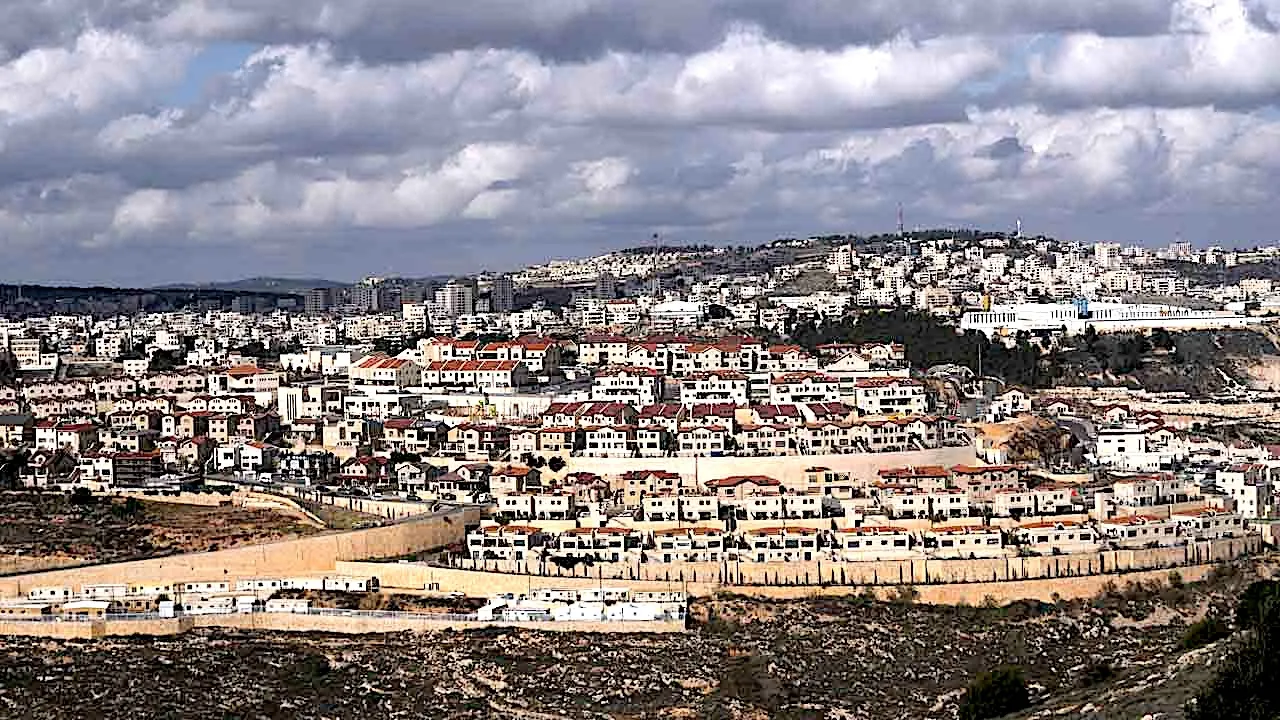
To understand the geographical and legal battleground of this dispute, one must look closely at the complex administrative division of the West Bank, established under the 1993 Oslo Accords negotiated under the Clinton administration. This historic framework divided the territory into three distinct administrative zones: Area A, under full Palestinian civil and security authority; Area B, under Palestinian civil authority with Israeli security control; and Area C, which remains under full Israeli administrative, civil, and security jurisdiction. The controversy surrounding Regavim often centers on its legal challenges against foreign-funded infrastructure built in Area C without proper Israeli permits or environmental assessments. A prominent example is a school near Bethlehem in Jabbet al-Dhib, funded by the European Union but built on Israeli state land within an ecologically sensitive nature reserve connected to the ancient Herodian archaeological complex. While the EU frames these structures as essential humanitarian initiatives to prevent the systemic displacement of impoverished Palestinian families, Regavim argues that the school was not only built in flagrant violation of clear zoning laws, but was also declared structurally unsafe by professional engineering assessments. Placing vulnerable young children and teachers in an unpermitted, structurally hazardous building for geopolitical leverage is, in the eyes of Israeli critics, a cynical exploitation of human lives. By deliberately bypassing local building codes and the legal frameworks established by the Oslo Accords, foreign entities are accused of utilizing humanitarian aid to unilaterally alter the physical and legal topography of disputed lands. From the Israeli perspective, this turns what should be neutral educational facilities into highly charged geopolitical pawns rather than safe, stable havens for learning. This dynamic creates a dangerous precedent where international agencies feel entitled to violate the local laws of a sovereign state under the banner of charity, ignoring the long-term safety risks posed to the very populations they claim to assist.
This physical battle over construction and administrative control is reflected in the staggering numbers put forward by mapping studies, which reveal a silent, brick-by-brick campaign for territorial dominance. Regavim’s extensive research suggests there are currently over 100 unauthorized schools scattered across Area C, which they argue are strategically utilized by the Palestinian Authority, with extensive backing from European donors, to establish a de facto annexation of the area. Additionally, a comprehensive mapping study conducted by the organization in 2023 estimated that there are approximately 103,000 unauthorized Arab-built structures across the West Bank, pointing to a highly coordinated effort to bypass bilateral negotiations through rapid, illegal expansion. For Israelis living in the region, this represents a coordinated attempt to render the borders of any future peace agreement completely irrelevant by establishing irreversible physical realities on the ground before any diplomatic talks can even occur. The human cost of this chaotic development is felt by everyone in these disputed zones, where unregulated construction threatens local environmental conservation, strains shared water resources, and creates volatile security friction points. Rather than fostering an environment conducive to peaceful negotiations and mutual respect, the influx of unilateral, foreign-funded projects has only deepened polarization, leaving local communities on both sides caught in a perpetual, exhausting loop of demolitions, legal battles, and rising mutual distrust. It transforms the physical landscape from a place of potential cooperation into a highly militarized zone of structural warfare, where every home, school, and road built becomes a tactical move on a regional chessboard. This constant friction wears down the psychological well-being of the inhabitants, who find themselves living on an unstable legal frontier where international laws are invoked selectively to suit political narratives, rather than to protect the actual human rights or security of the civilian population.
In response to these escalating spatial dynamics and the perceived overreach of European entities, the Israeli cabinet recently approved a series of sweeping policy measures designed to counter the Palestinian Authority’s efforts to assert control over Area C. This includes declaring any land registry initiatives initiated by Ramallah in these territories to be completely void of legal status or authority under Israeli law. Sharren Haskel points out that the EU’s sanctions do not actually address physical violence, but rather attempt to silence legitimate domestic opposition to a two-state framework that many Israelis believe is no longer viable or safe, particularly in the wake of recent terror onslaughts. By sanctioning groups that highlight the EU’s own legally questionable construction projects in Judea and Samaria—the biblical names Israelis use for the West Bank—the European bloc is accused of attempting to shield its own controversial actions from legal scrutiny. Haskel contends that the EU is deliberately ignoring the cooperative agreements of the Oslo Accords, choosing instead to unilaterally intervene in a highly sensitive border dispute to favor one side over another. This heavy-handed approach, she suggests, disregards the complex realities of democratic governance, wherein civil society groups must have the freedom to debate, critique, and shape their nation’s security and territorial policies without facing international economic blacklisting. By targeting peaceful advocacy rather than actual criminals, the EU’s sanctions stifle the essential human voice of political dissent, warning other civil entities that dissent from Western foreign policy orthodoxy will be met with severe economic and social isolation. This sets a chilling precedent for global democracy, signaling that international bodies can use economic warfare to punish domestic organizations that simply speak out against policies they perceive as a threat to their national survival and legal order.
Ultimately, this confrontation highlights a profound moral and ethical debate concerning how the international community addresses localized conflicts and respects democratic sovereignty. Deputy Foreign Minister Haskel strongly condemns the dangerous moral equivalence she believes the European Union is drawing by grouping law-abiding Israeli civilians, public figures, and non-violent civic organizations in the same breath as Hamas, a recognized terrorist organization. She argues that this framing creates a false and highly dangerous symmetry that minimizes the horrific reality of global terrorism while unfairly demonizing everyday citizens who are merely advocating for their security within a democratic framework. This blurring of lines does a tremendous disservice to the pursuit of genuine peace, as it alienates the very democratic institutions required to negotiate and uphold long-term agreements. By reducing a highly complex, legally gray territorial dispute to a simplistic narrative of aggressor and victim, international bodies risk inflaming regional tensions rather than soothing them. For the human beings residing in these ancient lands, the path to a stable future cannot be paved by foreign sanctions that stifle domestic debate; it requires an honest acknowledgment of the legal frameworks in place, a mutual respect for sovereignty, and a rejection of the double standards that continually threaten to undermine the legitimacy of the Jewish state on the global stage. Only by stripping away these biased ideological masks can the international community hope to engage in a constructive dialogue that respects the safety and dignity of all people in the region. When international bodies prioritize posturing over genuine engagement, they push the possibility of a peaceful resolution further out of reach, leaving local populations to bear the heavy burden of a conflict exacerbated by distant players. True human rights advocacy must begin with fair, unbiased standards that recognize the sovereignty of democratic nations and protect their citizens from being used as geopolitical scapegoats.