

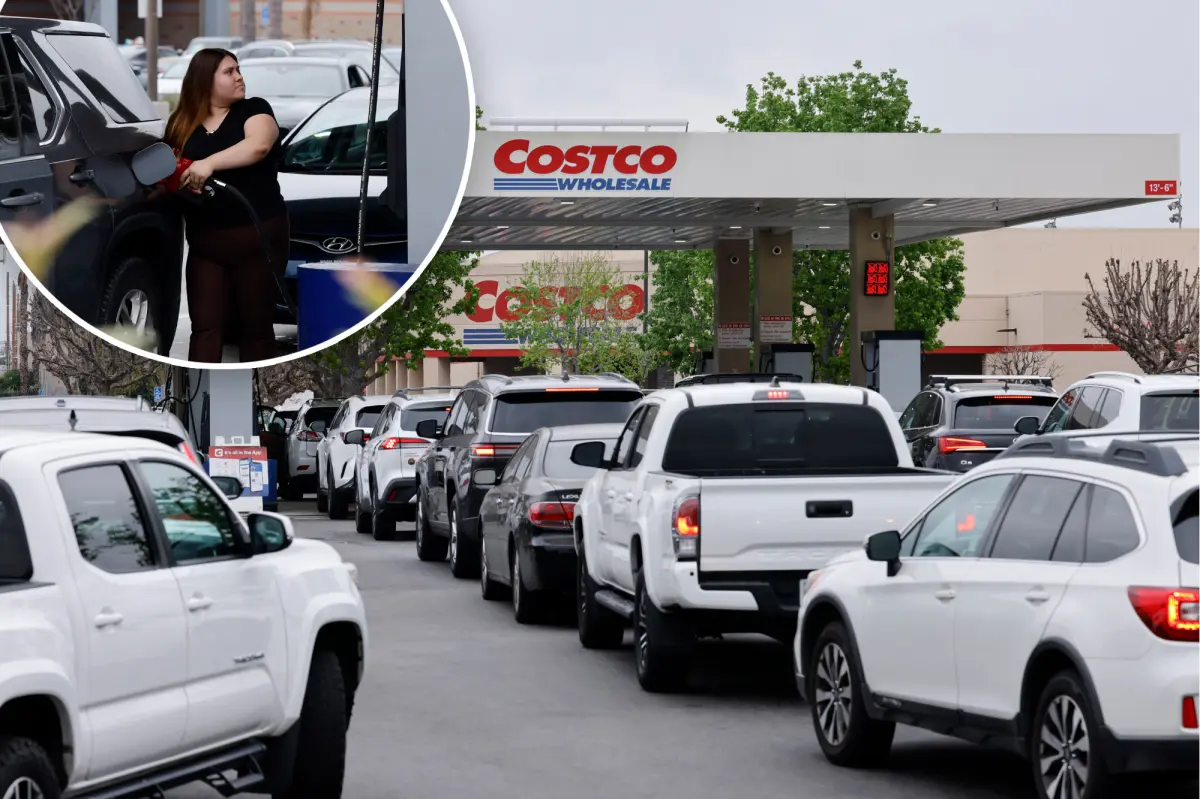
In an era defined by relentless inflation and tightening household budgets, the simple act of filling up a gas tank has transformed from a mundane chore into a source of profound financial anxiety for millions of hardworking families. As geopolitical instability and economic uncertainty cast long shadows over global markets, everyday drivers find themselves embarking on what can only be described as a modern economic pilgrimage, seeking sanctuary at the sprawling parking lots of Costco. The wholesale giant’s discount fueling stations have become an essential oasis in this unforgiving landscape, offering gasoline that averages an impressive thirty cents cheaper per gallon than neighboring independent providers. This seemingly modest discount has sparked an unprecedented surge in demand, catapulting Costco’s fuel operations to their highest levels of activity in a half-century, with desperate commuters willingly waiting in snaking, border-checkpoint-style lines for thirty minutes or more just to claim their savings. For these motorists, the idling engines and seemingly endless queues are not merely an inconvenience, but rather a calculated trade-off of time for precious financial survival, illustrating the lengths to which ordinary people are willing to go to protect their hard-earned dollars from being swallowed by rising prices.
To truly comprehend the sheer scale of the panic at the pumps, one must look past the suburban landscape to the volatile geopolitical fault lines of the global energy market, where shifting tides in the Middle East hold direct sway over the pocketbooks of average citizens. Recent intensifications of international conflict, most notably involving critical shipping avenues like the Strait of Hormuz, have sent shockwaves through global crude oil supplies, driving prices past the critical threshold of one hundred dollars per barrel and pushing domestic pump prices well beyond the agonizing four-dollar-a-gallon mark. Costco Chief Executive Officer Ron Vachris documented this global volatility hitting home when he revealed that the company shattered successive all-time national volume records over consecutive fiscal periods, forcing some heavily trafficked stations to summon multiple fuel tanker trucks every single day just to keep their underground reservoirs from running entirely dry. This frantic, high-stakes supply chain dance highlights a stark human reality: when international conflicts disrupt the delicate flow of global oil, the shockwaves are almost immediately absorbing by average families who must somehow find a way to commute to work, drop their children off at school, and run essential errands without completely draining their bank accounts.
The captivating puzzle at the heart of this economic drama is how a big-box retail behemoth can afford to sell its gasoline at such a dramatic discount while smaller, traditional stations struggle to survive. The secret lies in the brilliant, unconventional architecture of the Costco business model, which completely upends traditional retail strategies by prioritizing steady volume and membership loyalty over the immediate profit margins of individual transactions. Unlike the typical avenue store that relies on milking every cent of profit out of every single gallon of fuel or box of crackers, Costco operates 747 globally distributed fueling stations that function essentially as low-margin customer utilities. The company is able to endure razor-thin, almost negligible profit margins on its gasoline because it relies on a highly predictable, incredibly lucrative foundation: its subscription-based membership program, which represents an astonishing sixty percent of the company’s bottom-line net profits. By securing capital upfront through annual membership fees, Costco effectively insulates its bottom line, allowing it to absorb the wild fluctuations of the oil market and deliver consistently cheap gas as a direct, tangible reward to those who pay for the privilege of shopping within its warehouse walls.
This extraordinary capacity to absorb minimal margins sets up a heartbreaking “David versus Goliath” dynamic between Costco and independent, local “mom-and-pop” gas stations that form the backbone of many small communities across the nation. For these independent local service stations, there is no billion-dollar membership safety net or global corporate infrastructure to cushion the blow of rising wholesale oil costs and costly property maintenance fees. When global energy prices skyrocket, these small business owners find themselves trapped in a devastating economic catch-22: if they raise their prices to keep up with their own soaring costs, price-sensitive consumers immediately abandon them for cheaper corporate competitors; conversely, if they keep prices low to retain their customer base, their survival margins are entirely wiped out, leaving them unable to cover basic operational overhead. While Costco thrives on the sheer velocity of millions of transactions, these local purveyors suffer a double blow during inflationary periods, as cash-strapped drivers not only scale back the volume of fuel they purchase but also cut out the high-margin convenience store purchases—like coffee, snacks, and car washes—that these small businesses desperately rely upon to stay solvent.
Yet, Costco’s strategy of keeping gas prices phenomenally low is far from an act of pure corporate altruism; it is, in reality, a masterfully executed loss-leader strategy designed to trigger a highly lucrative chain reaction of consumer spending inside its massive retail warehouses. The brilliant psychological trick of the Costco gas line is that it captures a massive, captive audience of consumers who, having just saved several dollars on fuel, enter the retail store feeling a renewed sense of purchasing power. Executive leadership has observed a direct, powerful correlation between pump patronage and warehouse foot traffic, with store visits spiking by a remarkable five percent during periods of high fuel demand, as drivers transition seamlessly from the outdoor pumps to the indoor aisles. Once inside, these customers inevitably spend far more than they saved on gas, filling their oversized shopping carts with everything from bulk groceries and high-end electronics to the store’s legendary, inflation-proof dollar-fifty hot dog combo. This masterful symbiosis transforms the discount gas station from a simple convenience into an irresistible gateway, proving that the pennies sacrificed at the fuel pump are retrieved tenfold at the cash registers inside.
Ultimately, the phenomenon of the endless Costco gas lines speaks to a deeper, more profound narrative about the enduring power of brand trust and consumer loyalty in an increasingly volatile and unpredictable economic world. By consistently standing as a reliable shield against the harsh elements of inflation and global market chaos, Costco has succeeded in cultivating an emotional covenant with its members that goes far beyond the typical, cold transactional nature of modern big-box retail. When drivers willingly endure long queues and navigate congested parking lots, they are actively participating in a shared community ritual of resilience, finding comfort in the knowledge that their loyalty is being directly repaid with fair pricing and reliable quality. In an economic landscape where consumers feel increasingly alienated and exploited by corporate price-gouging and erratic market shifts, Costco’s steady commitment to affordability stands as a masterclass in modern business strategy. It demonstrates that the ultimate source of corporate wealth is not found in squeezing the maximum possible profit out of a single transaction, but in building an unshakeable foundation of trust that keeps millions of people gladly returning, cart in hand, year after year.