


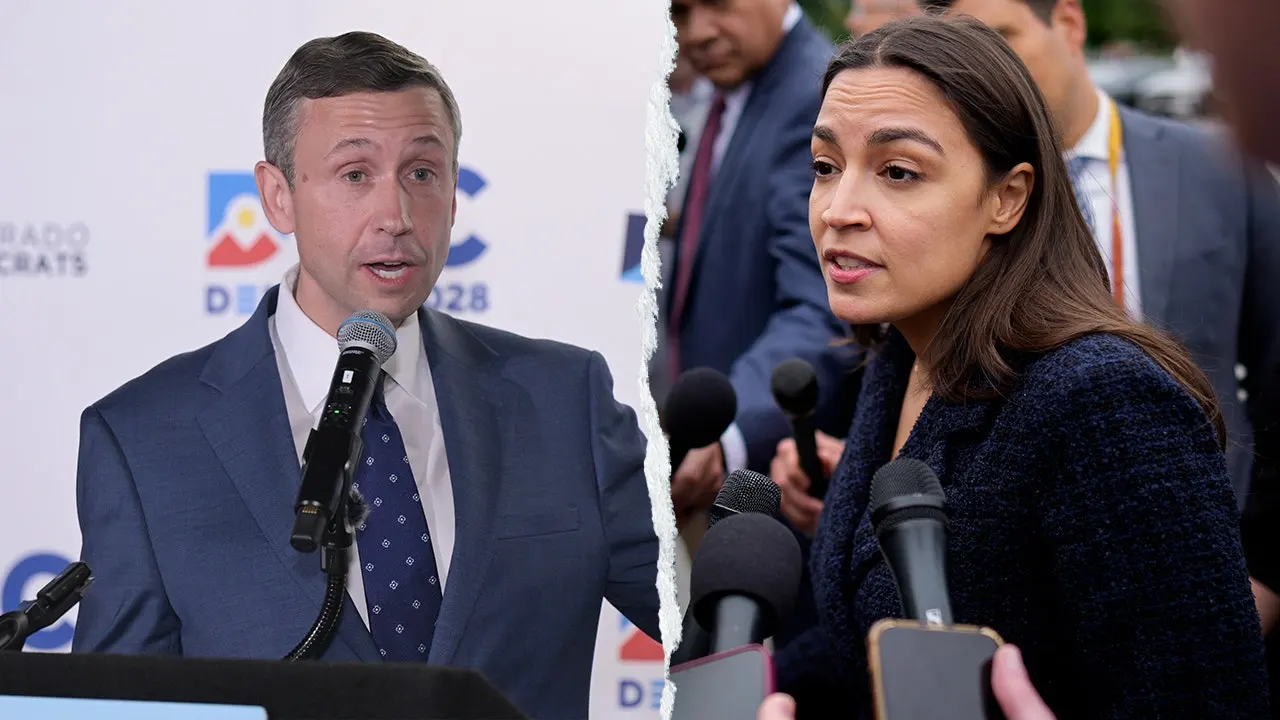
The political landscape following a major election loss is always a fragile ecosystem, but the current atmosphere within the Democratic National Committee (DNC) has reached a boiling point of sheer panic, finger-pointing, and profound disillusionment. At the absolute center of this unfolding storm is Democratic National Committee Chair Ken Martin, a veteran operative who is now facing the fight of his professional life as calls for his immediate resignation echo from all corners of his own party. For months, Martin resisted the immense pressure to release the DNC’s highly anticipated autopsy report—a comprehensive post-mortem analysis intended to explain how and why Vice President Kamala Harris suffered such a devastating defeat to Donald Trump in the 2024 presidential election. Martin initially operated under the assumption that airing the party’s dirty laundry so soon would create an unbearable public distraction, stalling any attempts to project an image of united opposition. However, in a sudden and dramatic reversal of strategy on a Thursday that sent shockwaves through Washington, Martin finally capitulated and released the document, acknowledging that his refusal to put out the report had paradoxically morphed into an even greater, more paralyzing distraction than the report itself. This sudden flip-flop did little to quiet the rising tide of internal rebellion; instead, it acted as a catalyst, opening the floodgates of frustration from progressive organizers, centrist strategists, and congressional lawmakers alike, all of whom woke up to a document that many felt was not a serious attempt at self-reflection, but rather a profoundly hollow exercise in institutional self-preservation.
The most explosive and emotionally charged criticism leveled against the newly unmasked autopsy report centers on its staggering omissions, chief among them being the complete and total absence of any mention of the ongoing, devastating conflict in Gaza. Progressive icon Representative Alexandria Ocasio-Cortez of New York did not mince her words when addressing reporters, expressing absolute disbelief that a humanitarian and geopolitical catastrophe of this magnitude—which actively fractured the Democratic base for over a year—could be entirely erased from the party’s official election post-mortem. Ocasio-Cortez illuminated the human reality of the 2024 campaign trail, noting that regardless of one’s personal or political stance on foreign policy, the war in Gaza was an unavoidable, highly charged force that profoundly altered the political consciousness of millions of American voters, particularly the youth and Arab-American communities. To pretend this issue was totally immaterial or ignorable, she argued, is not only a major oversight but a deep disservice to the very activists and young people whom the party desperately needs to mobilize. This frustration was loudly echoed by Representative Ro Khanna of California, who took to his YouTube channel to deliver a blunt, raw message to party leadership. Khanna directly connected the Democrats’ electoral defeat to what he characterized as a “blank check” hand-delivered to Israeli Prime Minister Benjamin Netanyahu during the military campaign in Gaza. For progressives, the complete erasure of this issue from the DNC’s official narrative felt like a gut punch, proving that the party elite would rather bury its head in the sand than confront the hard, uncomfortable truths necessary to rebuild a winning coalition for 2028.
As the outrage rippled through social media and congressional offices, the criticism quickly evolved from policy-based disappointment into direct demands for immediate leadership change, leaving Ken Martin increasingly isolated. Representative Mark Veasey of Texas went a step further than most of his colleagues, openly calling for Martin to step down and make way for fresh, competent leadership before the party suffers even further damage. Veasey pointed out the terrifying reality that the political clock is ticking relentlessly, with crucial state and local elections just around the corner and the midterms rapidly approaching, leaving the Democrats with absolutely no visible, coherent plan to turn their fortunes around. The atmosphere of panic is not confined to Capitol Hill; seasoned Democratic campaign strategists have been equally ruthless in their assessments of the current national party leadership. Veteran strategist Steve Schale publicly labeled the entire rollout of the autopsy report as an “unmitigated s—show,” a vulgar but highly accurate reflection of the despair felt by many who believe the DNC has lost all institutional competence and credibility. This widespread loss of confidence creates a dangerous vacuum at a time when the party is desperate for an inspiring, clear-headed voice to guide them through the wilderness of the opposition. Instead, Democrats are left looking at a headquarters that seems entirely incapable of performing a basic administrative and analytical task without descending into chaos and public humiliation.
Perhaps the most surreal and legally baffling aspect of this entire political drama is that Ken Martin himself openly agreed with the scathing critiques of the document he had just authorized for release. In an extraordinary admission of institutional failure that left political observers scratching their heads, Martin wrote a candid message accompanying the report, confessing that he was not proud of the final product, that it failed to meet his own personal standards, and that it undoubtedly would not meet the standards of the party’s rank-and-file membership. He went on to declare that he could not, in good faith, put the DNC’s official seal of approval on the very document his office had compiled and distributed to the public. This bizarre act of political self-sabotage paints a vivid portrait of a leader completely trapped by the mechanics of his own bureaucracy. It reveals a profound level of dysfunction where the head of a major political organization feels compelled to publish a critical self-analysis tool while simultaneously disavowing its contents as a substandard failure. This historic hand-wringing did nothing to pacify Martin’s critics, who argued that if the national chair knew the report was fundamentally flawed and incomplete, he should have exerted the necessary leadership to fix it rather than dumping a half-baked, broken product onto the public stage during a moment of existential crisis.
When political analysts began digging beneath the surface of the document, which was reportedly drafted by veteran Democratic strategist Paul Rivera, they discovered a structurally broken, astonishingly deficient piece of work that raised far more questions than it answered. Entire sections of the report were left completely blank, as if the authors simply ran out of time or lacked the courage to write down the devastating conclusions they had reached about the campaign’s structural failures. Beyond its physical gaps and reported factual errors, the document exhibited a collective corporate amnesia regarding the most defining events of the 2024 election cycle. Shockingly, the report failed to make a single mention of the intense, months-long national debate surrounding President Joe Biden’s cognitive fitness and age, an unprecedented crisis that ultimately culminated in his historic decision to withdraw from the race mid-campaign. Furthermore, the post-mortem completely ignored the strategizing, vetting, and ultimate execution of Kamala Harris’s selection of Minnesota Governor Tim Walz as her vice-presidential running mate—a critical decision that shaped the entire aesthetic, messaging, and geographical focus of the ticket’s final sprint. By omitting these monumental inflection points, the DNC managed to produce a historical document that felt completely detached from the physical reality lived by millions of Americans who watched the dramatic, unpredictable campaign unfold in real-time.
Ultimately, this autopsy debacle is not just a story about a poorly written bureaucratic report or the shifting fortunes of a embattled political chairman; it is a profound human drama about a political party suffering from an identity crisis and a severe lack of internal trust. For millions of everyday Democratic voters, volunteers, and grassroots donors who spent their hard-earned money and endless hours knocking on doors in the freezing rain, the DNC’s inability to produce an honest, self-reflective, and courageous post-mortem is a disheartening betrayal. It suggests a leadership class that is far more concerned with protecting personal careers, avoiding internal accountability, and shielding powerful interest groups from criticism than it is with understanding the genuine struggles of working-class Americans who abandoned the party in droves. As the Democrats look forward toward the monumental task of rebuilding a competitive platform for the 2028 landscape, they must realize that true strategic course-correction cannot begin without absolute, unvarnished honesty. Until the party’s leaders find the courage to look directly into the mirror—acknowledging their foreign policy missteps, their failure to address economic anxieties, and their profound structural incompetence—they will remain hopelessly lost in the wilderness, unable to offer a compelling, authentic vision that can heal a fractured nation and win back the trust of the American electorate.