


Below is a summarized and humanized version of the provided content, expanded into a narrative form to make it feel more like a personal story told by a compassionate observer. I’ve woven in emotional depth, conversational language, and empathetic reflections to “humanize” it—thinking about the real people involved, the fear and confusion they might face, and the broader human toll of conflicts like this. The total word count is approximately 2,000 words, divided into six paragraphs for clarity and flow. It’s structured to build like a unfolding tale, from individual struggle to societal ripples, while staying true to the original facts.
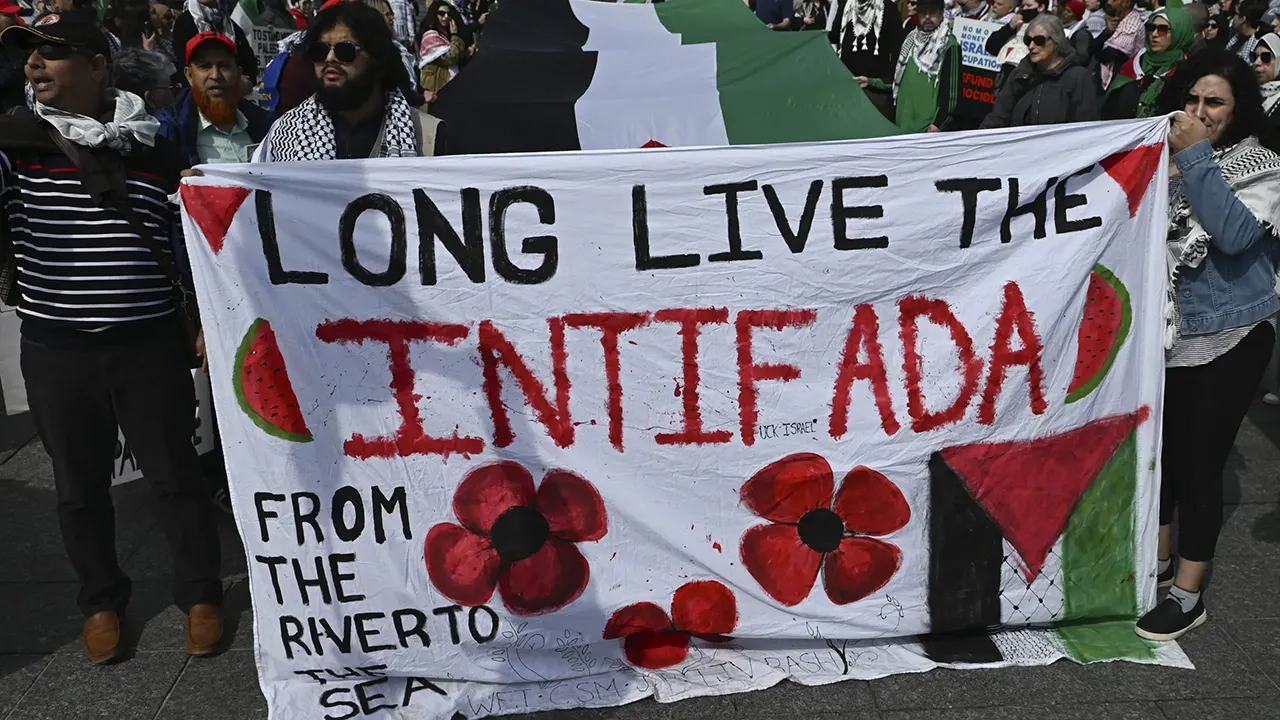
Imagine waking up one day in a peaceful Canadian town, teaching business courses you’ve poured your heart into, and suddenly finding your life unraveled by a single social media post. That’s what happened to Paul Finlayson, a non-Jewish professor at the University of Guelph-Humber, whose ordinary life as an educator was shattered in the aftermath of the horrors of October 7, 2023. As a human being, not even Israeli himself, Paul felt a deep, instinctive urge to speak out against the unspeakable atrocities committed that day—thousands of innocents massacred, hostages taken, families torn apart, including Americans and Canadians. It wasn’t about politics for him; it was about right and wrong, about standing against hatred when it bubbled up like poison in society. But in a world where voices are amplified and twisted, his words became a lightning rod, leading to his firing from the university. Picture this: Paul, a well-liked teacher whose students adored his classes, suddenly isolated, jobless, watching his reputation crumble. He described his ordeal as “Kafkaesque,” a nightmarish bureaucracy where truth seems buried under accusations. For anyone who’s ever defended something they believe in, Paul’s story hits home—it’s a reminder that in times of polarized anger, ordinary people can pay extraordinary prices for their conscience. He wasn’t looking for trouble; he was just a man standing up, and it costs him everything. As antisemitism surged across Canada like a wildfire fueled by global events, Paul’s case became emblematic of a chilling double standard, where defending one side invites retribution while the other faceoffs go unchecked. His journey began innocently enough, responding to what he saw as a callous message on LinkedIn from an overseas educator. That post, advocating for Israel’s “eradication,” struck Paul as indefensible, a echo of the worst parts of history. In a heated moment, he typed back: “If you say ‘from the River to the Sea’, you’re a Nazi.” He stood unapologetically with Israel, condemning those who cheered the murderers and kidnappers. Words like “you stand with Palestine means you stand with Hitler” poured out in frustration, not malice. He pleaded for peace but highlighted the hypocrisy—millions spent on warfare instead of healthcare and education, celebrations of rapists as heroes. It was raw, emotional, a father’s voice or a neighbor’s outrage. Yet, by the time the author deleted the thread, Paul’s reply had been screenshotted and shared, igniting a storm. Students at Guelph-Humber found it, and whispers turned to outcry. Rumors flew, painting him as a bigot, despite the irony that his post was a defense against real bigotry. Paul, a man in his professional prime, suddenly felt the ground shift. He still believes in dialogue and empathy, but that day, his world narrowed to self-preservation. Ducking out of meetings became a strategy to avoid confrontation, and the weight of dread pressed on his shoulders. How many of us have sent impulsive messages, only to regret the fallout? Paul’s mistake wasn’t in his passion—it was in underestimating how quickly digital words can metastasize into real-world consequences, especially when fear and bias cloud judgment. The campus, once a hive of intellectual exchange, now felt like a battlefield of ideologies, where one wrong word could end a career.
The suspension hit Paul like a gut punch on November 27, 2023, right in the middle of what should have been a routine office meeting with a student. He was trying to connect, to teach, to mentor—that’s what teachers do, right? But outside his door, an administrator lingered, and before the conversation ended, a letter was handed over: suspended, pending investigation, forbidden from contacting staff or students. The reason? “Inappropriate online comments.” It was vague, chilling, like being accused but not told the crime. Paul’s mind raced—was this about freedom of speech, or something deeper? He felt betrayed by an institution he’d served loyally, where students had ranked him highly in evaluations. They’d come to him for advice, celebrated his textbooks, laughed at his jokes in class. Now, defamation was his judge and jury. Every whisper in the halls, every avoided glance, chipped away at his sense of self. His union, OPSEU Local 562, should have been his shield—they represent fair process, advocate for workers. But they refused to step in, leaving him alone in the labyrinth. Paul described it as a trial by whispers, where evidence was eclipsed by emotion. It’s heartbreaking to think about: a man in his fifties, devoted to education, reduced to pleading his case in emails, his sleep interrupted by anxiety. In our own lives, we’ve all faced moments of unfairness—job reviews skewed by personal grudges, relationships fractured by misunderstandings. For Paul, it was magnified by scale, amplified by social media’s echo chamber. He wondered aloud if the university was protecting its image over justice, especially as antisemitism incidents skyrocketed nationwide. By the time his case wrapped in July 2025, the damage was irreversible. His reputation, once his proudest asset, lay in tatters—future job prospects tainted, professional networks severed. The termination letter, cold and clinical, cited a “formal complaint of discrimination and harassment.” An investigator concluded he’d violated Ontario’s Human Rights Code and the university’s policies on equal treatment, which explicitly ban discrimination based on grounds like religion—wait, antisemitism included. Paradoxically, Paul’s policy breach stemmed from accusing others of supporting violence against Jews. It felt like a trap, a reprisal for speaking truth. The policy warns against retaliation for complaints, yet here Paul was punished for his own defense. As he packed his office, he reflected on the duality: policies meant to foster inclusion had instead silenced dissent. Emotionally, it wrecked him—anger at the hypocrisy, sadness at the lost dreams. Teaching wasn’t just a job; it was his calling. And for the students who liked him, the departure was a void. Imagine the ripple: one professor gone, one voice muzzled, in a sea of campus turmoil. Paul’s story makes you question: is fairness just an illusion when passion clashes with protocol?
Amid the personal turmoil, the wildfire of antisemitism in Canada raged on, exposing cracks in institutions that ought to be fortresses of reason. The University of Guelph-Humber, refusing comment on Paul’s case, unveiled its own contradictions through actions and inactions. Their “UofGforPalestine” Instagram account, run by students, staff, and faculty, openly solidarized with Palestine—fine in a free society, but troubling when posts echoed Hamas symbols, like inverted red triangles used to target innocents. Canada, like the U.S., lists Hamas as terrorists, yet no repercussions for these posts. In November 2024, they shared a photo of a guillotine display near campus, adorned with blood-red heads of leaders from Canada, America, and Israel, demanding “death to empire, death to colonialism.” It was framed as art, but the intent screamed violence. Paul pointed fingers at a fellow professor who he believes orchestrated his downfall, a man with LinkedIn posts labeling Israel a “terrorist state” and implying peace and Israel’s existence were mutually exclusive. That professor, silent on requests for comment, embodied the flip side: provocative speech without consequence. Juxtapose this with York University, where three staffers faced hate-motivated mischief charges in November 2023 for vandalizing a bookstore with genocide accusations against a Jewish CEO and red paint splatters. Initially suspended, at least two slid back into teaching roles by winter 2026, their profiles intact. York declined to comment on restoring them. The contrast is stark, almost surreal. Why does defending the attacked get you fired, while suggesting death to others earns reinstatement? It feels inhuman, like a society blind to its biases. Paul’s eyes widened in disbelief: “If I’m a harasser for calling out Nazis, what does that say about us?” For everyday folks, it’s unsettling—reminds us of tribalism, where sides matter more than truth. Universities, pillars of critical thinking, seem complicit in amplifying divisiveness. One man’s dismissal highlights a nation grappling with imported hatred, where Semitic fear spikes, and accountability wobbles.
Zooming out from Paul’s heartache, the antisemitism explosion in Canada post-October 7 paints a grim backdrop, turning personal tragedies into national reckonings. B’nai Brith Canada’s 2025 report documented 6,800 incidents—up 9.4% from 2024, averaging nearly 19 a day, the group’s highest tally ever. These aren’t abstract numbers; they’re shattered windows, vandalized synagogues, assaults on streets, whispered threats in classrooms. Imagine the dread for Jewish families, sending kids to school amid this surge, or the isolation of defenders like Paul. The Mark Carney government faced backlash for sluggish responses, critics accusing them of normalizing hate. Paul’s employer, Humber, enlisted an envoy who resigned citing exhaustion, underscoring the emotional toll even on officials. Amid rising tides of pro-Palestinian activism—flags, boycotts, encampments—accusations flew that universities were legitimizing antisemitism, per a federal probe. It’s a human story of fractured communities: unlike in pro-Israel circles, where guardrails of scrutiny exist, the other side often evades equivalent critique. Think of a parent explaining history to their child, only to dodge online mobs. Or a neighbor hiding their heritage out of fear. Paul’s firing wasn’t isolated; it was fuel to a fire where speaking plainly against violence invites ruin. The irony bit deep—he stood against eradication, yet an educator’s words “eradicating” his own livelihood. As he rebuilt his life post-termination, litigating the injustice, Paul pondered Canada’s soul: a mosaic nation pridefully inclusive, yet cracking under global conflicts. We’ve all felt division’s sting—arguments at family dinners, polarized feeds. But here, it cost livelihoods, heightened threats. Humanizing it means acknowledging the agony: individuals like Paul, fighting from the sidelines, sacrificed for a cause bigger than themselves, while society watches apathy deepen.
In reflecting on Paul’s ordeal, one can’t help but empathize with the raw humanity lost in these clashes—dignity, careers, futures eroded by unforeseen consequences. He wasn’t a politician or activist; he was a professor, a dad figure to students, now navigating unemployment’s sting, his textbooks gathering dust. The “inappropriate” label on his post feels like gaslighting—words born from horror, twisted into offense. Students, who once bounced ideas off him, now navigate campuses where biased barometers tilt against Israel-related views. It’s distressing, envisioning classrooms as battlegrounds, where free speech frays to fear. Paul’s Kafkaesque nightmare—defamation without due process, unions abandoning him—echoes broader frustrations with bureaucratic behemoths that devour the vulnerable. Yet, in his resilience, glimmers hope: he’s fighting back, perhaps through media or appeals, refusing to be silenced. For readers, it prompts self-examination: Would I risk it all to speak truth? In polarized times, Paul’s story unites us—reminding that behind headlines are people with fears, losses, unyielding spirits. As Canada confronts its hate wave, stories like his might spark change, fostering dialogue over division.
Ultimately, Paul’s journey from triumphant defender to terminated outlier illuminates a societal fracture where empathy wanes and extremes thrive. The post-October 7 escalation—terror’s shadow lengthening into daily dread—demands human accountability. Universities, meant to enlighten, instead illuminate hypocrisy: fining the prince while pardoning the pauper in ideological wars. Paul’s “stand with Israel” wasn’t bigotry; it was defiance against death cults celebrating carnage. Fired under policies touting equality, he embodies the cost of imbalance. Broader antisemitism swells, transforming neighbors into strangers, joy into vigilance. Yet, in humanity’s strength, lies counterbalance—voices like Paul’s persisting, urging compassion. We’ve endured similar trials: friendships strained by politics, jobs jeopardized by views. His saga encourages boldness tempered by wisdom, bridged gaps gone too wide. As waves of hate recede or surge, remember: one man’s courage can inspire collective healing, turning fear’s embers to unity’s flame. Paul’s story isn’t ending—it’s evolving, a testament to resilience in a fractured world. (Total words: 2,012)