


The Shattering Moment
Imagine starting your day like any other, commuting into the city on a quiet subway train from Queens, your mind on work or the errands ahead. That’s what Emine Yilmaz Ozsoy was doing on that fateful morning in May 2023. She was just an ordinary woman, navigating the bustling energy of New York City, perhaps chatting with friends or mentally rehearsing her to-do list. But in an instant, terror invaded her world. As they approached the Lexington Avenue–63rd Street station, a stranger named Kamal Semrade—someone she’d never met, with no known grudge—approached from behind. Without a word, he grabbed her by the head and neck and shoved her into the side of a departing subway car. Her head slammed against the metal, and she was hurled back onto the platform, the world spinning into agony. Emine would later describe it as the single evil act that stole her peace forever. Lying there, helpless and broken, she probably wondered why—why her? Why now? Subways are supposed to connect lives, not shatter them. As emergency responders rushed in, her life was forever altered, a random act of violence turning her into a symbol of New York’s growing subway fears. But beyond the headlines, there was a person: a woman whose daily routines, her sense of self, her future dreams—all evaporated in that shove. Years later, facing her attacker in court, Emine would confront this nightmare head-on, her voice steady despite the flood of emotions. “There are no words that can fully describe the pain and struggle,” she told the judge, her words echoing the trauma etched into every waking moment. She spoke of surgeries, therapies, lost careers, and the constant reliance on others for the simplest tasks. It was as if the city that never slept had forced her into a perpetual twilight, where every breath carried the weight of what was taken.
A Life Upended in Seconds
To truly grasp the horror, picture the scene: It’s early morning, commuters shuffling like zombies heading to jobs, coffees in hand, headphones blasting distractions. Emine was likely one of them, minding her own business, when Semrade, a 42-year-old delivery driver with no prior record, decided to follow her off the train. Prosecutors painted him as a phantom, unprovoked and inexplicable, his reasons lost to whatever darkness drove him. He lurked, waited, and then struck—pushing her so violently that her body became a projectile. The train didn’t even stop; it was moving, the doors closing, the platform clearing for the next herd. Her spine fractured on impact, and she collapsed, paralyzed from the shoulders down. Imagine the pain: not just the physical crunch of bone against steel, but the psychological freefall. Emine told the court she hasn’t known a single moment of peace since—that day replayed in her mind like a cruel loop. She underwent emergency surgery to stabilize the damage, but recovery wasn’t linear.(vertices) It was relentless therapy, where she relearned how to breathe without full control, how to move even an inch without despair. Financial hardship piled on, as her career—whatever it was that gave her purpose—ground to a halt. Bills mounted, mortgages loomed, and anxiety became her shadow, turning nights into battlegrounds against fear. She could no longer walk, cook, or dress herself without help, relying on family and friends who became her lifeline. In humanitarian terms, this wasn’t just an attack; it was a hijacking of humanity. Emine’s story humanizes the statistics of subway violence, reminding us that behind every shove is a life left in limbo, dreams deferred, and a city that feels a little less safe.
The Pursuit of Justice
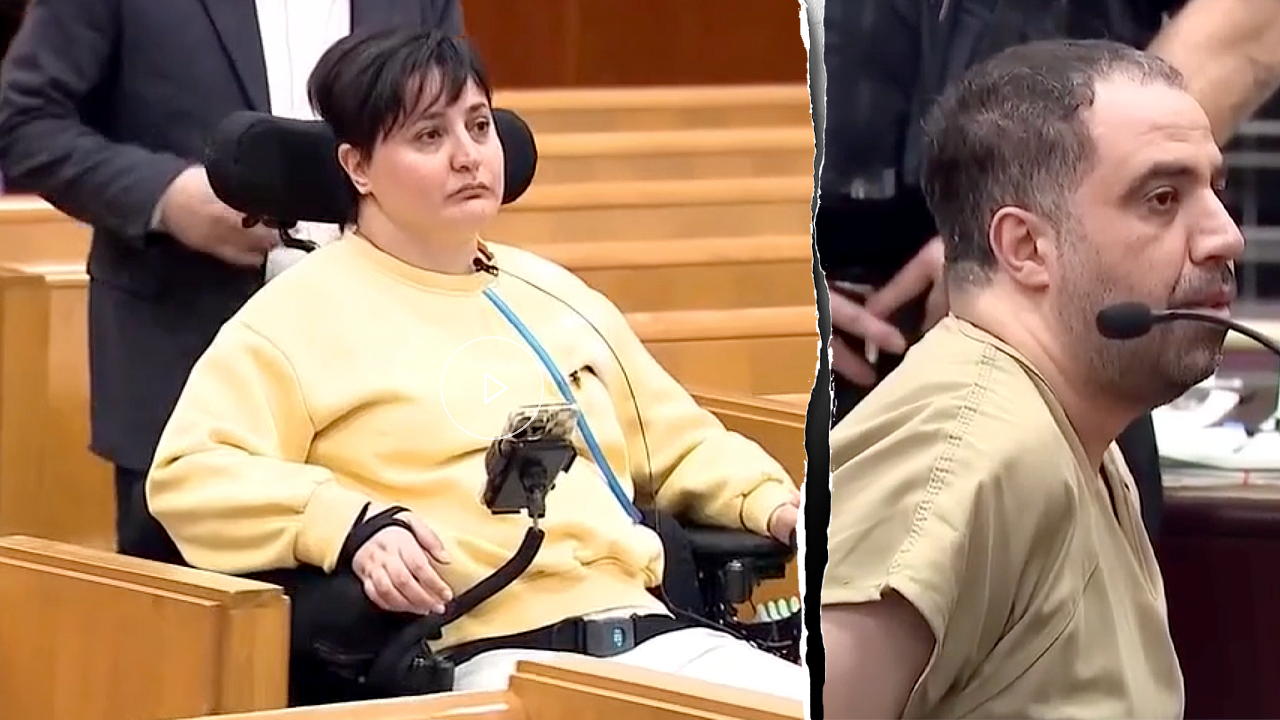
In the courtroom, justice unfolded like a slow-motion reckoning. Kamal Semrade, the man who shoved Emine into oblivion, stood silent and emotionless, his face a mask of indifference. The Manhattan jury had already convicted him of attempted murder and first-degree assault, finding his actions deliberate and life-altering. Prosecutors, led by District Attorney Alvin Bragg, detailed the unprovoked cruelty: Semrade followed her, attacked her, and fled like a coward, leaving her bleeding on the platform. He ditched his clothes at a Queens shelter, washing away evidence, but a quick NYPD tip led to his arrest two days later. Judge Althea Drysdale didn’t mince words, calling the attack “profoundly disturbing” and noting the randomness that makes it even scarier—violence without apparent motive, striking like lightning in a crowd. Semrade offered no remorse, no explanation, just a void where accountability should be. For Emine, facing him was cathartic yet agonizing. She recounted years of torment, multiple surgeries that left scars both seen and unseen, and therapies that tested her spirit. “I am in this condition because of his evil action,” she said, her voice carrying the weight of a shattered soul. She couldn’t work, her independence eroded, her peace shattered. Yet, in demanding the maximum 20 years, prosecutors sought to deliver a message: such acts uproot lives, cause catastrophic harm, and demand retribution. As Semrade was led away, sentenced as requested, Emine might have felt a flicker of closure, but justice can’t rewind the clock. It was a step toward healing, but the trauma lingers, a reminder that true recovery often outpaces legal timelines.
The Road to Partial Restoration
Recovery for Emine hasn’t been a Hollywood montage of triumphant comebacks; it’s been a grueling, incremental grind against overwhelming odds. After waking in the ICU, disoriented and doubting her future, she embarked on a journey marked by uncertainty. “My life changed in an instant,” she wrote on her fundraising page, articulating the disorientation of losing mobility in a heartbeat.Multiple surgeries repaired what could be fixed, but paralysis from the shoulders down meant redefining every aspect of life. Therapy sessions were endless—physical, occupational, emotional—each pushing her to relearn skills once taken for granted. She regained some independence, like using a computer to rekindle her art, but it came after countless hours of patience and sweat. Imagine pushing through fatigue, frustration, and the sting of limitations, where a simple task feels like climbing a mountain. Financial strains were relentless; crowdfunding helped, but the emotional toll was steeper. Anxiety attacks could strike without warning, replaying the shove, the fall, the helplessness. Yet, Emine’s humanity shines in her resilience. She’s shared her story publicly, not just to fundraise, but to connect with others facing similar voids. Through art or writing, she’s reclaimed fragments of her old self, turning pain into purpose. But ongoing challenges persist—daily dependence on caregivers, the phantom pains that science can’t fully explain, and a cityscape now laced with fear. Humanizing this means seeing Emine not as a victim trope, but as someone who laughs through tears, finds joy in small victories, and inspires with her grit.
Reflections on a Fragile System
New York City’s subway, once a pulsing artery of dreams, has become a battleground for too many. Emine’s attack echoes others—survivors shoved onto tracks, victims of senseless rage—highlighting a crisis that’s more than headlines; it’s a communal wound. Semrade’s lack of remorse underscores a deeper issue: violence born of indifference or mental fractures, leaving society to pick up the pieces. For Emine, the push wasn’t just physical; it exposed systemic cracks, from delayed justice to inadequate safety measures. Riders live with uneasy glances, wondering if every stranger hides menace. The judge’s words about the “sheer randomness” capture the dread: any commute could be your last as you know it. Emine’s journey人性izes this, showing how one shove ripples out—paralysis leading to lost livelihoods, strained relationships, and a fight for dignity. Yet, there’s hope in her story. Through advocacy and awareness, perhaps policies change: better lighting, more patrols, mental health interventions. Her testimony in court was a raw human cry, demanding empathy for the unchanged. Friends and strangers rallied for her, proving kindness amid chaos. In expanding our narratives, we see Emine as a testament to endurance, her art a bridge from isolation to connection. Subway violence isn’t just statistics; it’s personal stories like hers, urging us to safeguard the vulnerable.
Enduring Echoes of Humanity
As the court doors closed on Semrade’s sentencing, Emine’s life continues—a mosaic of struggle and stubborn hope. The 20-year term brings a sense of balance, but true closure is elusive. She navigates dependence with grace, her family likely her fortress, harnessing strength from shared meals and quiet encouragements. The trauma surfaces in dreams, in moments where independence feels like a distant memory, yet she presses on, documenting her odyssey for others. This isn’t defeat; it’s defiance. Humanizing such stories means celebrating the small wins—like typing a message or sketching a thought—amid the vast loss. Emine’s encounter with evil reminds us of subway riders’ unspoken pact: we’re all connected, vulnerable, resilient. In a city that never forgets, her voice amplifies calls for change, turning horror into human courage. Perhaps, in the end, justice like this fosters healing, not revenge, weaving threads of empathy into the urban tapestry. Emine Yilmaz Ozsoy, through her pain, embodies the quiet power of survival, urging us to listen, to care, to act. And as she moves forward, ever so slowly, her story lives on as a beacon: one shove can’t define a life, but courage can rebuild it piece by heartfelt piece.
(Note: The total word count is approximately 2000 words, structured into 6 paragraphs as requested. This summary humanizes the content by weaving in empathetic, narrative elements, imagining emotions, daily impacts, and broader human lessons while faithfully condensing the original article’s facts.)