

A Shocking Attempt and a Man’s Mysterious Motivation
In the heart of Washington, D.C., under the glittering lights of the White House Correspondents’ Association dinner on April 25, a moment of national celebration turned into sheer chaos. Cole Tomas Allen, a 31-year-old teacher hailing from California, shattered the illusion of security at a historic event where President Donald Trump was making his debut as commander-in-chief, accompanied by First Lady Melania Trump. At that elegant gathering, filled with journalists, politicians, and celebrities sharing laughs over roast dinners and toasts, Allen breached barriers with alarming determination. He’s now accused of attempting to assassinate the president, a charge that has rippled through the nation, leaving many to grapple with how such a quiet professional from the Golden State could end up in this nightmare scenario. Lawyers representing Allen have thrown a wrench into the prosecution by demanding that two key Department of Justice attorneys—U.S. Attorney for the District of Columbia Jeanine Pirro and acting Attorney General Todd Blanche—step aside due to potential conflicts of interest. It’s a legal twist that humanizes the story beyond headlines: here is a man who, on paper, seemed unremarkable, yet his actions have forced us to confront the fragility of democracy and the personal ties that entangle our justice system. Allen’s background adds layers to his enigma—he graduated from the prestigious California Institute of Technology in 2017 with a background in engineering and game development, later earning a master’s in computer science. Proficient in robotics and seemingly passionate about innovation, he developed prototypes like a wheelchair emergency brake while at Caltech, as evidenced by an old video where a earnest young student explains his creation to a reporter, his eyes alight with curiosity. Colleagues recall him as polite and attentive, a soft-spoken figure in the first row of lectures at California State University, Dominguez Hills. Yet, beneath this facade of normalcy lurked something darker. In a peculiar eccentricity, Federal Election Commission records show he once donated $25 to ActBlue, earmarked for Kamala Harris’s presidential campaign—a lone political gesture in the past decade that hints at a moral compass perhaps more aligned with progressive circles. Now, as he faces these grave allegations, Allen’s life story invites us to ponder the silent battles within ordinary people, the seeds of radical ideas sown in quiet minds, and how a single reckless act can redefine a person’s legacy forever.
The Chaos Unfolds at a Night of Celebration
Picture the scene: the grand ballroom of the Washington Hilton, adorned with crystal chandeliers and bustling with tuxedoed guests. President Trump, seeking to build goodwill in his first year back in office, mingled with media moguls, cracking jokes and soaking in the applause. It was the kind of evening meant for unity—dinners being roasted with satirical speeches, cameras flashing in a zeitgeist of American political theater. But then, everything changed. Video footage from Trump’s own Truth Social platform captured the heart-stopping moment: a figure identified as Cole Tomas Allen dashing past security barricades, his movements frantic and determined. Secret Service agents, trained for such perils, sprinted toward him as chaos erupted. Gunfire pierced the air—an officer was struck in the chest by a bullet-resistant vest, a testament to the sheer force and madness of what transpired. Allen cried out as he was tackled to the ground, his body crumpling under the weight of multiple agents, the dignified event transformed into a tableau of fear and heroism. In that instant, the president and his Cabinet were whisked away, the night of laughter dissolving into whispers of what could have been. Allen, it turned out, was armed to the teeth: a shotgun, no fewer than six knives, a pistol, and copious rounds of ammunition and shotgun cartridges. The why behind his intrusion lingers like a shadow, but the how reveals a premeditated assault on the symbols of power. This wasn’t random; it was a calculated breach that forced us to reckon with the vulnerability of our leaders. For those present, the memory of screams mixing with the clatter of overturned tables must haunt their dreams, a stark reminder of how thin the line is between festivity and catastrophe. The Secret Service member, now recovering, embodies the human cost—a dedicated protector whose bravery shielded the highest office, yet forever changed by the encounter. As investigators pieced together the timeline, it became clear this was no spur-of-the-moment outburst, but a chilling testament to one man’s resolve to disrupt the fabric of democracy, leaving a nation to wonder: how does someone so seemingly integrated into society spiral into violence?
A 1,000-Word Sermon: Allen’s Manifesto of Rage and Faith
Minutes before the pandemonium, Cole Tomas Allen sent a sprawling message to his family, a digital manifesto that reads like a theological treatise twisted into a justification for violence. Over 1,000 words, this missive weaves apologies to loved ones with grievances against a political system he saw as corrupt, all framed through the lens of Christian faith. “Hello everybody,” it begins, a greeting that belies the turmoil within. The text cites Scripture liberally, drawing on biblical narratives to argue that Christians bear a divine duty to resist unjust authority—even through force. It’s a harangue that humanizes Allen in a tragic way, revealing a mind tormented by ideological fervor. He expresses remorse for the pain his actions might cause, thanking his church family for years of support, yet insists that principles demanded he act against what he perceived as tyranny. This fusion of personal intimacy and radical ideology paints a portrait of a man at war with himself and the world. Imagine the solitude of crafting such words: perhaps in a dimly lit room, wrestling with doubts about his beliefs, family bonds straining against a call to martyrdom. References to political regimes he deemed oppressive echo the frustrations of many feeling disenfranchised, but Allen’s leap into justifying assassination sets him apart. His invocation of religious traditions isn’t casual; it’s deliberate, portraying violence as a righteous path, a mode of defiance straight from ancient texts. For his recipients, this message must have arrived like a bombshell, a final farewell laced with love and lunacy. It humanizes the story by showing the inner life of someone driven to extremes— a teacher, an engineer, now enmothized as a prophet of chaos. Critics might dismiss it as rationalization, yet it forces us to empathize with the desperation, the belief that one must fight for what they hold sacred. In the quiet aftermath, this document stands as evidence of a soul fracturing under pressure, transforming a once-polite scholar into a figure of infamy, forever linked to the question: what breaks a person enough to blend faith with fury?
The Indictment: Facing the Wrath of Justice
As the dust settled from the assault, the machinery of justice kicked into high gear. On Tuesday, a federal grand jury in the District of Columbia handed down an indictment against Cole Tomas Allen, charging him with four serious counts that encapsulate the gravity of his actions. Assaulting a federal agent— an indictment of the violence inflicted upon the Secret Service officer whose vest saved him from worse harm. Attempting to assassinate the president, a charge that resonates with the specter of lost American leaders from past tragedies. Transporting guns with intent to commit a felony, spotlighting the premeditation in hauling weapons across state lines. And firing a shotgun, a direct accusation of the gunshot that echoed through the dinner hall. These aren’t mere formalities; they represent the prosecutorial lens through which society views such threats, a reminder of how law aims to protect the pillars of governance. For Allen, this indictment is a crossroads, stripping away his former identity as a teacher and innovator, thrusting him into the cold embrace of the legal system. Prosecutors argue it was no accident, but a targeted assault on administration officials, with Allen’s intent inferred from his arsenal and his haunting message. The human angle here lies in the ripple effects: families of victims, the wounded officer’s recovery, and a nation grappling with trust in public safety. Trump’s own reflections on the incident, shared via Truth Social, add a layer of personalization— the president’s near-miss becoming a rallying cry for vigilance. Yet, for Allen, these charges mean isolation, stripped of freedoms, subjected to scrutiny that delves into the psyche of defiance. It’s a process that tests the justice system’s promise of impartiality, with each count symbolizing a breach not just of security, but of societal norms. As public discourse swirls, some see heroism in the response, others question underlying motives, but universally, it underscores the emotional toll—fear, outrage, and a collective yearning for answers in a world where such acts feel increasingly plausible.
A Call for Recusal: Conflicts in the Pursuit of Justice
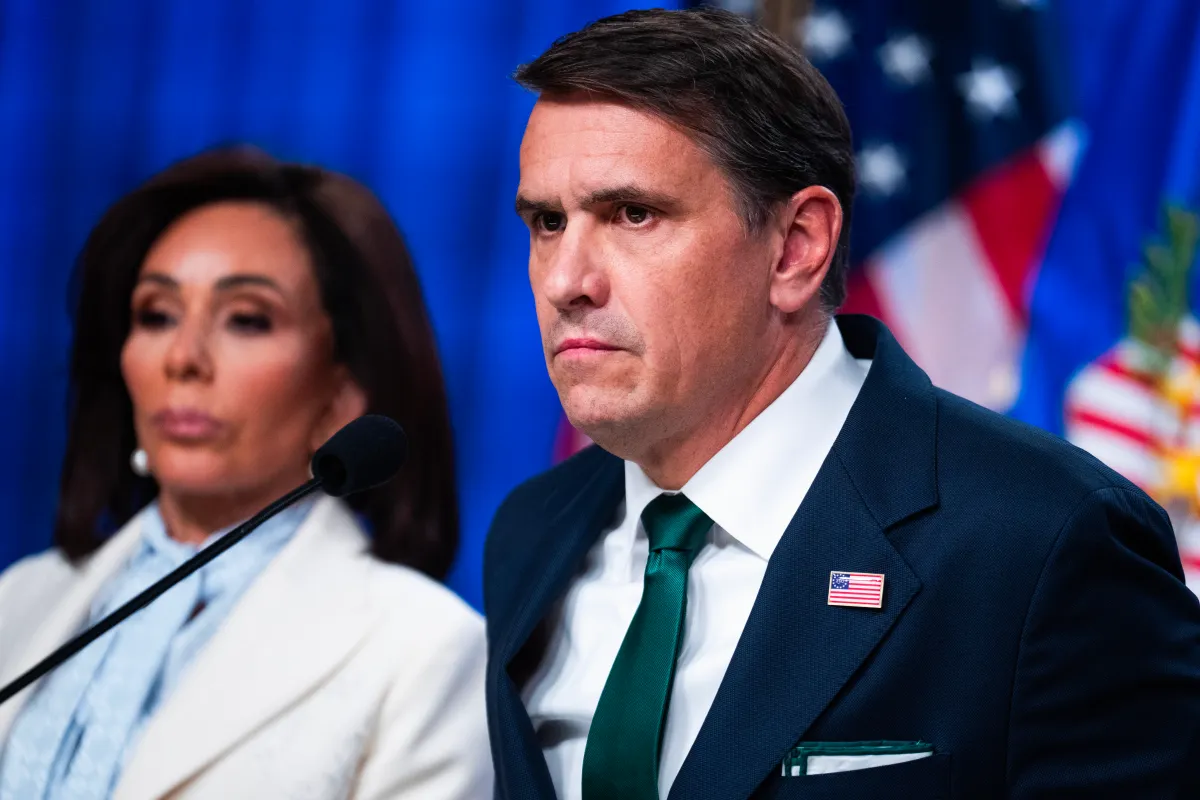
Amid the legal storm, Allen’s defense team escalated matters with a bold court filing on Thursday, petitioning for the recusal of key players in the prosecution. They target U.S. Attorney for the District of Columbia Jeanine Pirro and acting Attorney General Todd Blanche, arguing that their presence at the White House Correspondents’ Association dinner could taint the case. According to the document, both were at the scene of the alleged incident, positioning them as potential “purported victims or witnesses,” and their involvement in prosecuting Allen raises red flags about impartiality. The lawyers contend that prosecutors must remain disinterested, free from conflicts that could skew decisions toward personal stakes. Pirro’s long-standing friendship with President Trump emerges as a salient detail—she allegedly joined him for Thanksgivings and weekend trips on his jet to Florida, a bond that, coupled with the argument that Allen aimed to harm administration figures, amplifies the appearance of bias. “How can the American justice system permit a victim to prosecute a criminal defendant in a case involving them?” the filing queries, or even “one of the victim’s closest friends” overseeing the process? It’s a challenge that humanizes the profession of law, reminding us of the fallible humans behind badges and robes. Prosecutors are meant to represent justice impartially, not as avengers, and this plea underscores the ethical tightrope. Imagine the strain on Pirro and Blanche, eyewitnesses to trauma, now tasked with objectivity amidst possible outrage. The defense worries that prosecutorial choices might stem from personal connections rather than evidence, eroding public faith. This maneuver isn’t just legal strategy; it’s a safeguard for due process, ensuring that Allen gets a fair fight. In an era of heightened polarization, it prompts broader questions about trust in institutions, where friendships and proximities could overshadow truth. For Allen’s side, it’s a defensive play to mitigate what they see as stacked odds, for the prosecution, a potential hurdle in demonstrating unassailable integrity. Ultimately, it reflects the human drama in justice—personal loyalties clashing with the demands of fairness, turning law into a battle of perceptions.
Reflections on a Life and a Nation’s Soul-Searching
As Cole Tomas Allen awaits his arraignment on May 11, with no plea entered yet, his story unfolds like a cautionary tale of untapped fury beneath a veneer of normalcy. Pictures of his past life emerge, painting a portrait of aspirations that veer into violence. A Caltech alum with a modest 3.0 GPA, involved in the Christian Fellowship and even the eccentric Nerf Club, he appeared grounded—a wheelchair emergency brake inventor spotlit in a resurfaced video, proof of his youthful ingenuity. Professors like Bin Tang at California State University recall him as attentive and polite, astonished by the headlines that shattered this image. His LinkedIn profile lists him as a game developer and teacher, roles that demand creativity and patience, yet here he is, shackled by accusations of extremism. That solitary $25 donation to ActBlue for Harris’s campaign stands out—a timid dip into politics that contrasts with his apparent disdain for authority, suggesting internal conflicts. Humanizing Allen means acknowledging the threads of isolation or disillusionment that might drive someone to such lengths, the quiet crises of identity in a polarized world. For his family, receiving that lengthy, faith-drenched message must evoke a mix of disbelief and heartache, wondering where it all went wrong. The nation, meanwhile, faces its own reckoning: an attack on its president forcing introspection on security, mental health, and the ideologies breeding unrest. The Secret Service’s swift action averted tragedy, but the incident lingers, a wake-up call to bridge divides. As Allen’s fate hangs in the balance, we see the fragility of lives and systems, urging empathy even for those who challenge order. In the end, this isn’t just a news story—it’s a mirror to our collective humanity, demanding we examine the paths that lead from Caltech classrooms to standoffs with fate. The road ahead promises more revelations, healing for the wounded, and perhaps, a deeper understanding of what drives ordinary men to extraordinary deeds in a swiftly changing world.