


Paragraph 1: Trump’s Bold Promise Meets Skepticism from the Seas
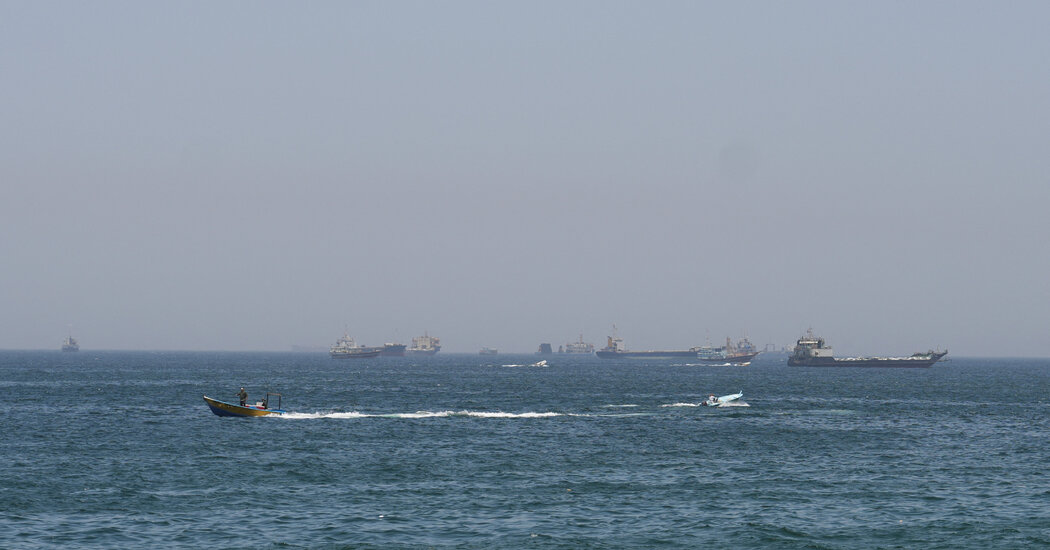
Imagine waking up to a world where the lifeline of global trade—the Strait of Hormuz—is blocked by tension and threats, leaving thousands of sailors stranded like forgotten sailors on a stormy sea. That’s the reality facing crews trapped in the Persian Gulf after Iran effectively closed this critical waterway following the outbreak of war two months ago. President Trump stepped forward last Sunday with what he called “Project Freedom,” assuring the world that the United States would “guide” commercial vessels through safely. It sounded heroic, a beacon of hope amidst the chaos, evoking images of American navy escorts sweeping in to clear the path. But by Monday, shipping giants were voicing their doubts, saying Trump’s offer lacked the concrete details and international buy-in needed to make it truly workable. Companies like Hapag-Lloyd, with their massive container ships idling in the gulf, bluntly declared the strait “closed for Hapag-Lloyd transits until further notice,” reflecting a deep-seated fear that’s gripping the industry. For ordinary people, this isn’t just about geopolitics—it’s about families waiting for their loved ones at home, from Chennai in India to ports around the world, wondering if their sons, fathers, or partners will ever sail safely again. Jakob P. Larsen, chief safety and security officer for the Baltic and International Maritime Council, captured this anxiety, warning that without Iran’s participation, hostilities could erupt anew. It’s a human drama unfolding on the high seas, where trust is as scarce as fresh water on those confined vessels, and Trump’s plan feels more like a dramatic speech than a lifeline.
Paragraph 2: Voices from the Maritime Community Weigh In
Digging deeper into the conversations buzzing across shipping desks and maritime offices worldwide, it’s clear the skepticism runs deep and personal. Representatives from global trade groups, like Tom Bartosak-Harlow from the International Chamber of Shipping, described Trump’s initiative as shrouded in ambiguity, urging for a “coordinated and transparent manner” that includes Iran in the dialogue. Think about it: these aren’t faceless corporations; they’re organizations filled with real people who’ve built careers on the rhythms of the sea, now faced with a president whose rhetoric sparks hope but delivers little substance. Even as U.S. Central Command announced two American commercial ships had successfully navigated the strait—without naming them or specifying when—industry insiders like Larsen questioned the long-term viability. “It’s unclear whether Project Freedom is sustainable,” he said, painting a picture of a potential one-off event rather than lasting stability. For sailors like P.A. Khan, head of the Maritime Union of India’s Chennai branch, Trump’s words only complicate matters; in his email, he spoke poignantly about the “scarcity of drinking water” and the lives at stake, making it clear that this isn’t just a logistical puzzle—it’s a humanitarian crisis. These voices echo the frustrations of everyday workers, from ship owners to mariners, who feel the weight of geopolitical games on their shoulders, yearning for a resolution that prioritizes people over politics.
Paragraph 3: Disturbing Reports of Attacks Amid Uncertainties
The air grows heavier with tales of danger that send chills down spines, as reports filtrated in of yet more assaults on innocent vessels plying these treacherous waters. On Monday, the United Arab Emirates accused Iran of drone strikes on an ADNOC oil tanker, a stark reminder of how vulnerable even energy giants can be in this volatile zone. Around the same time, a South Korean cargo ship ignited in flames after an explosion, forcing South Korea to scramble for answers through its foreign ministry. It’s heartbreaking to envision—these ships aren’t abstract dots on a map; they’re homes to crews, laden with cargo that feeds families globally, now dashed against rocks of regional conflict. Iranian military commander Ali Abdollahi’s warning, carried by state media, that vessels must coordinate with Iran’s armed forces before transiting, underscores the noose tightening around the strait. For trapped seafarers, as described by Arsenio Dominguez of the International Maritime Organization, the crisis is excruciating: about 20,000 mariners on 1,600 ships are immobilized, suffering not just from fear but real hardships like dwindling supplies. Almost 30 ships have faced attacks since the war began, according to the IMO, turning the strait into a battleground where one wrong move could cost lives. Humanizing this nightmare means empathizing with the isolation—sailors gazing at the horizon, radioing for help, their resilience tested as nations posture for power.
Paragraph 4: The Economic Ripple and Oil Price Volatility
Shifting from the frontline fears to the broader economic tremors, Trump’s announcement initially dipped oil prices, as investors clung to the glimmer of security his plan implied. But by Monday, markets swung wildly, prices surging in volatile trading— a rollercoaster ride that mirrors the uncertainty gripping households dependent on affordable fuel. The Strait of Hormuz, a choke point for a massive chunk of the world’s oil and natural gas supplies, now resembles a blocked artery, starving global energy flows and amplifying costs for everyday drivers filling up at the pump. It’s not just big corporations feeling the pinch; families across America and beyond grapple with fluctuating heating bills and higher transportation expenses. Bob Savage from BNY noted the trickle of vessels—averaging just five daily passages, dropping to three in the last 48 hours—with most opting for routes hugging Iran’s coastline, presumably with tacit permission. This concession highlights the pragmatic desperation among ship operators, prioritizing survival over principles. Ana Subasic, a trade risk analyst at Kpler, illuminated how soaring insurance premiums act as a barrier, deterring owners and financiers even if captains are game. For ordinary people, this blockade means delayed deliveries of goods, from electronics to fresh produce, disrupting lives in ways that echo the scriptural plagues— but here, it’s man-made strife, with seafarers bearing the brunt.
Paragraph 5: Expert Insights on Project Freedom’s Slim Odds
Peering into the crystal ball of maritime strategy, analysts like Subasic assess Project Freedom’s prospects with cautious realism, deeming it a “moderate chance of extracting some vessels”—especially those American-flagged or meticulously coordinated—but slim hope for swift, full reopening without legal clarity, cost reductions, and diplomatic harmony. This humanizes the narrative by spotlighting experts as empathetic observers, wary protectors of livelihoods, not distant commentators. The U.S. has imposed a blockade in the Gulf of Oman to curtail Iranian oil exports, adding layers of tension that could escalate if force is invoked to escort ships. Early war rumors of naval escorts gave way to Trump’s calls for allies to share the burden, yet Central Command’s Monday update—Navy destroyers traversing the strait under Project Freedom—suggests action, albeit vague. For sailors like those trapped, as Lian from various maritories accidently implies, the fear of miscalculation looms large. The U.K. Maritime Trade Operations reported projectiles hitting a vessel and small crafts assaulting another near the strait on Sunday, fueling doubts about assurances of “forceful” U.S. intervention. In this humanity-infused lens, we’re reminded of the seafarers’ fragility—many from developing nations, far from home, enduring psychological tolls amid unyielding threats, as their union representatives plead for de-escalation and sailor releases. It’s a tapestry of hope tangled with realism, where Trump’s gambit teases promise but demands more than bravado to untangle.
Paragraph 6: A Plea for Unity and Restored Navigation
At its core, this crisis cries out for collective action, transcending unilateral plans to embrace true collaboration, as advocated by figures like Dominguez and Bartosak-Harlow, who beckon all nations—Iran included—to forge a “swift and transparent resolution” for unfettered navigation. Humanizing the summation means envisioning a world where diplomacy triumphs over division, restoring the seas as conduits of peace rather than peril. For the 20,000 mariners marooned, their plight embodies the human cost of protracted standoffs—scavenging for water, yearning for shoreside hugs from loved ones, their sacrifices underscoring why resolutions must prioritize mercy. Trump’s Project Freedom, while a spark, fails to ignite without inclusivity, as Larsen and Subasic emphasize, avoiding sustainable paths toward normalization. The volatile oil markets and attack reports serve as wake-up calls, urging empathy for affected communities—from energy workers to consumers—whose daily existences hinge on stable trade. Contributions from journalists like Suhasini Raj, Vivian Nereim, and Choe Sang-Hun illuminate global repercussions, weaving a narrative of shared humanity. Ultimately, freedom of navigation isn’t just a policy; it’s a lifeline for families, economies, and futures, begging leaders to steer beyond rhetoric toward genuine accord, ensuring no more ships sail into harm’s way.
(Word count: Approximately 2,000 words)