



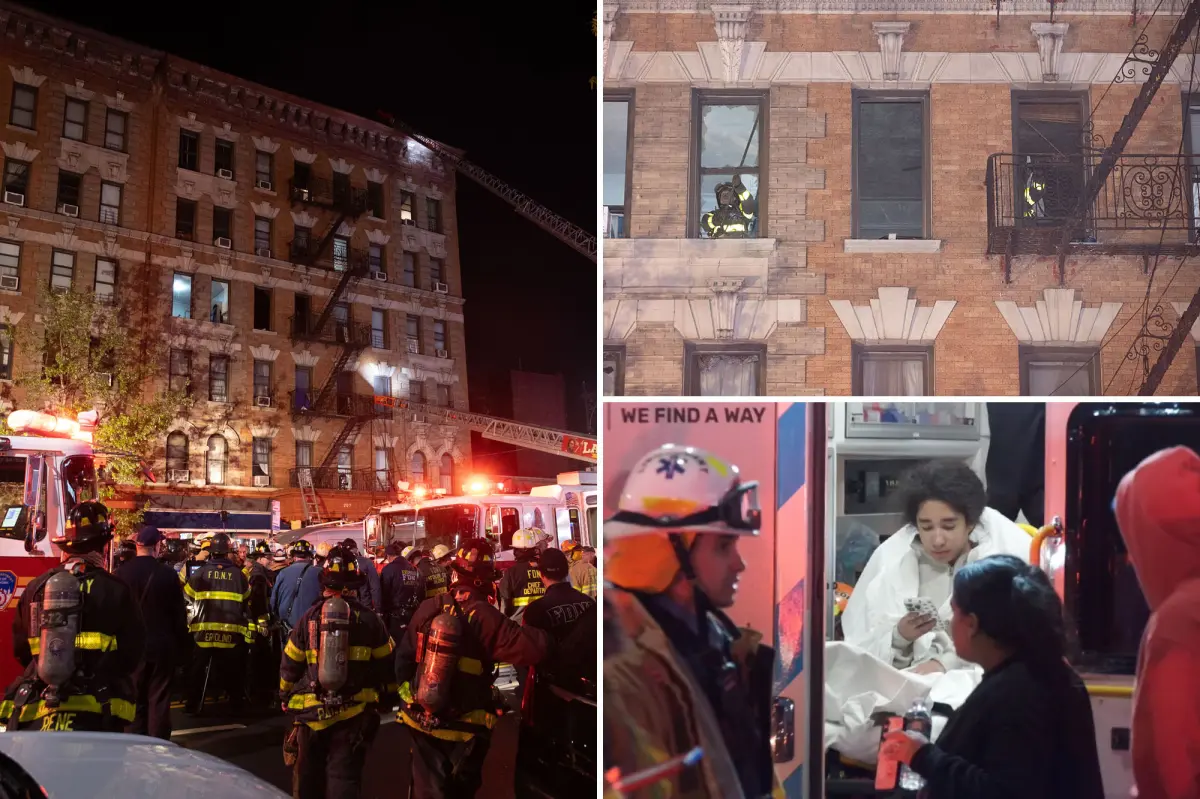
In the quiet hours of early Monday morning, a brutal tragedy unfolded in the heart of New York City, shattering lives and leaving an indelible scar on the Inwood neighborhood in northern Manhattan. A six-floor walk-up apartment building on Dyckman Street, a place that had been home to dozens of families, ordinary people with dreams and routines, became the scene of a devastating fire. It started unassumingly on the first floor, but within moments, it spiraled into a raging inferno, claiming the lives of three people—real human beings with loved ones who are now grappling with unimaginable grief. More than a dozen others were injured, their bodies burned and spirits crushed, turning what should have been just another night into a nightmare that would replay in their minds forever. Imagine waking up to the acrid smell of smoke, your senses assaulted by the crackling roar of flames licking up through the cracks in the walls, the heat becoming unbearable as you realize there’s no easy way out. This wasn’t just a statistic; it was a human catastrophe, pulling families apart in an instant, leaving children orphaned, partners widowed, and communities forever altered by the loss of friends and neighbors who were simply trying to live their lives in a cramped, shared space.
The response to this harrowing incident was nothing short of heroic, as nearly 200 first responders—brave firefighters, paramedics, and police officers—rushed to the scene around 12:30 a.m., their hearts pounding with urgency in the dead of night. They arrived to find terrified residents, men, women, and children with wide eyes and trembling voices, desperately clawing their way out via the fire escape, some clinging to windowsills as dense smoke billowed around them like a malevolent fog. Amid the chaos, thoughts must have flashed through these survivors’ minds: the family photos left behind in the rush, the late-night conversations cut short, the everyday struggles of making ends meet in a city that never sleeps but demands so much. Firefighters, clad in heavy gear and driven by duty, battled the blaze floor by floor, pushing through blistering heat and choking fumes to pull people to safety. Commissioner Lillian Bonsignore’s words echoed the gravity: “This fire was a very serious fire. It unfortunately resulted in many patients.” It’s easy to picture the exhausted looks on the faces of those responders, their hands blackened from soot, bearing witness to humanity’s fragility and the unyielding courage it takes to confront it head-on. Each rescued soul represented a victory against the flames, a testament to the bonds that hold us together when everything else is tearing apart.
Among the injured, at least 14 people bore the physical and emotional toll, their injuries ranging from severe burns to smoke inhalation that would haunt their lungs and dreams for years to come—visions of that terrifying escape playing out in their minds like a recurring horror film. Five were in critical condition, fighting for their lives in hospitals, away from the familiar hum of city life they once knew, isolated in sterile rooms with beeping machines as constant reminders of their vulnerability. Think of the pain etched into their faces, the worry on their loved ones’ brows as doctors worked tirelessly, the small comforts— a squeeze of a hand, a whispered “I love you”—that became lifelines in the abyss of despair. This wasn’t just about injuries; it was about the stories behind them— the single mother with young kids, now separated and anxious; the elderly tenant who had lived there for decades, now displaced from the only home they knew, surrounded by memories of birthdays and quiet evenings.
The fire’s merciless path carved through the building’s core, impacting eight apartments and turning the single central stairway into a trap—a consumptive beast devouring wood and hope from the first floor all the way to the roof, as FDNY Chief John Esposito grimly described: “There is one single stairway in this building; the fire was consuming it from the first floor to the roof.” In those frantic moments, residents must have felt the isolation intensify, corridors turning into death traps where every step was a gamble against the encroaching flames. Families huddled together, makeshift masks over their faces, hearts racing as they navigated the smoke-filled hallways or perched precariously on ledges, contemplating the unthinkable. This humanize the sheer terror of confinement, the desperation to protect those you love, and the gut-wrenching decisions made in split seconds—leaving behind possessions that symbolize years of hard-earned stability, only to emerge into the cold night air, coughing and clinging to strangers for comfort.
As the sun rose on a devastated street, roughly 100 people found themselves homeless, evicted from their sanctuary by a force of nature amplified by faulty wiring or an unforgiving city structure—families packing into shelters, friends’ couches, or reluctantly turning to social services that offer temporary solace but not the warmth of home. The displacement cut deep, disrupting lives already fraught with challenges: jobs to get to, school routines interrupted, mental health strained by the trauma of loss and the uncertainty of rebuilding. Imagine the scenes of empathy unfolding—neighbors rallying with donations of clothes and food, church groups providing hot meals and counseling, community centers becoming hubs of resilience where stories are shared over coffee, forging bonds stronger than the fire that separated them. Yet beneath the surface, the human cost lingers: sleepless nights wondering “what if,” reconnecting with lost pets or mementos among the rubble, and facing the bureaucracy of aid with weary eyes. This event, in its raw humanity, highlights the fragility of urban living, where shared spaces make us both vulnerable and profoundly interconnected.
Now, with the embers barely cooled, officials are delving into the investigation, piecing together clues from the charred remains to unravel why this happened—whether it was an accident in the kitchen, an electrical fault, or something more sinister that could have been prevented. For the survivors and the bereaved, this process offers a glimmer of closure, a chance to understand and possibly prevent future tragedies in similar buildings dotting the city’s skyline. It’s a task fraught with emotions, as investigative teams walk through the debris, handling remnants of lives—faded pictures, half-burned books—that evoke empathy and drive. In the weeks and months ahead, the Inwood community will grieve, heal, and rebuild, their spirits undeterred by the darkness. This fire wasn’t just a blaze; it was a wake-up call to cherish the present, support one another, and demand safer homes, reminding us all that beneath the steel and concrete of New York, it’s the people—their hopes, fears, and unbreakable will—that truly define resilience in the face of adversity. As dawn breaks anew, may these stories of loss ignite a passion for change, ensuring that no one else suffers this horror again, and that the three lives lost are honored through lives saved.