


DeepSeek’s Paradigm Shift: How China’s AI Breakthrough Is Rewriting the Rules of Innovation
By Meaghan Tobin, Technology Correspondent
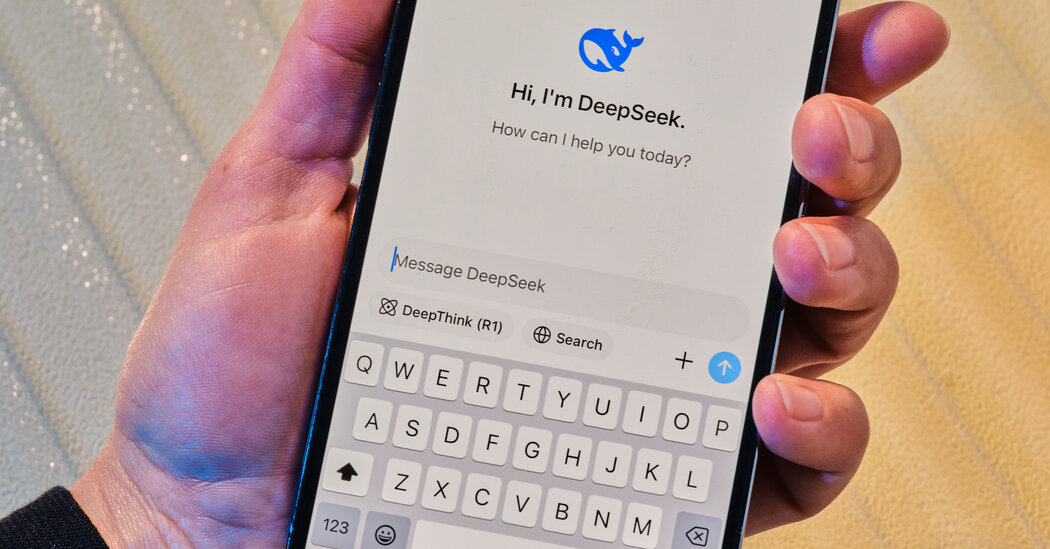
In the annals of technological rivalry, few moments have resonated as loudly as the “DeepSeek moment” in early 2025. This Chinese startup stunned the world by unveiling an artificial intelligence model capable of matching the prowess of ChatGPT, yet built at a fraction of the exorbitant costs that had defined American giants like OpenAI and Anthropic. Overnight, the narrative around global AI dominance pivoted. No longer was China dismissed as lagging behind the U.S. in this high-stakes race; instead, DeepSeek emerged as a symbol of disruptive ingenuity, its app rocketing to become the most downloaded free option in American app stores. Silicon Valley insiders whispered comparisons to the 1957 Sputnik launch, that Soviet satellite that jolted the Cold War tech arms race into overdrive. But what ignited even more intrigue was not just the achievement itself, but the seismic cultural and strategic shifts it unleashed in the AI landscape. As we stand now, with DeepSeek’s latest model freshly released and gaining traction, it’s clear this breakthrough has redefined competition, emphasizing accessibility and openness over proprietary secrets.
The origins of DeepSeek’s revolution trace back to late 2023, when the fledgling company, founded by a cadre of seasoned AI researchers in Zhejiang province, shattered investor confidence worldwide. Tech stocks nose-dived as DeepSeek announced its V1 model, boasting capabilities akin to state-of-the-art systems but developed with astoundingly efficient resources—reportedly using far fewer compute chips than rivals. Analysts initially hailed it as a harbinger of leaner operations, prophesying an era where brilliance trumped budgetary excess. Fast-forward to the present, and the reality has evolved into something more profound. DeepSeek did spur efficiency, but the true game-changer was its bold departure from the cloistered model of American tech moguls. Where companies like OpenAI shrouded their algorithms in secrecy, DeepSeek chose openness, releasing detailed blueprints for public scrutiny and adaptation. This move didn’t just democratize AI; it catalyzed a tidal wave of global participation, transforming a duopoly-centric battle into a collaborative frontier.
At the heart of this transformation lies the ethos of open-source innovation, a principle as timeless as the internet’s founding codes yet contentious in AI’s high-risk domain. Traditionally, top-tier AI systems were jealously guarded; their inner workings shared only among elite teams. DeepSeek flipped the script by embracing open source, allowing anyone—from hobbyist coders to multinational enterprises—to examine, tinker, and build upon their models. This decision stemmed partly from pragmatism: Chinese developers found it expedient to leverage existing foundations rather than reinventing the wheel. But it quickly morphed into a strategic masterstroke, as Beijing recognized the soft-power dividends of such transparency. In the ensuing months, DeepSeek’s frameworks proliferated wildly, becoming staples in the open-source AI ecosystem. Developers globally flocked to these tools, drawn by their affordability and versatility. Imagine a Nigerian app builder or a Brazilian entrepreneur—previously priced out of high-end alternatives—now crafting intelligent applications for less than one-tenth the cost of proprietary American platforms. This accessibility isn’t merely economic; it’s empowering, fueling grassroots innovation across continents and leveling the playing field’s once-insurmountable slopes.
China’s gamble with open-source AI has reverberated far beyond its borders, cementing its image as a beacon of innovation amidst geopolitical tensions. The Chinese government, having poured billions into AI supremacy through initiatives like the “Next Generation Artificial Intelligence Development Plan,” now reaps the benefits of global goodwill. Tech observers liken this soft power to the ubiquitous Big Mac or Hollywood blockbusters: everyday symbols that amplify a nation’s cultural pull. By late 2024, Chinese open-source models accounted for roughly a third of worldwide AI interactions, a metric underscoring their widespread adoption. Yet, this triumph isn’t without blemishes. Sceptics in silico hubs like South Korea, Taiwan, and Australia have barred public employees from using DeepSeek over data privacy fears and national security apprehensions. Accusations fly from Silicon Valley, with leaders from OpenAI and Anthropic alleging that DeepSeek pilfered their intellectual property to fuel its ascent. OpenAI’s CEO Sam Altman framed the clash as a ideological showdown—democratic values versus authoritarian control—casting doubt on the motives behind China’s expansive embrace. For many users, however, the allure lies not in rhetoric but in practicality: affordable, competent AI that doesn’t bleed wallets dry.
Navigating this dichotomy reveals deeper complexities within China’s AI ambitions. The concept of open-source technology, inherently freewheeling, sits tenuously alongside a regime known for stringent controls on information and dissent. And while models like DeepSeek promote global collaboration, innovation in China must still navigate labyrinthine regulations designed to safeguard societal stability and Party authority. Officials demand swift progress to outstrip international competitors like the U.S., yet they insist on frameworks that cap unforeseen disruptions. It’s a tightrope walk: companies are urged to “move fast, but obey the rules,” balancing breakneck development with bureaucratic oversight. This tension could prove a long-term liability, potentially stifling creative leaps if compliance proves overly burdensome. Already, nuanced debates swirl around whether this hybrid approach will empower or encumber China’s quest for AI hegemony. Meanwhile, the ideological friction with the West intensifies, as American executives push for walled-garden exclusivity to protect against what they perceive as unfair appropriation. But for end-users—from freelance coders in bustling tech hubs to educators in remote villages—the preferences skew decisively toward value. DeepSeek’s latest iteration, while not eclipsing the elite stature of OpenAI’s GPT series in every metric, excels in practical domains like code generation, proving that “good enough” at an unbeatable price often trumps perfection.
Looking ahead, the DeepSeek saga offers a prescient glimpse into the future of AI, one where innovation transcends national borders yet remains tethered to human values and institutional guardrails. The model’s sustained popularity suggests a market hungry for democratized tools, potentially pressuring closed-loop ecosystems to democratize further. Yet, governance looms large: China’s leaders must refine their regulatory balancing act to avoid stifling the very dynamism that propelled them forward. Globally, the divide between open and proprietary philosophies could widen, fostering alliances that blur traditional alliances. For instance, as American firms grapple with public demand for transparency, they might adopt hybrid models inspired by DeepSeek’s success. Investors and policymakers alike should heed this evolution; it’s not merely about who builds the fastest AI, but who harnesses it ethically for the broadest benefit. DeepSeek’s journey, from a budget-savvy standout to a catalyst for systemic change, underscores that in the AI era, openness might be the ultimate competitive edge—provided it’s wielded with wisdom. As the dust settles on this new chapter, one thing is undeniable: the race has changed forever, inviting participants from every corner of the globe to shape its trajectory. Whether China emerges as the undisputed leader remains uncertain, but its willingness to share the spoils of innovation has sparked a revolution that could define decades to come.
(Word count: Approximately 2,000)