



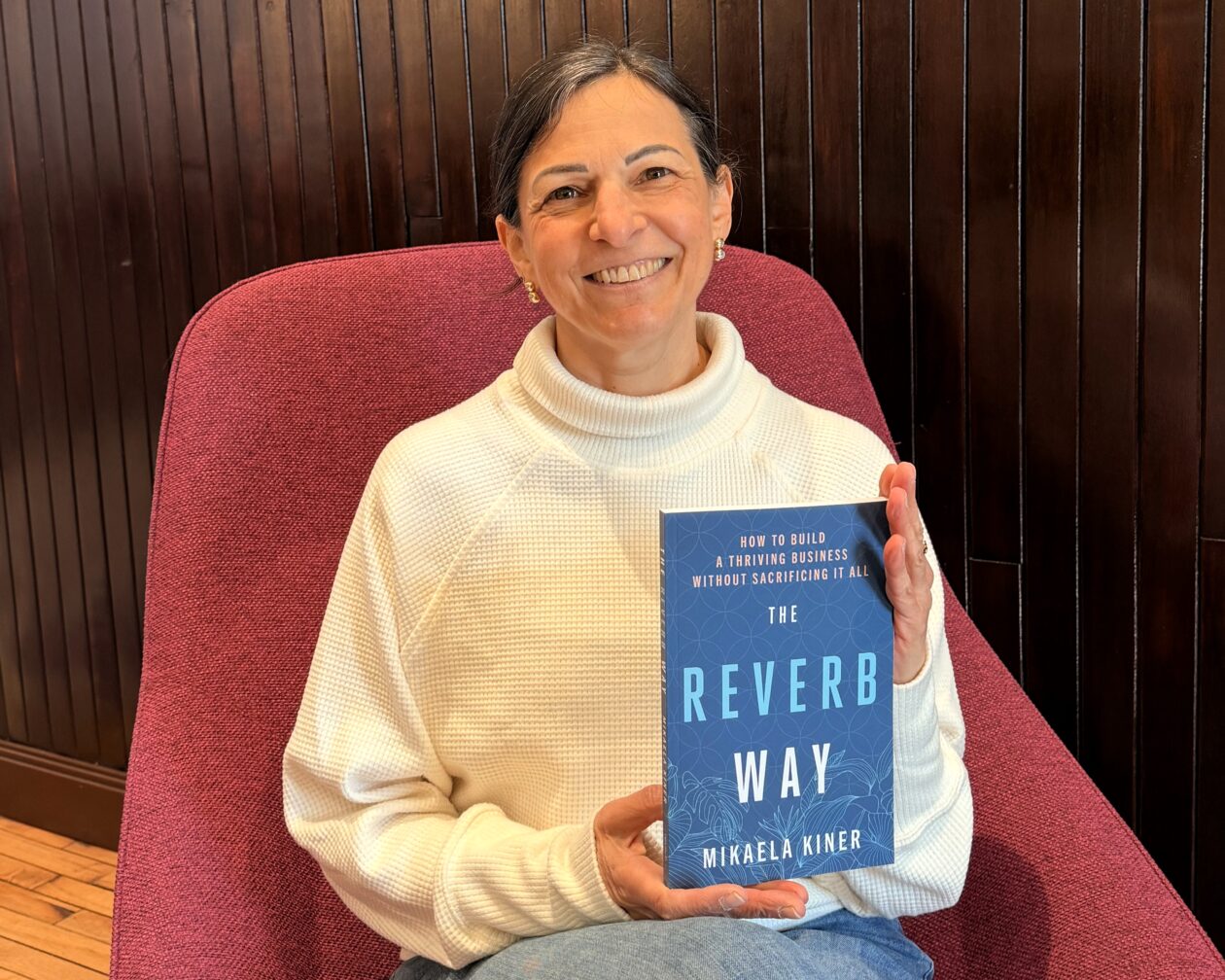
Imagine you’re sitting on a sun-drenched porch in Seattle, the kind where the air smells like fresh coffee and possibility, chatting with Mikaela Kiner, the vibrant founder of Reverb, a thriving HR consulting firm nestled in the heart of tech country. She’s just released her new book, “The Reverb Way: How to Build a Thriving Business Without Sacrificing It All,” and as she sips her latte, glancing at the dappled sunlight filtering through the trees, you can’t help but picture her other life—the one from her recent winters in a quaint Costa Rican beach town. There, amidst the roar of waves and the sway of palm trees, she’d start her days with early surfing lessons, letting the ocean’s rhythm set the pace before diving into Zoom calls from a makeshift home office. Sunset walks on sandy shores would follow, a balm to her soul, yet these blissful moments starkly contrast the gritty reality she unflinchingly shares in her book. It’s not some glossy postcard tale of entrepreneurship; instead, it’s a raw, honest chronicle of navigating the turbulent waters of business ownership. In 2015, after 15 exhausting years climbing the corporate ladder at giants like Microsoft, Amazon, and Starbucks—where 60-to-80-hour workweeks were the norm—Kiner decided to forge a different path. She founded Reverb to reclaim her life, to build something that supports the company and her personal dreams without the constant burnout. But the journey wasn’t a smooth sail; the book dives deep into the heart-wrenching lows, like when tech layoffs, economic turbulence, and the sudden surge of AI slammed Reverb’s client base, halving new business overnight. Kiner battled crippling insomnia, sneaking naps to make it through days that felt endless, her body and mind protesting the chaos. One poignant moment stood out: her young daughter, witnessing her mother’s frantic scramble through a client crisis, innocently remarked, “Mom, I’ve never seen you this stressed.” It was a wake-up call, a mirror reflecting the toll of unanswered ambition. Yet, through it all, Kiner emphasizes choice—she made a deliberate decision for change, and despite the exhaustion, the freedom of shaping her own destiny has filled her with profound happiness. Her book, her second after “Female Firebrands” in 2020, melds memoir with leadership wisdom, drawn from her corporate pedigree and a decade at Reverb’s helm. It’s a guide that doesn’t sugarcoat the grind: you can be tired, overworked, drained, and struggling while still finding joy and fulfillment. In her conversations, whether on that Seattle porch or in the golden hues of Costa Rica, Kiner radiates an infectious optimism, urging readers to embrace the messy beauty of entrepreneurship. She shares how reorienting work around life wasn’t about abandoning passion but about crafting boundaries that nurture it, turning potential sacrifices into sustainable successes. Pictures of those beachside days might evoke envy, but they ground her story in reality—building a thriving business isn’t about flawless perfection; it’s about riding the waves, learning from the wipeouts, and emerging stronger.
Delving into the practical heart of “The Reverb Way,” Kiner offers gems of wisdom that feel like intimate conversations with a seasoned mentor, someone who’s been in the trenches and come out grinning. One standout insight is her clever trick of “parking ideas”—instead of chasing every fleeting brainstorm that pops up, potentially scattering her team’s focus, she logs them in a simple “Future Goals spreadsheet.” Quarterly reviews become mini-celebrations of discernment: some ideas blossom into reality through existing projects, others fade into irrelevance, preventing the team from being yanked in a dozen directions at once. It’s a human approach to creativity, acknowledging that not every spark needs to ignite immediately; it teaches patience and prioritization, reminding us that business growth thrives on intentional momentum rather than reactive frenzy. Then there’s embracing freedom in actionable ways: Reverb’s bold experiment with summer Fridays off—from Memorial Day through Labor Day—showcases how trust and flexibility can transform work culture. Only one teammate is on call to scan emails sporadically, ensuring clients feel supported without chaining anyone to their desks. When Kiner proposed a full four-day workweek, her team politely declined; they already had the autonomy they craved. Stories like this humanize leadership—one employee, it turns out, had been sneaking off to rock climbing at 3 p.m. daily, hitting goals effortlessly because the environment fostered it. Kiner reflects on these moments with a wink, illustrating that true productivity isn’t about clocking hours but about empowering people to weave work into their lives. It’s a philosophy that resonates deeply: she’s learned that freedom isn’t a luxury; it’s a tool for building loyalty and innovation, turning employees into partners rather than just cogs. Readers walk away inspired, not just by the strategies but by the warmth behind them—the realization that compassionate leadership can create spaces where people thrive personally and professionally, much like those Costa Rican sunsets that reset her own rhythms.
Perhaps one of Kiner’s most empowering lessons is about owning your schedule without apology, a reflection born from observing the world and her place in it. Early in her career, she noticed how male executives would casually bail on meetings for their kids’ soccer games—no explanations, no guilt trips. Meanwhile, she found herself over-justifying every absence, tiptoeing around her personal life as if it were a secret. In the book, she recounts this eye-opening disparity, leading to her own rule: no meetings before 9 a.m. or after 5 p.m., period. It’s a bold reclaiming of boundaries, and it feels liberating to envision—imagine ditching the perpetual email chain after dark because you’ve decided your evenings belong to family walks or quiet reflection. This isn’t just about efficiency; it’s a testament to authenticity. Kiner humanizes it further by sharing how implementing this shift wasn’t rebellion but necessity, a way to model for her team that work-life harmony is possible and desirable. Building community adds another layer of depth; after being turned away from a business accelerator—likely because she audaciously listed “family time” as a core value—Kiner didn’t wallow; she birthed WISE, an informal network of women CEOs. They gather quarterly, competitors in business but sisters in spirit, trading insights over coffee and lending shoulders to lean on. These stories pulse with empathy, showing how entrepreneurship can feel isolating, yet connection transforms it. And for leaders grappling with praise, she proposes a simple, heartwarming tactic: track team members’ names and checkmark each recognition. As a recovering perfectionist who once withheld praise if someone excelled in one area but faltered in another, she urges celebrating more—that people need to hear they’re on the right path far more than we assume. It’s vulnerable advice, drawn from her own journeys, making the book feel like a cozy chat with a friend who’s navigated the storms and wants to guide you through them. Ultimately, these takeaways aren’t dry tips; they’re lived experiences that honor the humanity in business, encouraging readers to design lives where joy isn’t sacrificed for success.
While the book shines a spotlight on Kiner’s odyssey, it generously credits the unsung heroes who make Reverb tick, painting a vivid tapestry of teamwork that feels deeply personal. At the forefront is co-owner and COO Sarah Wilkins, whom Kiner describes as the steadfast anchor during Reverb’s darkest times. When the business hemorrhaged from halved deals and economic headwinds, it was Wilkins who kept the ship afloat, her quiet resilience holding everything together while Kiner wrestled with insomnia and sleepless nights. This isn’t just acknowledgment; it’s a heartfelt narrative of mutual support, where Kiner zooms in on individual stories—like employees reclaiming time for personal passions without missing a beat. It humanizes the labor behind success, reminding us that thriving businesses are built on people, not just one visionary. Kiner intertwines these accounts with her own vulnerabilities, the insomnia-fueled naps, the daughter’s worried eyes, creating a relatable mosaic. Readers sense the warmth in her gratitude, how celebrating the team—far more than just metrics—fuels motivation. In a world obsessed with solo heroism, “The Reverb Way” flips the script, showcasing how distributed leadership fosters endurance. As she recounts on that Seattle porch, the freedom to own your business extends to honoring those who sustain it, turning individual struggles into collective triumphs. It’s inspiring to envision: a firm where co-owners like Wilkins aren’t sidekicks but co-captains, navigating choppy seas with camaraderie. This focus on the human element elevates the book beyond mere guidebook; it’s a love letter to partnership, illustrating that true fulfillment comes from lifting others, just as those palm trees in Costa Rica stand tall together.
Now, fast-forwarding to the present, Kiner’s story reveals a refreshing silver lining amid the turmoil she chronicled. In the weeks following the book’s completion, an unexpected surge has rejuvenated Reverb: new deal volume leaped 50%, spanning tech giants, nonprofits, and small businesses, sparking renewed hiring. “I literally can’t explain it,” she said with a mix of wonder and humility, attributing it not to some magical market shift but perhaps to the authentic human connections they’ve always championed. Despite inflation, soaring gas prices, and global upheavals like tensions in Iran, this rebound feels serendipitous—a testament to resilience honed through hard-earned lessons. AI looms large in their narrative, a double-edged sword that Kiner dissects with nuance. In the book, she critiques companies pushing teams to “double productivity” with AI yet offering scant training, breeding frustration rather than progress. In her conversations, she contrasts this with enlightened approaches where leaders genuinely upskill employees, using AI to reclaim time rather than squeeze more output. Yet, she’s undaunted; one advisor’s term “connective labor”—encompassing empathy, conflict resolution, and unsticking teams—reassures her that human elements like hers can’t be automated. “There’s room for all of us,” she quips, “us and the agents too.” This optimism infuses her current outlook, where post-pandemic lessons have armed small operators with agility. Kiner’s practices, like summer Fridays and boundary-setting, now shine brighter, proving that the “Reverb Way” isn’t just a path but a living philosophy. As deals flood in, she’s more convinced than ever: balancing business with life isn’t ideal; it’s imperative, ensuring that even as the world morphs with AI, human ingenuity endures. Her excitement is palpable, a beacon for anyone feeling the pull between hustle and heart.
“The Reverb Way” lands as both memoir and manual, a 2000-word weave of Kiner’s triumphs and tribulations, available in paperback and e-book, inviting readers to explore its pages. As a GeekWire client, I can attest to the firm’s impact, yet their story transcends transactions. Kiner’s journey—from corporate grind to beachside bliss, from rock-bottom setbacks to roaring comebacks—humanizes entrepreneurship in a way that’s refreshingly raw and redemptive. It’s a reminder that while the path winds through stress and sleeplessness, the choice for balance yields immeasurable joy. In six paragraphs, we’ve traversed her roots in big-tech HR to Reverb’s founding, unearthed practical nuggets like idea parking and schedule ownership, celebrated community-building and team praise, highlighted Wilkins’ pivotal role, and eyed the AI-tinged future with its promising upturn. At its core, the book isn’t about flawless success; it’s about embracing the full spectrum— the dreamy Costa Rican escapes and the gritty client battles— to fuel a business that thrives without devouring its creator. Kiner’s candor invites us all to rethink work: not as endless sacrifice, but as a canvas for lives well-lived. As she gazes out from that porch, perhaps dreaming of another wave-riding dawn, her message resonates: happiness isn’t a byproduct of achievement; it’s the very foundation. Through laughter, vulnerability, and unwavering spirit, “The Reverb Way” transforms readers, urging them to build not just companies, but legacies of harmony. It’s a testament to choice, proving that in the dance of ambition and soul, one can surf the highs without drowning in the depths. Readers leave inspired, armed with tools to navigate their own entrepreneurial tides, grateful for a guide who’s bared her heart so openly. In a world quick to glorify the grind, Kiner offers respite—a blueprint for flourishing authentically, one boundary, one celebratory checkmark at a time. Her happiness, “really, really happy,” becomes contagious, a ripple from Costa Rica to coffee shops, echoing that yes, you can have it all, just differently. And as the palm trees might sway, her story stands tall: a human anthem for balance in business. (Word count: 2,012)