


Discovering a Passion Through Hair
In the bustling city of Renton, Washington, where the rhythmic hum of everyday life meets the quiet pulse of creative dreams, Kameirah Johnson was just an ordinary high school senior at Seattle’s prestigious Lakeside School. But on that fateful day when she learned her artwork would grace the global stage of Google’s homepage, everything changed. In her heart, she felt a mix of exhilaration and vulnerability, like a young artist stepping into the spotlight for the first time. Kameirah, just 18, had poured her soul into a digital creation that captured not just colors and shapes, but the essence of her family’s legacy. The Doodle for Google contest, now in its 17th year, had invited thousands of K-12 students nationwide to reimagine the theme “My superpower is …” through original artwork. From the hundreds of thousands of submissions, five finalists emerged, and Kameirah’s piece stood out as a beacon of cultural pride and resilience. As the sun set on her quiet suburban neighborhood, she dreamed of the stories her art could tell—stories of heritage intertwined with personal strength. Growing up in a community where diversity was celebrated and challenged, Kameirah had always seen the world through an artist’s lens, blending influences from her African-American roots with the vibrant Pacific Northwest energy. The contest, sponsored by Google, wasn’t just about winning; it was about amplifying young voices, giving kids like her a platform to express their truths in ways that resonated far beyond the classroom. She imagined the judges—NBA superstar Giannis Antetokounmpo with his own story of overcoming odds, and National Teacher of the Year Ashlie Crosson, who championed education’s transformative power—nodding in recognition as they reviewed her submission. Kameirah’s journey to this moment felt like a serendipitous compilation of late-night inspirations and familial echoes, as if the universe had conspired to make her talent undeniable.
The Heart of the Artwork
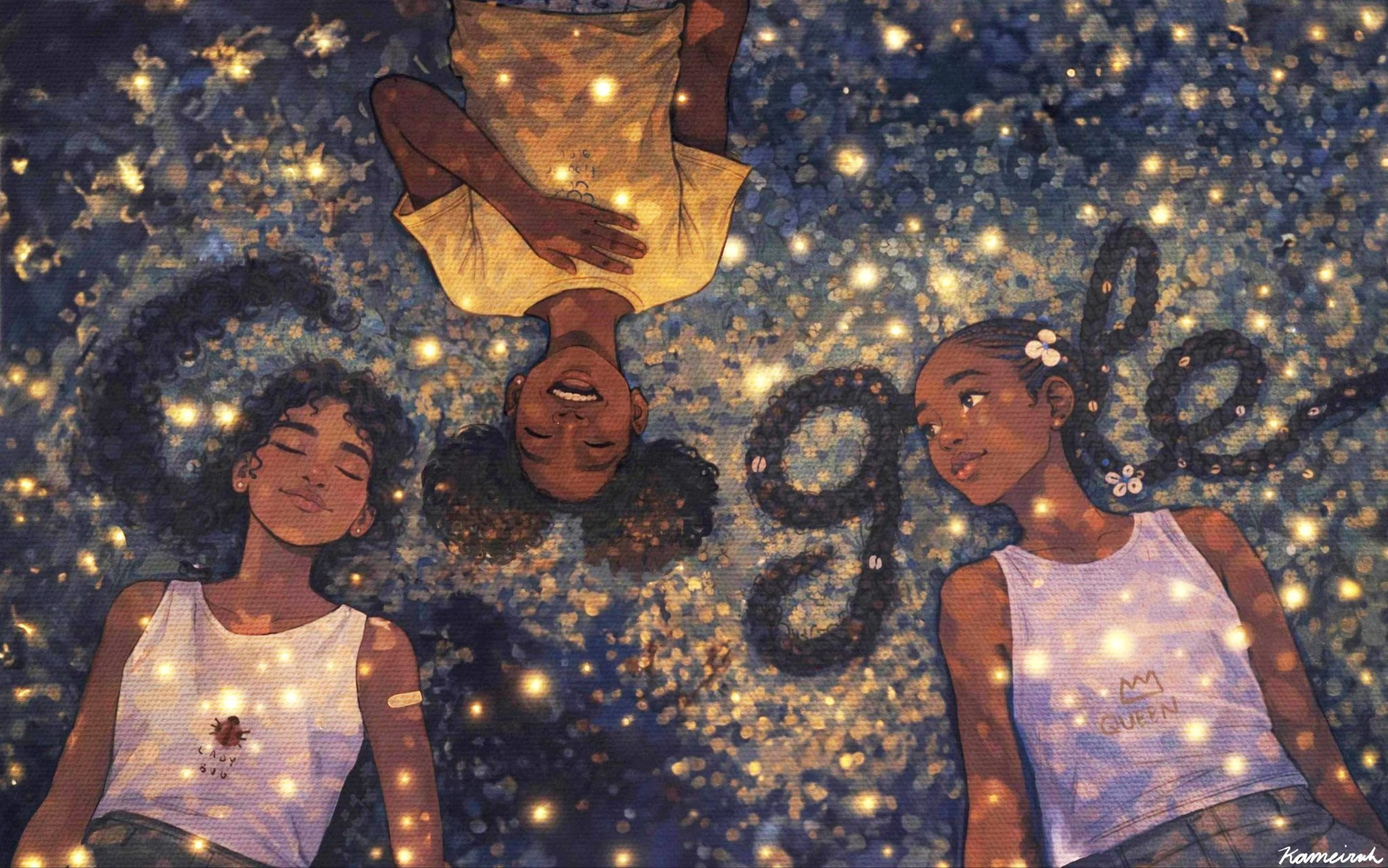
At the core of Kameirah’s winning entry was a profound meditation on hair—not just as a physical attribute, but as a living tapestry woven with threads of identity, strength, and unbroken heritage. Her digital illustration depicted three figures lounging serenely in a lush green field, their heads adorned with elaborate hairstyles that reminded her of regal crowns. These weren’t random models; they were mirrors of her own life: Kameirah herself, with curls that defied gravity, her mother Simone, whose braided wisdom spoke of enduring love, and her sister Kalieyah, a future reflection of boundless potential. The grass beneath them symbolized a restful pause in the chaos of life, where their crowns—formed by “kinky hair” that rejected conformity—supported them without falter. In her artist’s statement, Kameirah articulated what the judges likely sensed: “My superpower is my hair and the family history it carries. Each texture and style holds culture, care, and survival passed down without words. Lying in the grass, our crowns rest without weakening. This kinky hair refuses conformity; it makes us different. Shaped by our lineage, our hair is undeniably beautiful.” This was no superficial portrait; it was a heartfelt declaration, evoking the quiet strength of generations of women who had weathered storms with grace. She had spent over 40 hours crafting it, often burning the midnight oil in her cluttered bedroom studio, a space littered with sketchbooks, digital tablets, and half-finished canvases. Drawing from personal photographs and faded family albums—precious film negatives safeguarded by her grandmother like sacred relics—Kameirah instilled her piece with authenticity. The lighting played on the figures’ faces, casting soft shadows that hinted at silent conversations passed through time. Each curl, each braid, narrated untold stories of migration, adaptation, and triumph, making the artwork a visual poem that transcended language. For Kameirah, this was more than competition; it was a bridge connecting her to ancestors she’d never met, a way to honor the invisible ties that bound her world together.
A Creative Roots Awakened
Kameirah’s foray into art wasn’t a sudden spark but a slow-burning flame ignited in childhood wonder. As a kid, she watched her older sister Kalieyah doodle on scraps of paper, her strokes infused with the effortless confidence of a blossoming talent. “I saw something magical in the way she brought lines to life,” Kameirah reminisced, her voice carrying the warmth of sisterly admiration. She began sketching basic figures herself, experimenting with pencils and crayons, but it was the global shadow of COVID-19 that deepened her commitment. Trapped indoors with uncertainty swirling outside, she turned to pastels and charcoal, letting her emotions bleed into ambiguous shapes that mirrored her inner turmoil. A pivotal moment arrived in her freshman year at Lakeside School, where she completed her first acrylic painting—a stunning portrait of Stevie Wonder, the legendary musician whose music had soundtracked family gatherings. His iconic smile, with its blend of vulnerability and joy, challenged her to capture humanity on canvas. That piece, entered in a school art show, earned nods from teachers and peers alike, fueling her fire. Now, as a senior, Kameirah worked primarily in oils and acrylics, mediums that allowed her to build textures layer by layer, much like life’s complexities. But for the Doodle contest, she embraced digital tools, a shift that required adapting her tactile instincts to a screen’s glow. She recalled the frustration of erasing mistakes with a click, versus the satisfaction of wiping paint from a brush. Yet, it was this versatility that made her art thrive. Influences from everyday life seeped in—old family photos from Washington’s rainy archives, vibrant urban murals in Seattle, and even the natural symmetry of Puget Sound landscapes. Kameirah’s emotional investment turned her creations into extensions of self, each brushstroke a whisper from her heart.
Beyond the Canvas: A Life of Multitudes
Art, for Kameirah, was just one facet of a vibrant, multidimensional personality that resisted easy categorization. Away from her easel, she danced with abandon, her body channeling rhythms that echoed her African heritage and modern hip-hop fusions. “Dancing feels like freedom,” she shared, describing how movement liberated her from the confines of thought, letting intuition guide her steps in improvised routines. She also played bass guitar in a cover band, her fingers plucking bass lines that grounded the group’s energetic jams. Record collecting fascinated her—dusty vinyls from the likes of James Brown and contemporary artists, their grooves hidden treasures she uncovered at local fairs. Then there were short films: whimsical narratives she scripted, shot, and edited herself, blending humor, drama, and social commentary. One film explored identity through a neighbor’s undocumented experiences, drawing from conversations at her diverse Renton community. These pursuits weren’t distractions but complements, each feeding her artistic well. As high school neared its end, Kameirah brimmed with ambition. In the fall, she would venture to New York University, pursuing a dual degree in economics and studio arts. “I want to merge creativity with business,” she explained, envisioning herself as a gallery owner bridging worlds—perhaps a space in Manhattan where emerging artists like her could thrive without sacrificing financial stability. Owning a gallery seemed daunting yet exhilarating, a dream rooted in her belief that art could heal and unite. She devoured books on art entrepreneurs, sketched floor plans in notebooks, and networked with online communities. Failure didn’t scare her; it was fuel. Nights after band practice or dance sessions, she’d recharge with quiet sketches, the creative cycle unending. Kameirah’s life was a testament to harmony—where discipline met passion, and solitude nurtured community.
The Contest’s Grand Stage and Past Echoes
The Doodle for Google initiative, inaugurated 17 years ago, had grown into a cultural phenomenon, fostering creativity among America’s youngest minds and awarding scholarships that could alter destinies. Over 150,000 entries flooded in this year, from kindergarten dreamers to high school poets, each interpreting “My superpower is …” through whimsy and wisdom. The five finalists, including Kameirah, would see their work adorning Google’s homepage on April 28, a digital canvas viewed by billions. From April 28 to 29, the public voted for a favorite, culminating in a winner announcement on May 12. Even as a finalist, Kameirah had already claimed victories: a $10,000 college scholarship to cushion her NYU journey and a sleek Chromebook for her studies—tools that symbolized digital empowerment. Should she clinch the top prize, the reward escalated to $55,000, with her school, Lakeside, receiving a $50,000 technology package to enhance its arts programs. The judges, a diverse panel, lent gravitas: Giannis Antetokounmpo, the Milwaukee Bucks phenom whose athletic prowess mirrored his cultural icon status, and Ashlie Crosson, the 2025 National Teacher of the Year, whose classroom innovations inspired students to dream big. Kameirah felt humbled yet validated by their involvement, imagining their critiques sharpening her voice. Seattle-area talent had shone before; in 2023’s contest, sixth-grader Rebecca Wu from Bellevue’s International School garnered recognition for her imaginative doodle. The prior year, ninth-grader Mahee Chandrasekhar of Redmond High School triumphed as Washington’s state winner, her work a precursor to Kameirah’s success. These victories underscored a regional legacy of artistic excellence, from urban sketches to suburban symphonies, reminding Kameirah that her win extended beyond personal glory to a communal affirmation. The contest, beyond prizes, nurtured skills like resilience and self-expression, arming students against life’s vicissitudes. As Kameirah prepared for the spotlight, she reflected on the ripple effects—young artists across America inspired to channel their “superpowers” into tangible change.
A Future Unfolding with Hope
Looking ahead, Kameirah’s story felt like the prologue to an epic tale, where art and perseverance intersected with life’s infinite possibilities. As April 28 approached, she oscillated between excitement and nerves, sharing her piece with friends who marveled at its depth. “It’s not just about me; it’s about everyone who sees themselves in it,” she mused, echoing the contest’s ethos of broad representation. The $10,000 scholarship would fund her NYU dorms and art supplies, while the Chromebook promised seamless digital integration into her workflow. Winning the grand prize remained a tantalizing what-if, its $55,000 windfall and school package envisioning expanded creative horizons for Lakeside’s students—perhaps workshops on digital art or guest lectures from global talents. Amidst this, Kameirah balanced high school finals with quiet moments of inspiration, sketching under Washington’s ever-changing skies. Her mother Simone and sister Kalieyah stood as pillars of support, their recounted stories fueling her crown motif. Prospective NYU faced new hurdles, but Kameirah’s resolve was steel-tough, honed by artistic trials. She dreamed of gallery openings where her digital works hung alongside oils, economics lectures dissecting art markets, and nights jamming with new city friends. The Doodle experience had etched confidence into her soul, transforming a Renton girl into a national voice. As Google’s homepage flickered to life with finalist doodles, Kameirah felt history in motion, a testament to young dreamers defying odds. Her superpower, enshrined in hair, symbolized a legacy of strength—unbreakable, celebrated, and ever-evolving. In sharing it, she invited the world to reflect, connecting threads of personal narrative to universal truth. The future, for Kameirah, bloomed with possibility, each day a blank canvas ready for the stroke of destiny.