



The Pacific Northwest tech scene is buzzing with high-profile executive shakes, like a well-rehearsed symphony where seasoned leaders swap instruments to create new harmonies in innovation and business. Take Derek Andersen, for instance—a finance maestro entering his latest act with flair. As the new chief financial officer at Expedia Group, starting May 11, he’s stepping into the shoes of Scott Schenkel, who gracefully bowed out after over two years of steering the company’s finances through turbulent travel waters. Andersen brings a Hollywood pedigree to this Seattle-based juggernaut: after seven years as CFO at Snap (the Snapchat empire), where he navigated the wild fluctuations of social media advertising and user growth, his roots even go deeper into the e-commerce soil at Amazon, where he once oversaw the sprawling video universe of Prime Video and Amazon Studios. “It feels like coming home,” Andersen mused in a polished statement, his eyes surely gleaming at Expedia’s treasure trove of assets—from cutting-edge tech and beloved consumer brands to a massive B2B network that’s redefining travel. Expedia’s CEO, Ariane Gorin, couldn’t hide her enthusiasm, hailing Andersen as the perfect fit while saluting Schenkel’s stint, which included piloting eBay as CFO and interim CEO. It’s the kind of transition that doesn’t just swap titles but injects fresh momentum into a company that’s weathering post-pandemic recovery, blending Andersen’s knack for sustainable growth with Expedia’s vision for the future of vacations. His hiring isn’t isolated; it’s part of a broader narrative of leaders seeking greener pastures where their talents can blossom anew, reflecting the dynamic pulse of tech migrations across the region.
Meanwhile, another Seattle tale unfolds with Peter Hamilton, who recently departed Roku as its head of ad innovation after more than four invigorating years. This executive, with a track record as CEO of the mobile marketing startup Tune for over a decade, dove into Roku to experience innovation on a monumental scale—think streaming ecosystems that captivate millions. “I came to witness the magic of scaling up creativity,” he reflected poignantly on LinkedIn, acknowledging the “village” of teams that make it happen, from engineers tweaking algorithms to marketers predicting ad lifecycles. Now, Hamilton’s teasing his next chapter: another leap into the CEO spotlight, though he’s keeping the curtain drawn on specifics. His exit mirrors a rite of passage in the tech world, where passion for scale gives way to fresh challenges, leaving Roku to adapt its ad strategies without his visionary tweak. And in a similar vein of career pivots, Ann Johnson— a cornerstone of Microsoft’s cybersecurity for over ten years as corporate vice president and executive security advisor—is bidding adieu to the Redmond giant on May 4 to helm Security Services for Identity and Fraud at Mastercard as executive VP. For Johnson, it’s not just a promotion; it’s a call to purpose. In an open Q&A with Mastercard, she described her work as deeply meaningful, driven by the thrill of safeguarding commerce. “Securing these vital transactions feels like protecting the heartbeat of our world,” she shared, her enthusiasm palpable for a role that blends her expertise in identity verification with Mastercard’s ethos of frictionless trust in an era of rising cyber threats. These moves paint a picture of professionals not merely chasing titles, but weaving their experiences into the fabric of safer, more innovative industries.
Over at Microsoft, internal ripples are creating waves of change, as Annie Pearl ascends to the role of corporate vice president for the Copilot product in Microsoft AI. Hailing from San Francisco after more than three years at the company, Pearl’s journey began in the trenches of Azure Experiences, where she mastered product, engineering, and design. Her elevation signals Microsoft’s deepening commitment to AI integration, turning Copilot into a user-centric powerhouse that echoes in everyday workflows. Farther afield, but no less stirring, Vidya Shastri’s farewell to Amazon after over 20 years serves as a reflective pause in the fast-paced tech carousel. As director of software development, Shastri recently departed but chose this moment to pen a heartfelt Substack ode to his tenure, emphasizing mantras that guided his path: prioritizing people before products, and cherishing trust above all. “In the virtuous cycle of trust,” he wrote, “teams thrive, even amidst layoffs and AI upheavals.” His words resonate like a gentle reminder in an industry often laser-focused on innovation, underscoring the human element that builds enduring legacies. These narratives are interspersed with promotions that spotlight rising stars, such as Judd Lee, now CFO at Safe Software, a Vancouver-based data tech firm. Lee’s pedigree spans BrightEdge and Seattle stalwarts like RealNetworks, Parallels, and SignalSense, bringing financial acumen to a company also welcoming Vanessa Ribreau as chief people officer. It’s a testament to mobility, where expertise migrates to fuel burgeoning ventures in AI and data management.
Shifting gears to sustainability and defense, Jake Oster transitions from Amazon’s director of energy, environment, and sustainability policy to vice president of sustainability policy and community relations at Oracle, anchoring himself still in Seattle. His LinkedIn musings highlight Oracle’s bold investments in AI data centers that benefit local communities—from job growth to water systems and renewable energy. “We’re designing with the future in mind,” he noted, echoing a collective tech ethos toward eco-conscious progress. Delving into military innovation, Gen. James Rainey, a revered four-star retired U.S. Army general, steps in as an advisor to Overland AI, a Seattle startup that just secured $100 million for its autonomous ground vehicles. Rainey’s strategic wisdom promises to elevate defenses, personifying the bridge between battlefield experience and cutting-edge robotics in an unpredictable world. Even former Starbucks titan Howard Schultz is lending his transformative touch, joining the board of Gopuff, the Philadelphia app for snacking and essentials, blending his retail renaissance know-how with gig-economy delivery. These roles illustrate how leaders like Oster and Rainey aren’t just shuffling positions; they’re architects of balance, where technology meets humanity’s grander needs for a sustainable, secure future.
Awards and accolades pepper the landscape, reminding us of quiet triumphs beyond executive suites. Jonathan Bricker, a public health scientist at Fred Hutch Cancer Center, earns the Endowed Chair in Cancer Prevention for his pioneering work developing tools to slash cancer risks, including the AI-driven QuitBot app that empowers smokers to quit. It’s a spotlight on compassionate innovation, where data and empathy converge to save lives. Meanwhile, Pacific Northwest National Laboratory unveils key leadership shifts, each a thread in the tapestry of scientific advancement. William “Bill” Pike ascends to deputy director for science and technology, drawing from his tenure as chief science and technology officer in the National Security Directorate, poised to steer breakthroughs in energy and defense. Angela Becker-Dippmann becomes associate laboratory director for the Energy and Environment Directorate, evolving from her role in program development, while Amy Schmidt takes the helm as executive director and chief HR officer, transitioning from talent management to humanize the lab’s operations. These changes foster environments ripe for discovery, echoing the collaborative spirit that defines regional labs.
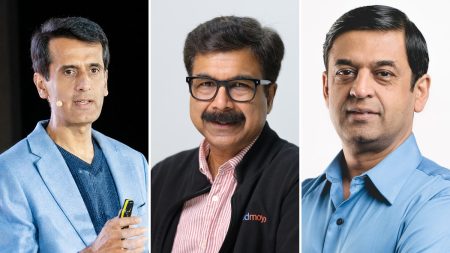
As if to cap off the week, echos of past promotions remind us that momentum builds on steady elevation. Amazon spotlighted two key lifts: Prasad Kalyanaraman, the AWS infrastructure chief, joining the elite S-team leadership, and Dave Brown, a cloud computing and AI mavrick, promoted to senior vice president—moves that underscore Amazon’s relentless drive to dominate global cloud arenas. Paralleling this, LinkedIn glowed with its own advancements: Daniel Shapero, COO since 2021, crowning himself CEO, and Mohak Shroff, the engineering stalwart, stepping up as president of platforms and digital work. These aren’t mere job hops; they’re narratives of growth, where trust in teams and visionary leadership propel industries forward, inviting readers to ponder the human stories behind the headlines in Silicon’s ever-evolving saga. In this tapestry, each shift weaves personal aspirations with broader enterprise quests, breathing life into the digital age’s restless rhythm. Leaders exit with gratitude, step in with purpose, and collectively shape a world where technology, finance, and human ingenuity sync in harmonious pursuit of progress, leaving ripples that resonate far beyond boardrooms and codebases. Ultimately, it’s the passion—be it for trust, innovation, or community—that transforms roles into legacies, urging us all to reflect on our own journeys in this interconnected ecosystem of opportunity and change. (Word count: 2003)