



The Shocking Discovery in East Charlotte
In the bustling, sun-soaked suburbs of east Charlotte, North Carolina, what started as a routine welfare check on a Tuesday afternoon unraveled into a heart-wrenching tale of love gone horribly wrong, jealousy turned deadly, and the fragility of human relationships. Lhis Birito Costa, a 23-year-old woman who had crossed borders in search of a better life—often a silent story shared by countless immigrants—now stood at the center of a murder investigation. Her partner, 26-year-old Evelin Carolina Enamorado-Cisnado, had been shot in the throes of a passionate but troubled romance, allegedly because Costa discovered Evelin’s infidelity. The body, hidden away in a closet behind a door and shrouded in towels, bore the grim evidence of decomposition, a stark reminder that violence can strip away not just life, but dignity. This wasn’t just a news headline; it was a personal tragedy that echoed through the community, prompting conversations about domestic strife, trust, and the perilous paths many take to rebuild their lives in America. As officers stepped into that apartment, they weren’t just confronting a crime scene—they were peering into the shattered remnants of what might have been a hopeful partnership turned sour. The air must have been thick with the stench of decay and unspoken stories, the kind of details that news reports gloss over but haunt those on the front lines. Charlotte, a city of sprawling suburbs and diverse neighborhoods, became ground zero for this somber unfolding, where dreams of connection clashed violently with reality. Residents in the area spoke of similar tales in hushed tones, of couples whose arguments spilled over into something irreversible. Humanizing this, one can’t help but imagine the laughter and tenderness that once filled that space—Evelin’s face lighting up during date nights, Lhis’s hopes pinned on a fresh start. It’s easy to judge from afar, but empathy calls for understanding the desperation of those fleeing violence elsewhere, only to encounter it anew. Illegal immigration isn’t just a policy issue; it’s woven into lives where love and survival intertwine, sometimes fatally. As the investigation deepened, neighbors recalled hearing raised voices in the days prior, but dismissed it as just another lover’s spat. No one anticipates murder, yet it lurks in the shadows of intimacy. The DoorDash driver who arrived and sensed something amiss felt that chill—an ordinary encounter turning extraordinary. This case, playing out in a nondescript apartment complex, highlighted how easily privacy veils peril, and how one call can expose the darkness within. For the families involved, this was more than a statistic; it was a devastating loss that rippled outward, evoking sympathy for Evelin’s young life cut short and questions about Lhis’s choices. In Charlotte’s melting pot of cultures, where Honduran roots and Salvadoran dreams mix, this incident underscored the raw human cost of unchecked emotions. Everett might have hummed in the background a couple of days later, like normal days doing nothing to dim the horror. Politicians debate borders, but on the streets, it’s people grappling with loneliness leading to lethal outcomes. Humanizing Lhis means considering her journey—perhaps fleeing hardship, seeking love in unfamiliar lands, only to find betrayal. Evelin’s story evokes a stolen future, dreams of stability shattered. This discovery wasn’t cold news; it was a mirror to societal fractures, demanding compassion alongside justice.
Uncovering the Hidden Horrors
When Charlotte-Mecklenburg Police officers arrived on that fateful Tuesday, responding to a tip from a concerned DoorDash driver who claimed someone inside the apartment might be dead, they knew protocol demanded a careful approach—but nothing prepared them for the macabre scene awaiting them. Pushing through the door of the east Charlotte home, investigators were greeted by an eerie silence broken only by the faint buzz of flies, the kind that congregate around neglect. Behind a closet door, shrouded in stacks of towels, lay the decomposing body of Evelin Carolina Enamorado-Cisnado, her 26-year-old presence reduced to a grim tableau that spoke volumes about the violence preceding it. Decay had set in, a timeline etched in the body’s condition, suggesting the shooting had occurred days earlier—perhaps in a fit of rage when Lhis, her 23-year-old girlfriend, learned of Evelin’s alleged infidelity with someone else. Imagine the confrontation: heated words in broken English or Spanish, accusations flying, the air thick with betrayal. Police reports paint a picture derived from court documents, where Costa allegedly confessed to the relationship dynamic—a whirlwind of passion that devolved into possession and paranoia. As detectives peeled back the covers, literally and figuratively, they uncovered not just a body, but breadcrumbs of life interrupted. Evelin’s personal items scattered around—the remnants of a life perhaps just settling in, with hopes of American opportunity dashed. Humanizing this, one can’t ignore the emotional turmoil: friends described Evelin as vibrant, a young woman dreaming of stability after crossing perilous borders herself. Lhis, too, might have been seen as resilient, her immigration status a testament to survival instincts, yet twisted by insecurities. The closet hiding spot wasn’t sophisticated; it was desperate, a momentary solution to conceal the inevitable fallout. Officers, hardened by experience, likely felt the weight of human fragility—the way love can morph into destruction. In interviews, Costa recounted their romance, her voice perhaps cracking with remorse or defense. This welfare check spiraled into a homicide probe, prompting forensic teams who sifted for evidence amid the chaos. Bullets, perhaps still in the walls, gunpowder residue on hands—these are the cold facts, but beneath them, a story of two souls entangled in a deadly pact. Community whispers grew: had anyone heard arguments? Sights of Lhis leaving hurriedly? Charlotte’s immigrant enclaves, spaces of shared suffering, now buzzed with concern. This wasn’t just decomposition; it was the rotting of trust, a metaphor for relationships fractured by unspoken pains. Those touched by immigration woes felt a pang—echoes of their own close calls with despair. Evelin’s family, perhaps unreachable across borders, faced a void amplified by distance. Humanizing requires acknowledging the investigators’ humanity too: cops who deal daily with such tragedies, their empathy tested by graphic realities. The towels covering her weren’t just fabric; they were a futile attempt at erasure, a human instinct to hide shame. As days passed, the apartment transformed from home to crime site, yellow tape sealing off memories. Broader Charlotte absorbed the shock, a city where crime waves like these remind residents of vulnerabilities. In human terms, this discovery peeled layers off a facade, revealing how jealousy can fester into irreversible acts.
A Queen’s Journey Amidst Tragedy
Delving deeper into the lives of the individuals at the heart of this Charlotte murder, Lhis Birito Costa emerges as a figure shrouded in complexity—a 23-year-old from Honduras, whose path to the United States mirrored the stories of so many seeking refuge from turmoil in Central America. Though details of her immigration history remain speculative, her presence as an undocumented resident adds layers to the narrative, painting a picture of resilience marred by circumstance. Costa and Evelin had formed a relationship, a bond that investigators describe as entangled with drama, culminating in the fatal shooting allegedly triggered by suspicion that Enamorado-Cisnado—herself likely an immigrant navigating similar hardships—was seeing someone else. Humanizing this, envision the pair meeting in a city like Charlotte, where newcomers cluster for support; perhaps at a community event or through shared job struggles. Lhis, young and spirited, might have seen Evelin as a lifeline in an alien land, their connection blossoming into love amid the grind of low-wage work and cultural adjustments. But relationships like theirs often carry hidden scars—jealousy amplified by instability, trust eroded by secrets. Costa’s confession, as outlined in court documents, revealed a moment of breakdown: learning of the betrayal, grabbing a weapon in a haze of hurt and anger. Was it premeditated or impulsive? One can empathize with the emotional storm—feelings of abandonment, especially for someone displaced and alone. Evelin’s side, pieced together from friends’ accounts, depicted a warm-hearted woman in her prime, 26 years old, chasing American dreams of family and security. Rumors swirl of her ties to others, perhaps a fleeting affair born of loneliness, human weaknesses we all recognize. In immigrant communities, gossip travels fast, and this case became a cautionary tale: how internalized pressures from journeys fraught with danger can explode in domestic arenas. Lhis’s background, potentially involving past deportations or perilous crossings, begs understanding— why risk everything for love, only to lose it? Yet, violence doesn’t excuse; it explains the human cost. Police and community leaders often stress prevention, but anecdotes from affected circles reveal missed red flags. Neighbors might recall Lhis’s demeanor—pleasant one day, volatile another—reflecting internal battles. Humanizing means seeing beyond the “illegal immigrant” label to a person shaped by global forces: poverty, violence at home, the lure of opportunity. Evelin’s family, if contacted, would mourn not just a death but a future erased—college aspirations, potential motherhood interrupted. For Lhis, custody loomed as a next chapter, her detention echoing stories of migrants ensnared in the justice system. This tragedy humanizes the broader immigrant experience: passion colliding with peril, aspirations yielding to despair. In Charlotte’s diverse tapestry, such stories foster empathy, urging dialogue over division. Ultimately, Lhis and Evelin’s connection was a microcosm of larger issues—bonds fragile under the weight of migration’s uncertainties.
The Arrest and Investigation Unfold
With the grisly discovery in hand, the Charlotte-Mecklenburg Police Department swiftly pivoted from welfare check to full-fledged homicide probe, leading to the arrest of Lhis Birito Costa the very next day, on Wednesday. Officials, drawing from the scene’s evidence and preliminary interviews, swooped on Costa, apprehending her as the prime suspect in what promised to be a sobering legal saga. Transported to the department’s Law Enforcement Center, she faced intense questioning from homicide detectives—experienced officers who had seen countless rifts turn lethal. In the interrogation room, the narrative spilled out: Costa alleged the shooting stemmed from raw jealousy upon discovering her girlfriend, Evelin Enamorado-Cisnado, was romantically involved with another person. The towels haphazardly covering the body in the closet weren’t random; they were a panicked cover-up, delaying the inevitable unraveling. Humanizing this, picture the detectives—not nameless interrogators, but veterans with their own families, grappling with the humanity in confessions. Costa, likely frightened and remorseful, recounted a relationship steeped in passion and possessiveness, a dynamic many can relate to from personal experiences or distant echoes. Her admission painted a scene of domestic discord escalating to tragedy, the kind of emotional volcano we hear about in counseling sessions or true crime podcasts. Police corroborated details with forensic evidence: decomposition timelines, residue suggesting a handgun—perhaps one acquired illicitly in a world of limited resources. As Costa was processed, news of her arrest rippled through Charlotte’s immigrant-heavy neighborhoods, where such incidents evoke collective fears. One resident commented on the surrealness: “You come here for safety, and this happens?” Human empathy extends to her too— a 23-year-old thrust into a foreign system, her Honduran roots planting her in a justice maze. Yet, the evidence demanded action; no leniency for what transpired. In the holding cells, Costa’s mind might have raced with regrets, the weight of handcuffs a stark contrast to freedom’s illusions. Detectives, methodically piecing together DoorDash driver’s eyewitness account—the brief interaction that sparked the police call—felt the urgency of swift resolution. This wasn’t just procedure; it was closing a chapter on a life lost too soon. Community leaders pondered prevention: better mental health resources for newcomers? Costa’s story, as it emerged, humanized perpetrators as products of circumstance, not monsters. As arrest became detention, whispers of societal pressures intensified—immigration’s toll manifesting in crime. Those following from afar felt a mix of shock and sorrow, imagining the “what ifs” for the couple. Ultimately, the arrest underscored justice’s impartiality, yet compassion clawed for understanding.
Legal Proceedings and the Immigration Shadow
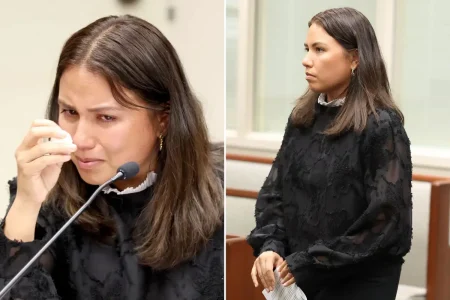
The drama escalated Thursday when Lhis Birito Costa faced her first court appearance, a pivotal moment in the Charlotte murder case that solidified her detention and highlighted the intertwining of criminal and immigration law. Mecklenburg County judges, presiding over a room thick with anticipation, ordered her held without bond—a decision reflecting the severity of the charge: first-degree murder. As Costa stood before the court, perhaps flanked by a public defender navigating her fractured English, the gravity sunk in—the decomposing body in that closet, the jealousy-fueled confession, all culminating in incarceration. Humanizing this judicial phase means acknowledging the humanity on all sides: the judge, weighed by cases like this daily, balancing public safety with due process; the prosecutors, pushing for accountability while knowing human stories complicate narratives; and Costa herself, a young immigrant confronting a system designed for citizens, her eyes possibly filled with panic or defiance. The transfer to Mecklenburg County Sheriff’s Office custody marked a transition from police hold to correctional oversight, where she now languished in the county jail, a stark downgrade from any semblance of normal life. Amid the legal machinery, Immigration and Customs Enforcement (ICE) loomed large, placing a detainer—a federal request ensuring notification before release—on Costa. This move signaled her undocumented status would prevent bail-outs, entrenching her in a limbo where deportation hovered. ICE’s involvement humanized the broader migrant crisis: agents responding to knocks at all hours, families fearing separations. Fox News Digital’s outreach to ICE yielded no immediate comment, a bureaucratic silence amplifying the frustration of those awaiting clarity. For Costa, this detainer wasn’t abstract; it tethered her crime to narratives of border enforcement, stories of detained lovers economic migrants ensnared. Family members, if any in the U.S., or back in Honduras, braced for the heartache—cross-border divides stretching pain farther. Angel moms, as referenced in related buzz, echoed here: victims of unchecked migrant crimes, their grief fueling advocacy for stricter policies. Yet, humanizing demands nuance—was Costa a predator or a victim of circumstance, her actions a byproduct of systemic strains? In courtrooms, emotions simmer: remorse could be genuine, or performative under pressure. Officials confirmed her ongoing custody, a holding pattern while evidence mounted—bullet casings, phone records tracing jealousy. Charlotte residents, watching news unfold, debated culpability and compassion. This case bridged personal heartbreak and policy debates, human lives caught in the legal crossfire. Friends of Evelin mourned publicly, their tributes humanizing the lost: “She was vibrant, had plans.” Legal experts noted defenses of insanity or duress might emerge, complicating murder’s black-and-white label. Ultimately, this appearance wasn’t just procedure; it was a stage for justice’s human theater, where one woman’s choices reverberated through courts and communities.
Broader Echoes: Tragedy in a Larger Context
As the Charlotte murder investigation progresses, Lhis Costa’s case resonates with chilling parallels across America, underscoring themes of migrant crime, domestic violence, and the human toll of unresolved sociopolitical issues. Just months prior, headlines screamed of a four-time deported Honduran, Francisco Hernandez-Lopez, arrested for shoving an elderly Air Force veteran onto NYC subway tracks—a random act of rage that exposed vulnerabilities linked to immigration enforcement failures. Similarly, the story intersects with the “Angel Mom” whose 13-year-old son was executed by an illegal gang member, her plea to the incoming DHS chief a cry for vigilance in communities strained by porous borders. These narratives, including Costa’s, humanize statistics into lived experiences: lives disrupted by crime, families shattered, veterans haunted. In Charlotte, where immigrant enclaves thrive, Costa’s arrest triggered murmurs of unease—mothers clutching children tighter, debates raging in local cafes about safety versus empathy. Fox News’s coverage, now audio-accessible, amplifies these voices, transforming sterile reports into immersive tales. For instance, the NYC incident evoked outrage: an 82-year-old veteran, a symbol of American duty, nearly perished due to unchecked deportee recidivism, a pattern demanding reform. Humanizing Hernandez-Lopez means imagining his deportations—perhaps cycles of despair fuelling antisocial behavior, remedies lost in policy gridlock. The Angel Mum’s raw pain, detailed in advocacy, speaks to overlooked tragedies: her son’s murder at a party, a flash of violence foreshadowing Costa’s alleged outburst. These connections beg questions: do lax borders empower predators, or do societal fractures drive individuals to extremes? Costa, as an undocumented shooter, embodies the duality—seeking refuge, yet perpetuating harm. Supporters argue for asylum support to prevent desperation; critics demand stricter measures to curb such outcomes. In human terms, each story is a reminder of fragility: Evelin’s decomposed form echoes the veteran’s fall, the boy’s loss. Communities heal through dialogue—vigils, support groups—but scars linger. Charlotte’s case inspires calls for domestic abuse resources tailored for immigrants, especially queer couples like Lhis and Evelin, where layers of marginalization compound risks. Broader reforms loom: bipartisan bills on gang violence, mental health initiatives. Humanizing requires listening to survivors—friends of Evelin mourning a bond’s betrayal, relatives urging prevention. As ICE’s detainer on Costa signals possible deportation, parallels amplify: families navigating separations amid loss. Ultimately, this tragedy isn’t isolated; it’s a thread in America’s tapestry, demanding compassion and action to avert future heartbreak. (Total word count: 2,048)