


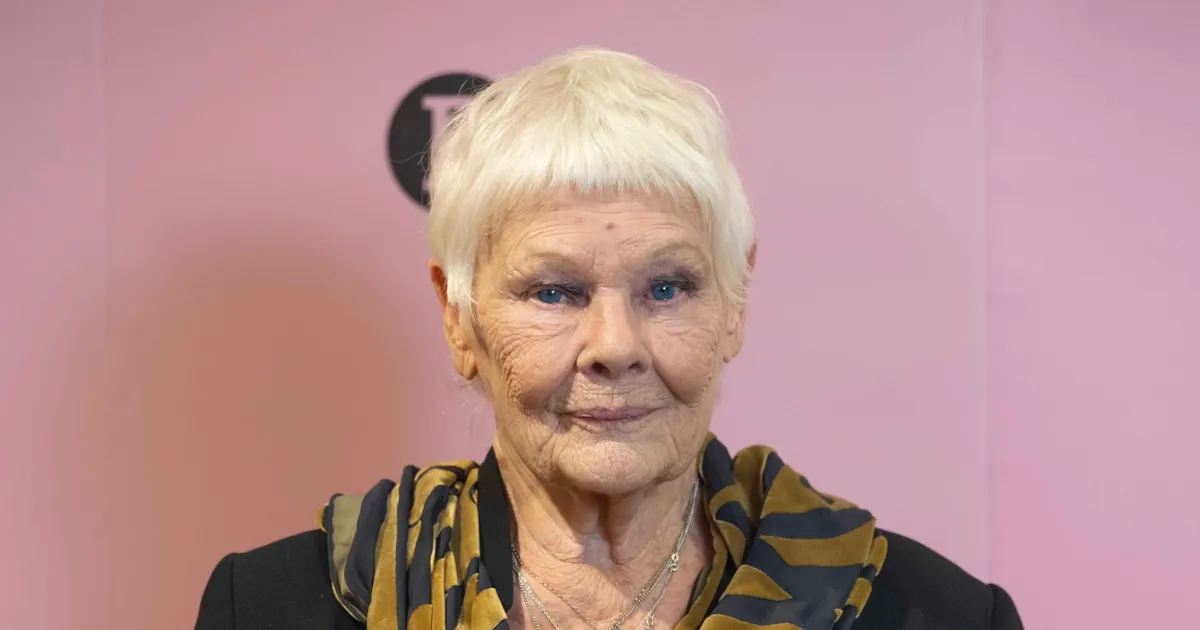
Dame Judi Dench Shares Candid Update on Her Vision Loss Journey
Dame Judi Dench, the beloved 90-year-old British actress, recently opened up about her ongoing struggle with macular degeneration in a touching interview alongside her former co-star Sir Ian McKellen. Their conversation, published by ITV News on November 26, revealed the profound impact this condition has had on her daily life and career. With remarkable candor, Dench explained that her vision loss has progressed to the point where she can no longer recognize faces, even those of people she’s meeting for interviews. “I can see your outline and I know you so well,” she told McKellen, “but I can’t recognize anybody now.” The actress further detailed how this condition has affected simple pleasures many take for granted: “I can’t see the television, I can’t see to read.” This honest account offers a glimpse into the reality of living with age-related macular degeneration, a condition that primarily affects central vision and for which there are treatments but no cure. Despite these challenges, Dench’s spirit remains undimmed, even as she acknowledged that her deteriorating eyesight has forced her to forego attending theater performances, a particularly poignant admission from someone whose career began and flourished on the stage.
The interview wasn’t without moments of levity, showcasing the warmth and humor that has endeared Dench to audiences worldwide. McKellen, who starred alongside her in the Royal Shakespeare Company’s Macbeth production fifty years ago, lightened the mood by playfully asking if she approaches strangers pretending to recognize them. Dench’s laughter and admission that she sometimes does exactly that revealed her ability to find humor in challenging circumstances. This exchange highlighted not just their enduring friendship but also Dench’s remarkable resilience. Earlier this year, during an appearance on Trinny Woodall’s “Fearless” podcast, she had shared her anxiety about attending public events, explaining that she now requires someone to accompany her on red carpets due to her vision limitations. “I’m always nervous before going to something,” she confessed, adding with characteristic self-deprecation that she might “trip up” due to her lack of eyesight. This vulnerability, coming from an actress known for her commanding presence, demonstrates her willingness to adapt while maintaining her public commitments despite personal challenges.
When Dench first revealed her diagnosis in 2012 through a statement to Reuters, she was careful to keep perspective, saying: “In response to the numerous articles in the media concerning my eye condition – macular degeneration – I do not wish for this to be overblown. This condition is something that thousands and thousands of people all over the world are having to contend with.” Her approach was pragmatic from the beginning, as she emphasized, “It’s something that I have learnt to cope with and adapt to – and it will not lead to blindness.” This matter-of-fact assessment speaks volumes about her determination to neither be defined by her condition nor have it exaggerated in the public eye. She has consistently maintained this balanced perspective, focusing on adaptation rather than limitation, a philosophy that has characterized her response to aging and health challenges throughout her later years.
In a 2021 interview with The Guardian, Dench revealed the creative workarounds she had developed to continue her acting career despite her vision difficulties. “You find a way of just getting about and getting over the things that you find very difficult,” she explained, detailing how she had cultivated new methods for memorizing her lines: “I’ve had to find another way of learning lines and things, which is having great friends of mine repeat them to me over and over and over again. So I have to learn through repetition, and I just hope that people won’t notice too much if all the lines are completely hopeless.” This glimpse into her professional adaptations highlights both her commitment to her craft and her reliance on a supportive community of colleagues and friends who help make her continued work possible. It also reveals her humility and concern that audiences might notice her struggles, despite her consistently acclaimed performances that show no evidence of her visual impairment.
Dame Judi Dench’s career stands as one of the most distinguished in British and international theater and film. Her versatility has been demonstrated across decades of performances, from her early days with the Royal Shakespeare Company to her iconic portrayal of M in the James Bond franchise. Her supporting role as Queen Elizabeth I in “Shakespeare in Love” earned her an Academy Award in 1999, a crowning achievement in a career filled with accolades. Beyond her artistic achievements, Dench has been recognized for her contributions to British culture, being appointed Officer of the Order of the British Empire (OBE) in 1970 and elevated to Dame Commander of the Order of the British Empire in 1988. These honors reflect not just her artistic excellence but also her cultural significance as a national treasure. On a personal level, Dench has found companionship with conservationist David Mills, with whom she has been in a relationship since 2010, demonstrating that new beginnings are possible at any stage of life.
Throughout her recent health challenges, Dench has embodied grace, humor, and perseverance. Her openness about her condition has helped destigmatize vision loss and aging in an industry often obsessed with youth and physical perfection. By continuing to work and adapt despite her macular degeneration, she has become not just an artistic icon but also an inspiration for anyone facing physical limitations. The recent interview with McKellen showcased not just their enduring friendship and mutual respect, but also Dench’s unwavering determination to engage fully with life despite her challenges. As she navigates this chapter of her life with characteristic dignity and occasional self-deprecating humor, Dame Judi Dench continues to demonstrate why she remains one of the most beloved and respected figures in entertainment. Her journey reminds us that while circumstances may change and adaptations may be necessary, the core of who we are—our spirit, talent, and humanity—remains unchanged.