


For decades, the concept of a borderless Europe stood not only as an economic triumph but also as a profound moral achievement—a testament to a post-war continent that had chosen unity, compassion, and open arms over the division and suspicion of the past. From the sun-drenched shores of the Mediterranean to the historic cities of the north, the promise of free movement and humanitarian sanctuary became central to the European identity, attracting millions seeking a better life, safety from conflict, and a chance to build a future under the banner of Western democracy. However, beneath this optimistic surface, a quiet but incredibly powerful shift was taking place among the continent’s working-class and everyday citizens, who began to feel that their local communities, public services, and cultural stability were being transformed far too rapidly, and entirely without their consent or input. These ordinary men and women watched as their neighborhoods shifted in character and their local infrastructure struggled under the weight of rapid demographic changes, while their concerns were frequently dismissed by political elites in Brussels as mere resistance to progress. This growing disconnect between the governed and those who govern created a volatile political landscape, eventually drawing the attention of global leaders, including former United States President Donald Trump, who used his platform at the United Nations General Assembly to deliver a stark warning to European heads of state, declaring that their nations were being “destroyed” and “invaded” by unchecked, undocumented migration on a scale never seen before. Prompted by this rising tide of domestic outrage, the growing strength of populist political parties at the ballot box, and a painful realization that the status quo was no longer sustainable, the European Union has finally taken a massive, unprecedented step toward reclaiming control by introducing a sweeping new package of migration and asylum rules across its twenty-seven member states.
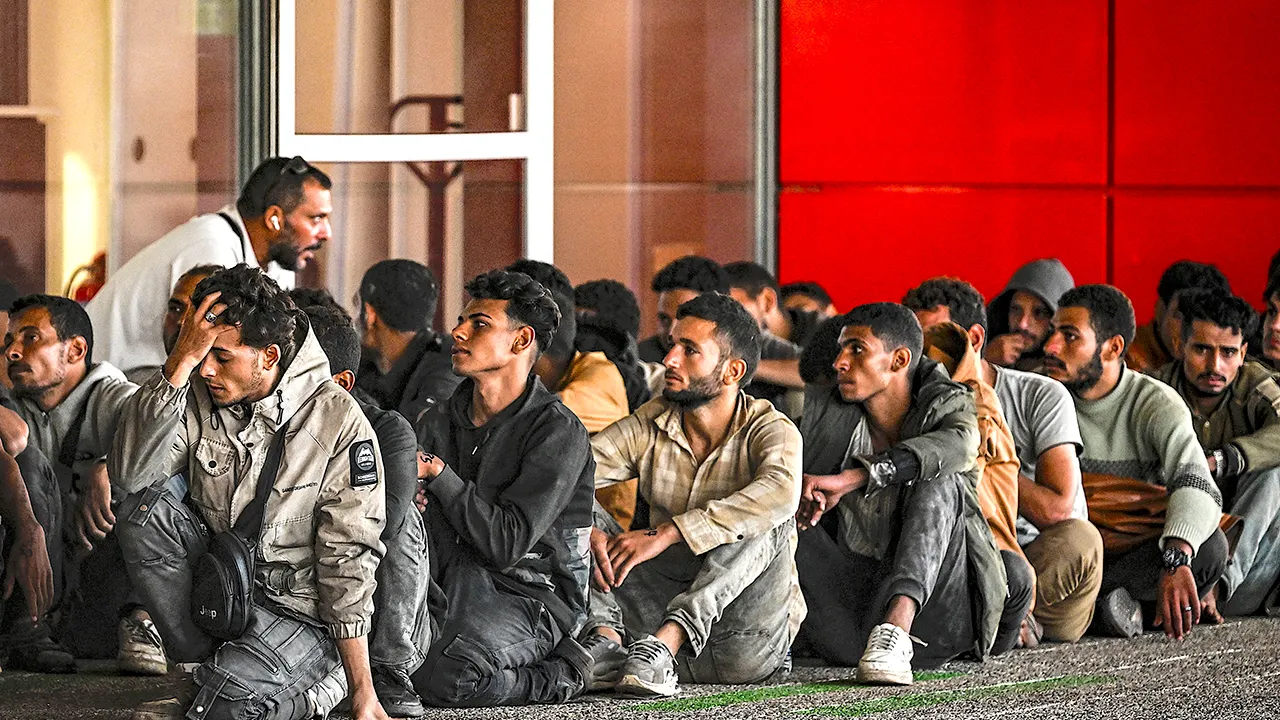
The newly minted agreement, which was carefully hammered out through intense negotiations among the European Union’s three primary governing institutions, represents a fundamental and uncompromising shift in how the continent handles the arrival of undocumented migrants at its outer borders. No longer will asylum seekers be allowed to enter European territory while their claims slowly wind their way through slow, backlogged legal systems; instead, the new protocols mandate immediate, highly rigorous preliminary screenings right at the border, designed to verify identities, assess potential security threats, and conduct thorough health evaluations before any entry is officially permitted. To enforce this strict new regime, the EU is investing heavily in a digital, technocratic shield that relies on advanced biometric data, using cutting-edge facial recognition technology and comprehensive fingerprinting databases to meticulously track and record every single non-EU citizen as they enter or exit the bloc. For those whose applications are deemed invalid or who are found to have entered illegally, the consequences will be swift and dramatic, as the new rules pave the way for the creation of offshore return hubs and detention centers situated in non-EU countries, where migrants can be quickly transferred and housed while their deportation proceedings are finalized. This strategic embrace of offshoring is intended to act as a powerful psychological deterrent, systematically dismantling the perception that Europe is a soft touch for undocumented migration or an easy destination for the human trafficking cartels that make billions of dollars exploiting desperate travelers. By demanding total solidarity and mandatory information sharing among all twenty-seven member nations, Brussels hopes to construct an impenetrable, unified continental defense system that takes the burden off individual border countries and establishes a centralized, high-tech fortress of control.
At the heart of the intense, often bitter debates surrounding these new border regimes lies a deeply personal and emotional conflict concerning demographic change, integration, and the preservation of Western culture. Experts like Alan Mendoza, the founder and executive director of the London-based Henry Jackson Society, argue that Europe is currently facing a profound demographic crisis that is fundamentally altering its cultural landscape, leading to a situation where large numbers of arriving migrants do not, and in some cases cannot, integrate into the local customs and historic traditions of their host countries. This lack of integration has created immense social friction, leaving long-term residents feeling like strangers in their own hometowns and fueling a growing sense of alienation that is fracturing the social cohesion necessary for a healthy democracy. Even in the United Kingdom, which chose to leave the European Union in part to regain absolute control of its national borders, the political establishment continues to struggle with the implementation of its own offshore holding policies, leaving many British voters frustrated that their nation remains highly vulnerable to illegal island crossings and is perceived as overly lenient. This ongoing friction highlights a fundamental societal truth: when local populations feel that their heritage and rules of law are being disregarded by an influx of newcomers who do not share their foundational values, hospitality inevitably hardens into self-defense, fueling a powerful grassroots populist movement that demands absolute borders and native-first policies. The debate has transcended mere economics, evolving into a battle for the soul and preservation of Europe’s historic identity, with critics warning that if democratic leaders wait too long to resolve these issues, the social fabric of the continent may be permanently and irreversibly damaged.
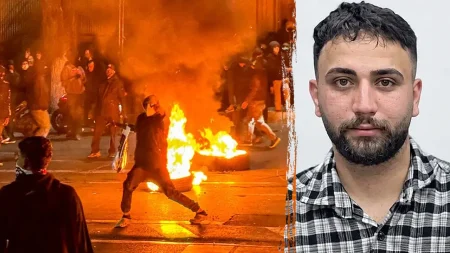
This sense of an existential crisis has found powerful, polarizing expression in the rhetoric of prominent Western political figures, who increasingly frame the migration debate as a literal struggle for the survival of Western civilization. A tragic focal point for this brewing anger emerged with the death of Henry Nowak, an eighteen-year-old British man whose passing was publicly mourned by United States Vice President JD Vance as a devastating symbol of a dying civilization—one that has been abandoned and handcuffed by its own progressive elites who prioritize the comfort of foreign arrivals over the protection of their own citizens. Vance’s emotionally charged, highly controversial statement accused European leaders of succumbing to a paralyzing politics of self-hatred, allowing a mass invasion of migrants, many of whom harbor a deep contempt for the values, laws, and history of the Western world. Similarly, during a commemorative event on the historic beaches of D-Day in France, Secretary of War Pete Hegseth drew a stark, historical parallel between the physical invasions of the mid-twentieth century and the modern influx of migrant boats arriving on the shores of Italy, Greece, Bulgaria, and Spain, questioning when European capitals will finally find the courage to halt this quiet occupation. By framing the issue through the lens of national defense and civilizational collapse, these leaders are directly tapping into a profound, raw sense of grief, betrayal, and fear felt by millions of ordinary families who feel unprotected by their governments and vulnerable to the rising tide of crime and social instability, turning every local tragedy into a national battleground over the future of the nation.
Yet, even as the European Union strives to present a unified, hardened stance on external border security, deep internal fractures continue to threaten the cohesion of the bloc, perhaps most vividly demonstrated by Spain’s controversial decision to break ranks and legalize half a million undocumented migrants currently living within its territory. This dramatic move, championed by Spain’s left-leaning government, stands in stark contrast to the restrictive spirit of the new EU regulations and has ignited a fiery debate over the economic, social, and moral consequences of mass legalization. Local media figures, such as Javier Negre, the owner of La Derecha Diario, have raised serious alarms about this policy, arguing that granting legal status and access to extensive social security benefits to hundreds of thousands of undocumented individuals acts as an irresistible magnet that will only encourage further illegal border crossings. Negre also pointed to the massive, highly lucrative influence of non-governmental organizations that have turned the search-and-rescue and resettlement of migrants into a highly profitable enterprise, effectively subsidizing and promoting undocumented entry at the expense of national taxpayers. Moreover, this policy disconnect has visible, real-world consequences for ordinary Spanish citizens, who have observed a disturbing rise in petty crimes, such as the theft of mobile phones and wallets, often attributed to young, unintegrated migrants who are left to wander the streets without jobs, social ties, or respect for local laws. This situation highlights the immense practical dangers of mass legalization without a robust, realistic framework for assimilation, suggesting that simply providing papers does not resolve the deep-seated cultural and economic friction but instead intensifies the feeling of betrayal among those who play by the rules.
In stark opposition to the restrictive measures adopted by Brussels, a wave of profound moral outrage has erupted from human rights organizations, progressive politicians, and non-governmental groups who view the new EU migration pact as a catastrophic betrayal of humanitarian values. Prominent left-wing figures, such as French Green Party politician Mélissa Camara, have vehemently condemned the agreement as a historic setback for the European Union, characterizing the legalization of offshore detention hubs, the detention of migrant children, and the implementation of aggressive, ICE-style home searches as a complete capitulation to a nationalistic and xenophobic ideology. To these critics, the new policy represents a dark, cold transition toward a fortress Europe that prioritized high-tech walls and physical exclusion over the preservation of human life and the sacred right of asylum for those fleeing war, torture, and climate disaster. This intense battle of ideas leaves Europe at a historic and deeply unsettling crossroads, caught between two entirely incompatible visions of its future: one that prioritizes strict national sovereignty, cultural cohesion, and border security, and another that champions unconditional humanitarian compassion, global solidarity, and open migration. As these controversial rules move toward final legislative ratification and nationwide enforcement, the citizens of Europe find themselves navigating a deeply fractured society, forced to confront the painful reality that their efforts to secure their borders may ultimately come at the cost of the very values of freedom, tolerance, and human dignity that they have long claimed to represent.