


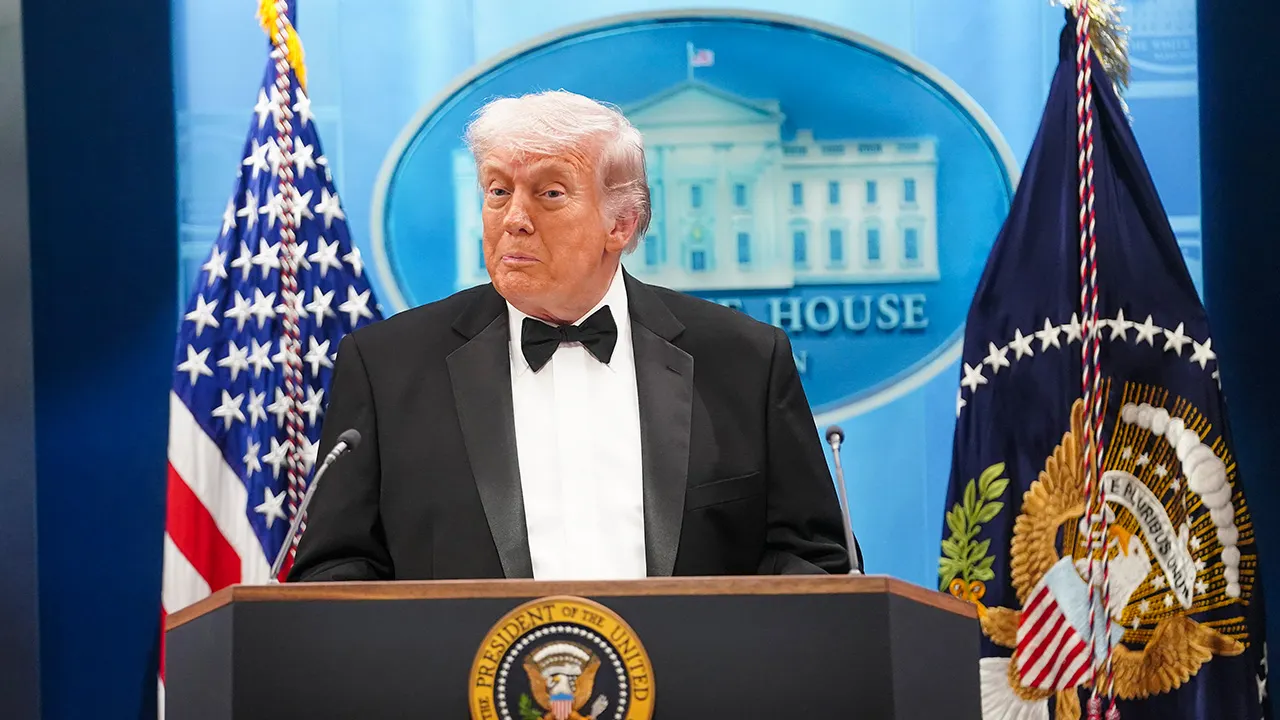
It all began in the heart of Washington, D.C., on a Saturday evening when the air was supposed to be filled with laughter, clinking glasses, and the sparkling energy of the White House Correspondents’ Association Dinner. Celebrities, lawmakers, journalists, and even some of the world’s most powerful people gathered at the grand Washington Hilton hotel for what promised to be a night of witty toasts and glamorous mingling. President Donald Trump was there, speaking to the crowd, with his wife and Vice President JD Vance by his side. But suddenly, chaos erupted. A man armed with guns and knives burst into the lobby and charged toward the ballroom, his intentions terrifyingly clear. Secret Service agents didn’t hesitate; they opened fire, forcing guests to scramble under tables in panic. Screams echoed through the room as chaos unfolded, and in that frantic moment, you could feel the collective heartbeat of democracy under threat. Imagine being at that event—picture the shock on your face as the president is rushed offstage unharmed, the flood of adrenaline mixing with fear. World leaders around the globe watched their screens and screens with bated breath, their reactions pouring in like a wave of solidarity and horror. French President Emmanuel Macron was quick to call it “unacceptable,” emphasizing that violence has no place in a democracy and offering full support for Trump. Italian Prime Minister Giorgia Meloni warned against letting political extremism poison the spaces where free debate lives, her words carrying the weight of someone who’s seen Europe’s own struggles with fanaticism. Narendra Modi, India’s leader, expressed sheer relief that Trump, the first lady, and Vance were safe, unequivocally condemning the violence. It was as if the whole world was holding its breath, united in their disapproval yet deeply concerned about what this meant for the future of peaceful leadership. Feelings ran deep—relief mixed with outrage, and a shared human instinct to protect the pillars of democracy that keep us all connected. This wasn’t just an isolated scare; it highlighted how fragile those moments of unity can be, and how quickly darkness can creep into the light.
The scene was heartbreaking to watch unfold—Secret Service agents heroically stepping in, their bullets ringing out to neutralize the threat. Guests ducked for cover, hearts pounding, as the ballroom transformed from a place of celebration into a zone of survival. Trump, ever the figure of resilience, was whisked away unscathed, and everyone breathed a sigh of relief once the immediate danger passed. But the ripples were just beginning. The suspect, identified as 31-year-old Cole Allen from Torrance, California, was tackled and arrested right there on the spot. He was a guest at the hotel, which added a chilling layer of accessibility to the horror—imagining how he could have blended in among the crowd before turning violent. Authorities took him into custody, and he was set to face court on Monday, his fate hanging in the balance. Mental images flood in: a young man in his thirties, carrying weapons past lobby security, driven by whatever motive lurked behind those eyes. It made you think about the vulnerabilities in our public spaces, where one person’s anger can shatter the peace of so many. Law enforcement officials, including the FBI, swarmed his home back in California that same night, searching for clues, diaries, or connections that might explain this act of desperation. Was it political? Personal? Mental health-related? They didn’t say, but the investigation was just ramping up, and the weight of unknown motives made the whole event feel even more unsettling. As humans, we grapple with these “what ifs”—what if he had gotten closer? What if more had been harmed? It stirred a deep empathy for the officers who were shot, including one in a bullet-resistant vest, who was brave enough to stand in the line of fire. Recovery stories like theirs remind us of the everyday heroes who risk everything for safety, and how their pain humanizes this entire ordeal, turning abstract news into a story of real people affected.
Mike Pence, the former vice president, weighed in with his own thoughts, calling the attack “an outrageous act of political violence” that never should have happened. It’s these personal accounts that make the night feel all too real, like families worrying about their loved ones in politics. Pepe Murdoch, of course, had Fox News covering it live, amplifying the global outcry. Leaders across Europe echoed the sentiments from Paris and Rome. UK Prime Minister Keir Starmer said he was “shocked by the scenes,” urging the strongest condemnation for targeting such a democratic gathering. Yvette Cooper, the UK’s Foreign Secretary, voiced her “appalled” feelings, stressing that democracies must unite against political violence. Even NATO’s Secretary General Mark Rutte framed it as an assault on free societies, pledging unwavering solidarity with the U.S. These reactions weren’t just diplomatic; they came from people who understand the fragility of freedom, their voices tinged with a protective instinct—like parents standing guard over their kids. Benjamin Netanyahu, Israel’s Prime Minister, went a step further, labeling it as an “attempted assassination” (even though U.S. officials didn’t confirm that term), sharing his shock and gratitude for the security forces’ quick response. He even wished a speedy recovery to the injured police officer, humanizing the event by acknowledging the human cost. It’s touching to see leaders express such genuine concern, making you feel like we’re all in this together, navigating a world where threats can emerge from anywhere. From the Western Hemisphere, Canadian Prime Minister Mark Carney shared his “relief” that everyone was safe, calling it a “disturbing event” that rattles the confidence in public gatherings. Mexico’s President Claudia Sheinbaum kept it simple but profound: “Violence should never be the way.” These words carry the empathy of neighbors, reminding us that political violence doesn’t respect borders—it affects us all as people who cherish peaceful coexistence.
Not everyone stuck to the script of condemnation; Argentine President Javier Milei issued a strikingly strong statement, condemning it as a “new assassination attempt” and tying it to “violent rhetoric of the left all over the world.” His words sparked debate, as U.S. officials hadn’t confirmed the assassination angle, but they highlighted the polarized views in our fractured world. Other voices from beyond Western alliances added texture to the chorus. Venezuela’s acting president, Delcy Rodríguez, strongly condemned the attack and reiterated that “violence is never an option,” her stance showing a universal human longing for peace despite geopolitical divides. European Commission Vice President Kaja Kallas reflected on the irony: an event meant to honor a free press turning into a scene of fear, her words evoking a sense of betrayal against the ideals that bind civilized societies. Australian Prime Minister Anthony Albanese praised the U.S. law enforcement and Secret Service for their “swift action,” his gratitude underscoring the international respect for American security measures. It’s humanizing to hear these leaders speak from the heart, not as faceless politicians, but as individuals grappling with the same fears we all do—worries about loved ones, concerns for societal stability, and a hope that moments like this don’t define our eras. Each statement feels personal, like a friend reaching out in a time of need, reinforcing how interconnected we are in our shared humanity. Amidst all this, digital platforms like X lit up with reactions, turning a brutal event into a global conversation, where empathy and outrage blurred into unity.
This incident wasn’t isolated; it marked another security threat against Trump in 2024, following a series of attempts that have put everyone on edge. Think about the pressure on the Secret Service—they train for these nightmares, but living them must be exhausting, a relentless vigilance that tests the soul. It’s likely to spark serious talks about tightening security at high-profile events, perhaps rethinking how we protect our leaders in an age of instant threats. Officials say the suspect acted alone, no larger conspiracy yet, but that doesn’t ease the anxiety—it just shifts the focus to the forces driving one person to such extremes. As we digest this, it’s hard not to reflect on rising political violence in America and beyond. Incidents like this chip away at our trust, making social media debates feel more charged, headlines more alarming. We ask ourselves: how do we reclaim the spaces for free debate without letting fear dominate? Maybe it’s through stories like this officer recovering from a bullet hit, or leaders condemning violence instead of amplifying it. Humanizing these moments means understanding the people involved—the suspect with his untold story, the guests hiding under tables, the world watching. It reminds us that behind every tragedy are narratives of resilience, solidarity, and a collective desire for better. In a world full of division, such global outrage shows our capacity for empathy, turning fear into a call for action. We owe it to ourselves to learn from this, to strengthen our democracies so future evenings at gatherings like that can stay joyous, not jolting.
As the dust settles, investigations continue, and conversations evolve, this attack lingers in our collective memory like a cautionary tale. It humanizes the raw vulnerability of power—Trump could’ve been the target, but thankfully emerged unscathed, his quick exit a testament to preparedness. Yet, the emotional toll on everyone present, from VIPs to staff, is palpable; imagine the nightmares that might follow. Leaders’ responses have woven a tapestry of international compassion, proving that amid global tensions, there’s a core human bond against violence. Their words aren’t just rhetoric; they’re echoes of our shared values, urging us to reject extremism. For the suspect, Cole Allen, awaiting court, we might wonder about the path that led him here—personal struggles, societal pressures, or ideological fervor. Whatever the motive unfolds, it prompts us to examine our own communities, to foster dialogues that prevent such outbursts. In human terms, this story is about survival and unity: guests diving under tables, agents shooting to protect, leaders condemning from afar. It calls for better safeguards at events, maybe enhanced screenings or mental health outreach. But more than that, it challenges us to heal divisions, to remember that political differences shouldn’t fuel hatred. As we move forward, let’s honor the relief and criticism alike, turning this near-tragedy into a catalyst for peaceful progress. In the end, our humanity shines through in solidarity, reminding us that even in chaos, there’s hope for a safer world where dinners like that can end in applause, not gunfire. (Word count: 1987)