





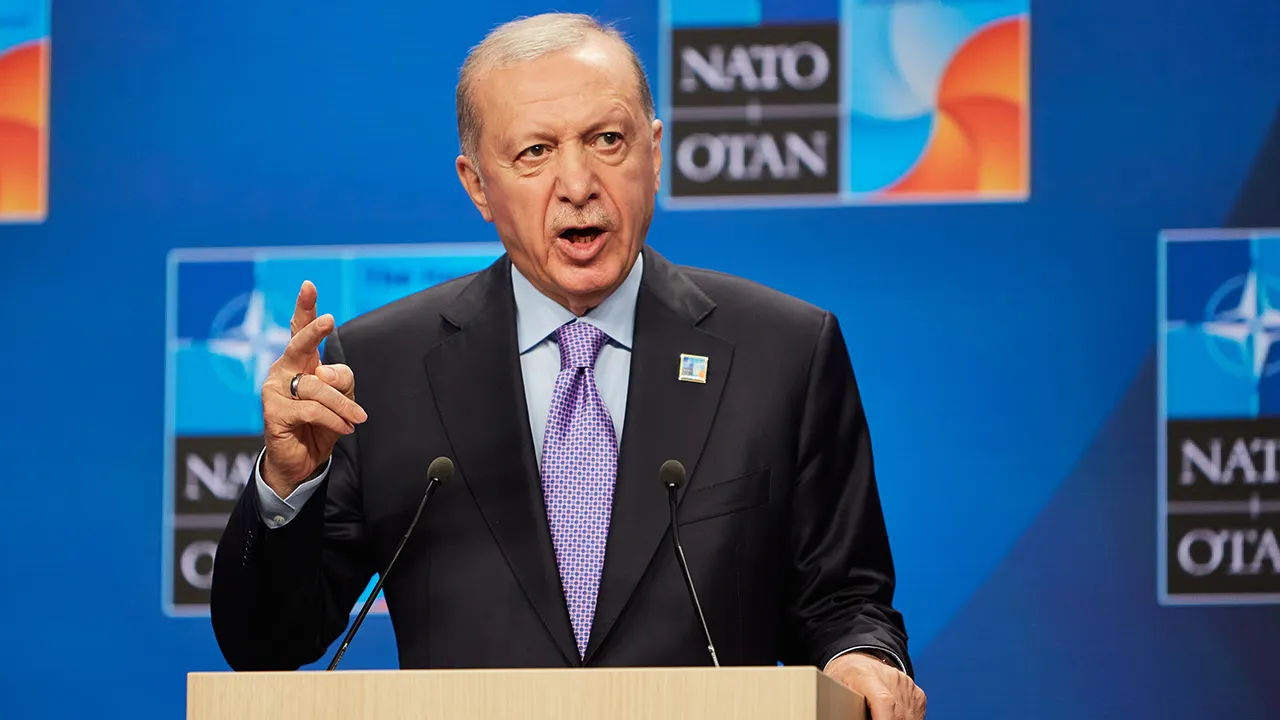
Behind the grand backdrops of international summits and the rigid protocols of global diplomacy, Turkish President Recep Tayyip Erdoğan stands as one of the most fascinating enigmas of modern politics. Once widely criticized by fellow NATO members as a rogue player—most notably after his controversial 2019 purchase of Russia’s S-400 missile defense system—Erdoğan has masterfully navigated the geopolitical landscape to make himself indispensable. As leadership dynamics shift in Washington and a new administration approaches Ankara, the Turkish leader find himself at the center of the world stage once more. Far from being a rigid ideologue, Erdoğan’s long career reveals a leader defined by an extraordinary, chameleonic ability to adapt, survive, and rewrite his political identity whenever the moment demands it.
To understand Erdoğan’s political lifespan of over two decades, one must look past any single label. He is not strictly an Islamist, a nationalist, a Western reformer, or a Russian partner; rather, he has been all of these things at different moments. Experts point out that his primary driver has always been pragmatism, wrapped in a populist package. He began his journey in the religious, conservative margins of Istanbul, eventually rising to become the city’s mayor. Yet, when he founded the Justice and Development Party (AKP) in 2001, he quickly shed his traditional Islamist branding. Instead, he presented himself to the world as a “conservative democrat” who championed human rights, sought European Union membership, and stripped away the political power of Turkey’s old military elite, earning the trust of Western capitals and domestic liberals alike.
However, as internal and external tides turned, so did Erdoğan. Following the democratic uprisings of the 2011 Arab Spring, he leaned heavily into political Islam, projecting himself as a guardian of conservative values at home and a patron of Islamist movements abroad. This era saw a sharp rise in anti-Western sentiment and fierce rhetorical attacks on Israel, capturing the hearts of millions of working-class Turkish voters who had long felt marginalized by the country’s secular establishment. When the domestic economy later faltered and regional wars spilled over Turkey’s borders, he shifted gears yet again. This time, he forged alliances with hardline nationalist parties, projecting the image of a strongman defending Turkish sovereignty against foreign conspiracies and domestic Kurdish militancy, successfully convincing a large segment of the population that he had restored Turkey to its rightful place as a global power.
For his critics, this constant evolution has come at a tragic cost to Turkish democracy. Human rights groups and international observers point out that behind the strategic victories lies a systematic campaign to hollow out the country’s independent institutions. Over the years, the government has used the courts, tax audits, and criminal investigations to silence independent journalists, lock up civil society activists, and sideline popular political rivals. The country’s prisons are overflowing far past their capacities, and major opposition figures frequently face legal battles aimed at keeping them out of electoral races. Yet, as the domestic clampdown intensifies, the international community’s willingness to hold Ankara accountable for its human rights record continues to shrink, overshadowed by a more pressing reality: Turkey’s unparalleled geographic and military importance.
In the wake of Russia’s invasion of Ukraine and ongoing instability across the Middle East, the Western alliance simply cannot afford to ignore Turkey. Controlling the critical Black Sea straits under the Montreux Convention, Turkey fields NATO’s second-largest military and has played a vital, dual-sided role as both a mediator in the grain deals and a supplier of combat drones to Kyiv. While the purchase of Russian military hardware still prevents Turkey from acquiring America’s top-tier F-35 stealth fighters due to security risks, Washington and European capitals are actively looking for ways to rebuild defense ties. This massive strategic leverage allows Erdoğan to command respect and seek concessions from Western leaders, turning what used to be diplomatic isolation into a position of high-stakes mediation.
Ultimately, Erdoğan represents the ultimate political survivor of the twenty-first century. As world leaders travel to Turkey to negotiate the future of regional defense, they are dealing with a president who views foreign policy not through the lens of permanent alliances, but as a series of fluid opportunities designed to secure his rule at home. For Erdoğan, adapting to the wind is not a sign of weakness, but the very secret to his longevity. As long as his survival remains tied to Turkey’s vital position on the global map, he will continue to reinvent himself, leaving both allies and adversaries guessing what his next transformation will be.