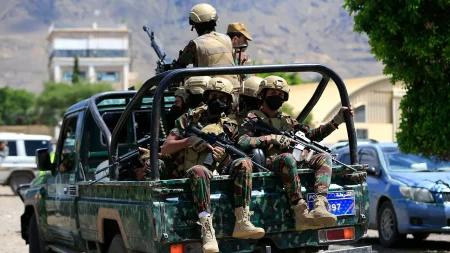






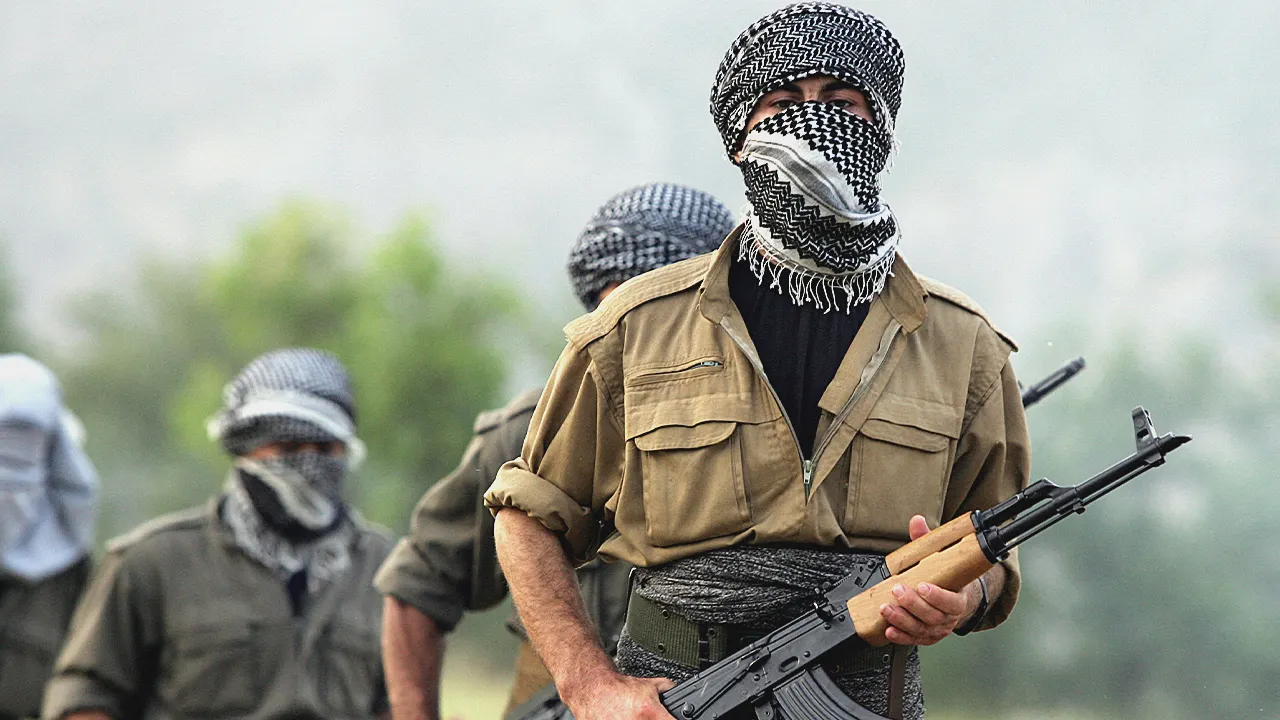
The historically rugged and politically neglected mountain ranges of western and northwestern Iran have once again erupted into active combat zones, signaling a highly volatile acceleration of a long-simmering Kurdish insurgency that threatens the internal stability of the clerical regime. In recent days, a series of intensive, coordinated clashes between the Islamic Revolutionary Guard Corps (IRGC) and local opposition groups has shattered the uneasy peace of towns like Paveh, Baneh, Mahabad, and Marivan, turning quiet civilian neighborhoods and security checkpoints into bullet-ridden warzones. This is not merely a clinical, abstract skirmish of state power; the daily human cost is mounting rapidly and painfully, symbolized by a devastating attack on a police checkpoint in the border city of Baneh that left security forces dead and wounded several civilians, including a three-year-old girl caught in the crossfire of this relentless conflict. In the border enclave of Paveh within Kermanshah Province, a newly visible, highly motivated armed group calling itself Xore Heva, or the “Sun of Hope,” proudly claimed responsibility for a deadly ambush on Iranian security forces, framing their actions as direct, armed retribution. The group declared that their violence is a righteous reaction to the state’s relentless, brutal crackdown on the massive, nationwide protests sparked by the tragic 2022 death of Mahsa Amini. Amini, a twenty-two-year-old Kurdish woman, died in the custody of Iran’s notorious morality police for allegedly failing to wear her mandatory hijab correctly, an event that ignited a firestorm of national grief and feminist resistance that has never truly gone out. Today, these fresh clashes highlight how that deep-running collective trauma, historical marginalization, and systemic outrage remain raw and ready to boil over, transforming ordinary citizens into defensive fighters who see no other path to survival or justice within their surrounding communities, with the haunting imagery of a wounded three-year-old girl standing as a tragic testament to the collateral damage of this long-simmering ethnic and political struggle.
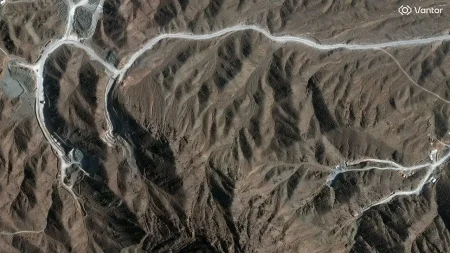
To fully understand the gravity of these emerging skirmishes, one must look at the historical plight of the Kurds, who constitute one of the largest stateless ethnic groups in the entire Middle East, their ancestral homelands arbitrarily carved up across the borders of Iran, Iraq, Syria, and Turkey. Within the Islamic Republic of Iran, millions of Kurds occupy the majestic but economically starved western mountains, a rugged terrain that has historically served as both a sanctuary for cultural dissent and a target for heavy-handed state pacification. For decades, Iranian Kurds have lived under a system that human rights advocates characterize as structural subjugation, marked by disproportionate rates of state executions, forced cultural assimilation, the silencing of their native tongue, and severe economic underinvestment designed to keep the region weak, isolated, and dependent. This systematic oppression actively extends into the state’s educational curriculum, meaning that denied the right to be educated in their mother tongue, Kurdish children grow up in a system designed to strip them of their heritage from a very young age. In stark contrast, the clerical regime in Tehran views these minority borderlands through a paranoid, militarized lens of national security, branding all active Kurdish political and armed factions as existential, separatist threats designed to fracture the Islamic Republic from within. Groups like the Party for a Free Life in Kurdistan (PJAK) have engaged in low-intensity, periodic warfare with the IRGC for years along these mountainous borders, a standoff driven not simply by a desire for ethnic preservation, but by a profound yearning for basic civil liberties, regional autonomy, and an end to the militarized occupation of their hometowns by the state. This deep-seated political struggle is continuously aggravated by the IRGC, which acts not only as a defense force but as an iron-fisted occupying power, systematically suppressing any expression of Kurdish cultural identity.
This underlying sense of societal exhaustion and burning injustice is what makes the current wave of violence feel distinct and deeply worrisome to regional observers who monitor the region’s fragile peace. According to Jino Victoria Doabi, the head of international relations for Hiwa, a prominent Kurdish-led human rights group, these widespread, geographically scattered altercations suggest a coordinated escalation rather than a series of disconnected, random border skirmishes. Doabi emphasizes that the psychological state of ordinary Kurdish civilians in Iran has reached a dangerous tipping point, heavily influenced by an overarching feeling of abandonment, isolation, and absolute defenselessness against systemic inequality. She notes that the young generation of Kurds, having witnessed their friends and relatives disappear into the regime’s grim prison system, have lost all faith in peaceful reform and are increasingly supportive of armed resistance. The local population is profoundly demoralized by the reality that the IRGC can launch heavy artillery barrages, conduct arbitrary arrests of environmentalists, and execute young local activists with absolute impunity while the international community looks away. There is a deep, agonizing frustration that while the regime can systematically dismantle Kurdish schools, suppress local assemblies, and launch lethal strikes on opposition bases, any defensive response from Kurdish fighters is instantly framed by state authorities as unprovoked terrorism. The geographic spread of these clashes—stretching across several provinces and uniting disparate factions—mirrors the collective exhaustion of a community that has run out of peaceful avenues to demand safety, dignity, and basic human rights, choosing instead to stand their ground against a state that relies exclusively on fear to maintain control.
Adding a layer of intense geopolitical anxiety to this volatile domestic mix is the high-stakes chess game of international diplomacy, as reports emerge that Iran and the United States are quietly moving closer toward a fragile memorandum of understanding. Iranian President Masoud Pezeshkian recently indicated that Supreme Leader Ali Khamenei, who holds absolute power in the country, has given his official blessing to this diplomatic framework after receiving assurances that the national interests of the regime would be preserved and insulated from foreign pressure. For the Kurdish population and other historically marginalized ethnic minorities within Iran, such as the Azeris and Baluchis, these diplomatic warming trends are viewed with absolute dread and a profound sense of Western betrayal. These minority communities, particularly the Baluchis, have similarly faced years of state-sponsored violence and economic deprivation, and they fear that international sanctions relief will directly fund the surveillance networks and advanced weaponry the regime uses to police their streets. Human rights activists fear that any deal between Washington and Tehran will act as an economic lifesaver for a struggling regime, providing them with the financial relief and international legitimacy necessary to crack down even harder on domestic dissent without fear of foreign intervention. Kurdish political parties and civil organizations are largely unified in their belief that a diplomatic compromise will do nothing to alleviate the suffering of everyday citizens, arguing instead that a deal would only strengthen the regime’s grip on power and free up the IRGC’s resources to wage a quiet, unchecked war of attrition against minority groups along the country’s restive borders. The deep anger felt by the Kurds over this deal reflects a recurring historical pattern where their human rights are traded away in favor of regional stability.
The tragedy of the Kurdish position is further highlighted by the shifting, transactional nature of global alliances, as demonstrated by the dramatic geopolitical maneuvering that took place earlier in 2026. Amidst a broader shadow war between Israel and Iran, reports surfaced that Israeli security agencies had been actively encouraging several major Iranian Kurdish opposition groups—including PJAK, the Democratic Party of Iranian Kurdistan, and the Kurdistan Freedom Party—to unite and launch a coordinated ground offensive across the border to pressure Tehran. Former U.S. President Donald Trump had publicly expressed enthusiastic support for such an endeavor, encouraging Kurdish fighters to take the initiative and win their long-sought freedom against a common adversary. However, this potential coalition quickly dissolved under the pressure of realpolitik when Turkish President Recep Tayyip Erdogan intervened, reportedly convincing Washington to scrap the plan to arm Kurdish forces due to Ankara’s own deep-seated hostility toward Kurdish self-determination and fears of a unified Kurdish front. This intervention was reportedly facilitated by covert leaks from White House officials directly to Ankara, which exposed the operation before it could begin. The abrupt cancellation of this initiative left a bitter taste in the mouths of Kurdish commanders, who felt that their aspirations for freedom were once again sacrificed on the altar of NATO alliances and regional stability. Left without concrete Western air support, heavy weaponry, or a unified strategic plan, the Kurdish groups were forced to hold their ground, realizing once again that they were being utilized as temporary, disposable chess pieces in a global conflict rather than genuine partners in a struggle for liberation. This rapid shift from being potential spearheads of a regional war to being abandoned in favor of diplomatic concessions with Turkey left Kurdish fighters isolated and exposed to the IRGC’s retaliatory strikes.
Ultimately, the current flare-up in western Iran exposes the deep-seated wounds of a nation that has been perpetually caught between the brutal authoritarianism of the Iranian regime and the cold, transactional nature of global foreign policy. While the recent clashes across Paveh, Baneh, and Marivan do not yet confirm a fully militarized, coordinated nationwide revolution, they clearly illustrate that the status quo is entirely unsustainable and highly combustible. As the IRGC continues to deploy heavy weaponry in places like Marivan, prompting defensive, retaliatory counter-attacks from groups like the East Kurdistan Defense Units, the human cost will undoubtedly continue to rise, dragging innocent civilians into an endless, agonizing cycle of violence. For the Western policymakers currently negotiating with Iranian officials, the blood-soaked valleys of Iranian Kurdistan serve as an urgent, sobering reminder that lasting peace cannot be built on the backs of oppressed minorities. The international community cannot afford to remain blind to these borderlands, as the yearning for self-determination, dignity, and autonomy has proven to be an unquenchable flame that will continue to burn against any form of tyranny. Until the fundamental humanness, cultural dignity, and political rights of the Kurdish people are recognized, the rugged mountains of western Iran will remain a hotbed of resistance, where the “Sun of Hope” and other armed factions will continue to clash with a regime that rules through fear, leaving the region permanently on the brink of a much larger explosion that no diplomatic paper can contain.