




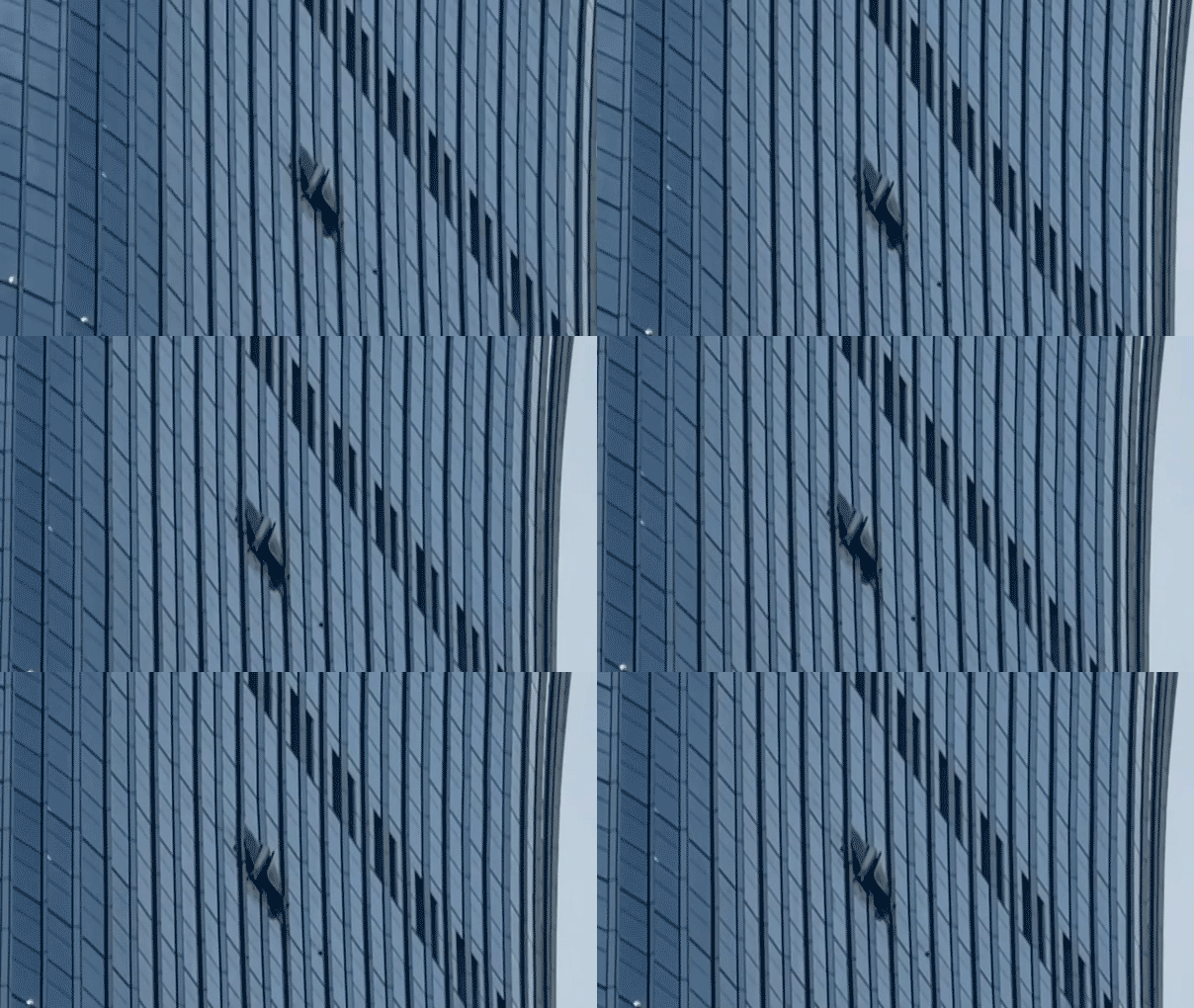
Friday evenings in Beijing usually carry a sense of winding down, as the sprawling metropolis of over twenty million people prepares to transition from the relentless grind of the workweek into the weekend. But on this particular Friday, the sky above the capital’s glittering central business district became the stage for a terrifying and surreal disaster. Without warning, a small recreational aircraft plummeted out of the hazy sky and slammed directly into the side of the iconic CITIC Tower, also known as China Zun, which stands as the city’s tallest skyscraper at a towering 108 stories. The impact tore a gaping, jagged hole into the high-rise’s glass facade, sending shockwaves through the heart of the financial district. In an instant, the routine sounds of evening traffic were punctured by the roar of the collision and the subsequent, terrifying descent of debris, leaving onlookers on the ground frozen in disbelief as they watched the light aircraft spiral toward the pavement below.
For the thousands of professionals still working late inside the giant monument of glass and steel, the collision was felt as a sudden, violent shudder that rattled desks and shook the very core of the building. Within moments, the tower’s automated fire alarms began to wail, transforming quiet offices into scenes of urgent, adrenaline-fueled evacuation as workers scrambled toward safety. As employees hurried down countless flights of stairs, desperate to make sense of the emergency, a massive ground-level response was already assembling on the streets below. Fire trucks, ambulances, and police cruisers flooded the surrounding area, their flashing lights bouncing off the skyscraper’s mirrored surface. Yet, alongside the frantic rescue and safety efforts, another, distinctly systemic response was initiated. Rather than focusing solely on securing the area and aiding potential victims, police officers and emergency personnel immediately began enforcing a strict physical perimeter, actively preventing witnesses from taking photos, demanding onlookers delete their recordings, and attempting to curb any immediate documentation of the tragedy.
Yards away from the physical chaos, investigators and aviation enthusiasts turned to the digital skies to reconstruct what had occurred, revealing a chilling timeline of the aircraft’s final moments. Flight tracking data from Flightradar24 identified the ill-fated plane as a Sunward SA 60L Aurora, a lightweight, Chinese-manufactured sport aircraft. The plane had departed from an airfield approximately 30 miles east of Beijing, embarking on a flight path that should have kept it far away from the highly restricted, ultra-secure airspace surrounding the central capital. However, the available Automatic Dependent Surveillance-Broadcast (ADS-B) data paints an incomplete and puzzling picture of the journey. The flight path simply cuts off abruptly in mid-air shortly before 6 p.m. local time, leaving analysts to wonder whether the pilot suffered a sudden medical emergency, a catastrophic mechanical failure, or a complete loss of navigation in the dense urban landscape. The silence of the transponder in those final, critical moments underscores the terrifying isolation the pilot must have felt as the massive tower loomed inescapably in their path.
What followed the physical crash was an equally intense digital battle fought across the airways of the global and domestic internet, highlighting the profound reach of state censorship. Within minutes of the collision, eyewitness photos and videos began flooding Chinese social media networks like Weibo and WeChat, showing the stark, undeniable image of the damaged skyscraper. Almost immediately, the invisible hand of China’s “Great Firewall” swung into action. Algorithms and digital censors worked at breakneck speed to delete posts, suspend accounts, and block keywords related to the crash, effectively erasing a major metropolitan disaster from the national digital consciousness in real-time. Yet, a few desperate, fleeting transmissions managed to escape the domestic intranet, finding a second life on international platforms like X, where global audiences watched the unfiltered terror of the event play out, exposing the deep divide between the physical reality on the ground and the curated silence imposed by authorities.
For the families of those who work in the CITIC Tower, and indeed for the global community watching from afar, the subsequent hours have been characterized by an agonizing lack of information. In the hours following the crash, Chinese state-controlled media outlets remained conspicuously silent, offering absolutely no official reports, casualty figures, or details regarding the condition of those inside the building or the fate of the pilot. This information vacuum breeds a unique kind of dread, leaving loved ones to search for fragments of unverified news on encrypted messaging apps while official channels act as though nothing occurred. Even on the international stage, the response has been one of cautious silence; when pressed for information or comment on the developing situation in the Chinese capital, the White House declined to offer an immediate statement, reflecting the delicate, highly sensitive geopolitical tightrope that surrounds any sudden, unexplained aviation incident in the heart of one of the world’s most heavily guarded cities.
Ultimately, the tragedy at the CITIC Tower serves as a somber reminder of our shared human vulnerability in an age of soaring architectural ambition and tightly controlled information. When a plane strikes a skyscraper, it taps into deep-seated, collective anxieties about safety, modernization, and the fragile nature of city life. No matter how high we build our towers, or how strictly a government seeks to control the narrative, the raw, unfiltered truth of human tragedy cannot be completely suppressed beneath the weight of censorship. As the dust settles over the business district of Beijing and the physical scars on the skyscraper are boarded up, the quiet resilience of the ordinary citizens who witnessed the disaster remains. They are left to process the trauma not through official statements, but through the whispered, human connections that survive in the shadows of the firewall, waiting for the day when transparency and human life are valued as highly as the concrete monuments that touch the sky.