

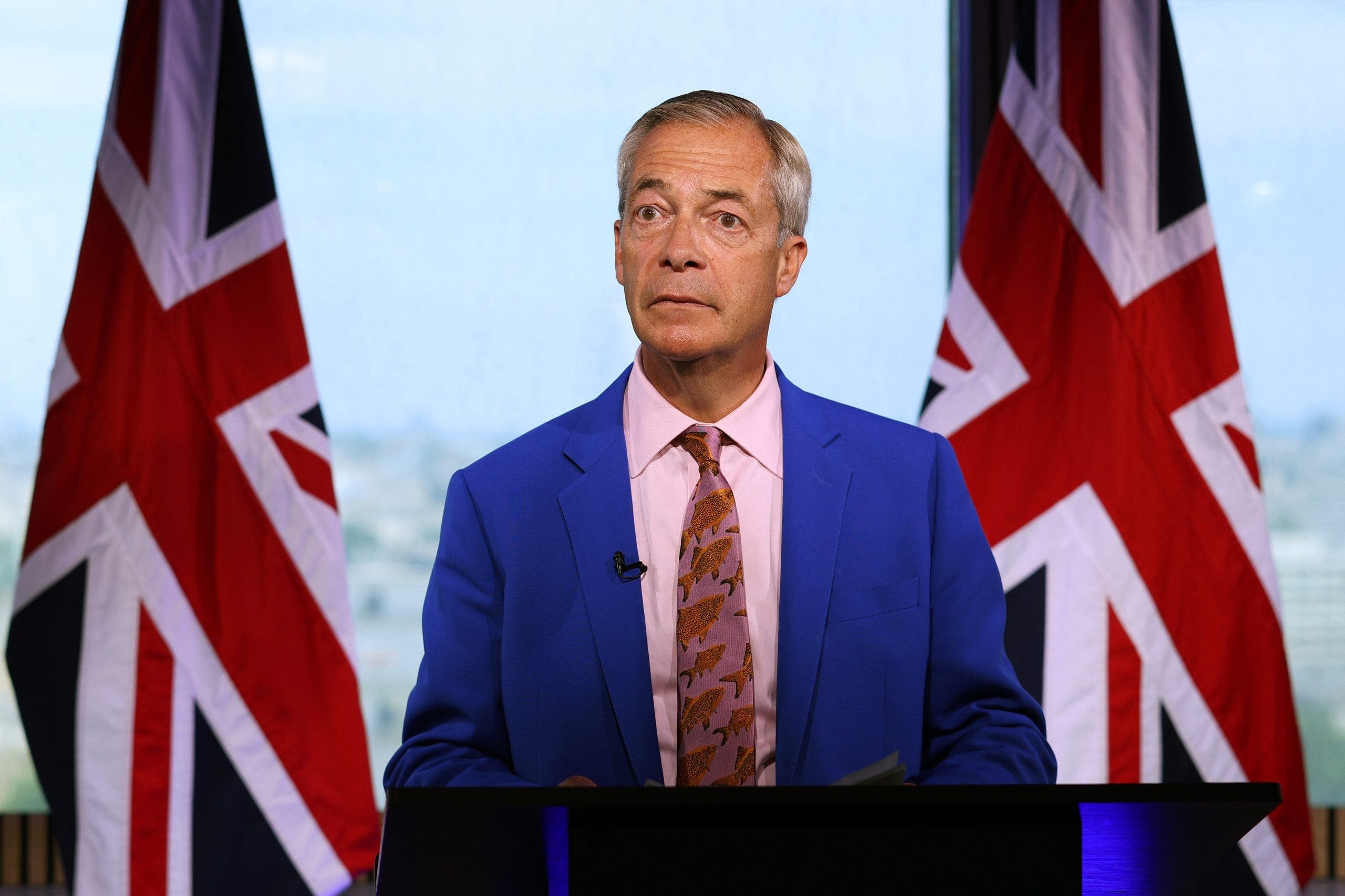
The news lands with a jolt, not only because of the raw violence it describes, but because it exposes a disturbing truth about the world we now live in: that a quiet afternoon at home can suddenly become a nightmare, and that those who step forward to serve their communities in public life can become targets simply for who they are and what they believe. British prosecutors announced terrorism charges on Friday against a 28-year-old man who was already in custody, accused of the brutal murder of a prominent conservative politician. The man, Joshua Kerry, from South Yorkshire, now faces one count of preparation of terrorist acts under the Terrorism Act, with prosecutors specifically alleging that his conduct involved plans against Nigel Farage, the leader of Reform UK and a Member of Parliament. To hear the word “terrorism” linked to the murder of a former lawmaker is deeply unsettling, especially because the new charge suggests that this was not simply a random and terrible crime, but one that may have been connected to a wider pattern of preparation, intimidation, and ideological hatred. For the public, the case forces a reckoning with the reality that political violence is not something that only happens in distant, unstable countries; it can happen in a quiet village in Devon, in the middle of the day, to an elderly woman eating lunch in her own home. It also raises deeply personal questions for every family touched by politics: How safe are those who represent us? How much courage does it take to stand for office in a climate of abuse, threats, and sometimes deadly hostility? These are not abstract concerns. They are the lived nightmares of people who have chosen to serve, and they are the reason this case feels so personal for so many.
The details of the alleged murder are almost too grim to absorb. According to prosecutors, Ann Widdecombe, a former Reform UK and Conservative politician, was eating lunch in her home in Devon on July 8 when Kerry walked through her front door and attacked her with a hammer. In a terrifying act that lasted only two minutes, she was struck 21 times in the head. Her wallet was taken, and then he was gone. One can only imagine the sheer terror of those final moments—the sudden intrusion, the shock, the helplessness, the unbearable pain. Ann Widdecombe was a woman who had spent decades in public service, known for her strong opinions, her sharp wit, and her unapologetic presence in British politics. She had survived the rough-and-tumble of political debate, the arguments, the criticism, the scrutiny. But no amount of political experience could prepare anyone for such a violent and senseless end. The fact that this attack is now being investigated as an act of terrorism only deepens the tragedy, because it suggests that her death was not just a random act of criminality, but perhaps part of a calculated effort to instill fear in the political class. Kerry has been in the custody of His Majesty’s government since late July, when he was arrested and accused of her murder. Now, the Crown Prosecution Service has added the terrorism charge, alleging that between May 31 and July 8, he was engaged in conduct intended to prepare acts of terrorism, including against Nigel Farage. The timeline is significant: it means that for more than a month, authorities believe, Kerry was not merely planning one horrific act, but possibly moving toward a broader campaign of violence. For the public, this is a chilling reminder that the threat of terrorism is not always about bombs exploding in crowded streets; sometimes it is about a person with a hammer, a grudge, and a twisted ideology, walking through an unlocked door.
The investigation that led to this charge has been described by senior officials as a monumental effort involving many teams and many hours of painstaking work. Deputy Assistant Commissioner Vicki Evans, the Senior National Coordinator for Counterterrorism Policing, issued a statement that tried to reassure the public while acknowledging the gravity of the situation. She said the charge was a result of the tireless work of investigators across the Counterterrorism Policing network, with a dedicated team of detectives, analysts, and forensic experts working on multiple lines of inquiry. Behind that dry official language lies a deeply human story: sleepless nights, long shifts, the grinding determination to piece together fragments of evidence, to follow every digital footprint, every witness account, every clue that might explain what happened and why. It is the kind of work that rarely makes headlines, but without it, justice would be impossible. The fact that the charge was brought now, weeks after the arrest, suggests that investigators were not satisfied with a straightforward murder case. They wanted to understand the motive, the mindset, and the possible larger plot. They wanted to know whether Widdecombe’s death was an isolated tragedy or part of something more sinister. And they wanted to make sure that anyone else who might have been in danger, including Nigel Farage, was protected. That is the quiet, unglamorous work of counterterrorism: not just solving crimes after they happen, but preventing the next one, often before the public ever learns the full threat. It is also a reminder that the people who do this work carry a heavy burden, knowing that a single overlooked detail could mean the difference between life and death. Their dedication to the investigation of this case deserves recognition, not just because of the charge itself, but because of what it represents: a society refusing to let hatred and violence go unchallenged.
The political reaction to the new charge has been swift and deeply emotional, reflecting the fear that many in public office now carry with them every day. U.K. Home Secretary Shabana Mahmood took to social media to call the charges against Kerry “extremely concerning” and sent her “profound sympathies” to the Farage family. In a message that resonated far beyond the specifics of this case, she wrote that “an attack on anyone in politics is an attack on us all.” Those words carry particular weight in a country that has seen the murder of politicians before, including Jo Cox, the Labour MP who was killed in 2016 by a far-right extremist. The Jo Cox Foundation, established in her memory, also issued a statement that spoke directly to the painful truth of public life today. “No one in public life should have to fear for their safety,” the statement said. “Violence, abuse and intimidation not only endanger individuals and their families, but threaten our democracy and have no place in public life. We must do more to prevent the rising levels of abuse and intimidation in politics.” This is not just a political statement; it is a cry of grief and frustration from people who have already lived through the worst possible outcome. It is a plea for everyone to understand that when we allow political discourse to become toxic, when we treat our opponents as enemies rather than fellow citizens, we are creating the conditions in which violence can flourish. The foundation’s words are a reminder that behind every politician is a human being with a family, with neighbors, with a right to live without fear. The rising levels of abuse and intimidation in politics are not abstract statistics; they are real threats that change the way people live, the way they speak, the way they decide whether to serve at all. Kerry is due back at Westminster Magistrates’ Court on Wednesday, and the courtroom will no doubt feel the weight of all of this—the grief for Widdecombe, the fear for Farage, the broader anxiety of a democracy under pressure.
In a separate but no less alarming development on Friday, Counterterrorism Policing announced charges against two Iranian men accused of plotting to target the Jewish community in the Manchester area. The men, 36-year-old Salam Ahmadyan and 34-year-old Rahman Salehi, were charged with engaging in conduct in preparation for terrorist acts, contrary to Section 5 of the Terrorism Act 2006. Prosecutors allege that the two men were in contact with an overseas third party who may be in Iran in relation to the plot. This news arrives at a time when Jewish communities in the United Kingdom are already on edge, during the High Holy Day period, a season of reflection and prayer, and just around the anniversary of the devastating terrorist attack last year at Heaton Park synagogue. Deputy Assistant Commissioner Evans called the charges “extremely serious” but reiterated that authorities do not believe there is any ongoing threat to the public in connection with this matter. Still, the very fact that such a plot was allegedly being prepared is enough to send a chill through any community that has ever been targeted because of its faith. For the Jewish community in Manchester, this news will inevitably evoke painful memories and deep anxiety. The mention of the anniversary of the attack at Heaton Park synagogue is a stark reminder that antisemitism is not a historical relic but a living, breathing danger. The increase in antisemitic incidents across the U.K. has been widely reported, and for many Jewish families, the feeling of being watched, targeted, and threatened is not paranoia but a rational response to a very real environment. The charges against Ahmadyan and Salehi, who have been remanded and are scheduled to appear at Westminster Magistrates’ Court on Saturday, represent an attempt by the state to disrupt that threat before it can become a tragedy. But they also raise uncomfortable questions about foreign interference, about the reach of hostile powers, and about the vulnerability of minority communities to plots that may originate far beyond Britain’s shores. It is a reminder that terrorism is a hydra with many heads, and that the fight against it must be as adaptable and determined as those who seek to do harm.
Taken together, these two sets of charges paint a troubling picture of the threats facing the United Kingdom in these times. On one hand, there is the threat of domestic political extremism, embodied in the alleged attack on Widdecombe and the alleged plot against Farage—violence aimed at destabilizing democracy by silencing elected voices. On the other hand, there is the threat of international terrorism, embodied in the alleged plot against Manchester’s Jewish community—violence aimed at instilling fear in an entire religious group. Both threats are serious, both require vigilance, and both ultimately share a common thread: the dehumanization of others, the belief that some people are not entitled to safety, to life, to peace. The human cost of such hatred is incalculable. For every victim, there are families left to grieve, friends left to wonder, communities left to heal wounds that may never fully close. For someone like Ann Widdecombe, her life was cut short in the most brutal way imaginable, in what should have been her own sanctuary. For Nigel Farage, the news that he may have been a target will likely leave a shadow over his daily life, a reminder that public service now comes with an unimaginable price. For the Jewish community in Manchester, the fear of walking to synagogue, of celebrating holidays, of simply living openly as who they are, is a burden that no one should have to bear. And yet, in the face of all this, there is also resilience. The counterterrorism police continue to investigate and charge, the courts continue to process, and the public continues to be told the truth about the dangers ahead. The statements from the Home Secretary and the Jo Cox Foundation remind us that we are not powerless; we can choose to respond with compassion, with solidarity, and with a renewed commitment to democratic values. We can honor the memory of those who have been lost by refusing to be silenced, by standing against abuse and intimidation, and by insisting that no one in public life should have to fear for their safety. As these cases move through the courts in the coming days and months, the hope is not only that justice will be done, but that society will finally confront the darkness that makes such violence possible—and find the courage to overcome it.