





Beneath the rolling, sun-drenched hills and verdant ancient forests of the Democratic Republic of the Congo lies one of the most astonishing concentrations of geologic wealth on our planet, yet for many decades, this subterranean treasure has been both a blessing and a deep-seated curse for its people. The rich, red earth of provinces like Lualaba and Haut-Katanga holds the key to the modern digital age, containing massive reserves of copper and cobalt—elements that have quietly transitioned from basic minerals into the very lifelines of global technology, powering everything from the personal smartphones in our pockets and the electric vehicle batteries humming along Western highways to the sophisticated guidance systems of our most advanced defense aircraft. For years, the extraction of these critical elements was characterized by opaque backroom deals, environmental destruction, and harsh physical labor that enriched foreign entities while leaving local communities with little to show but scarred landscapes, empty promises, and economic vulnerability. Now, a major geopolitical pivot is taking place as the United States government actively throws its weight behind an American mining company, Virtus Minerals, in a historic bid to challenge the long-standing Chinese monopoly in the region and secure two crucial mining sites, the Étoile mine in Lubumbashi and the Mutoshi mine in Kolwezi. This development, widely heralded as a substantial victory for the Trump administration’s foreign policy, marks the first significant American entry into the Congolese mining sector in over a decade, coming on the heels of the signing of the Washington Accord last December. By establishing a direct, transparent presence in the heart of Africa’s copper belt, Virtus Minerals is not just launching a commercial endeavor but is participating in an ambitious effort to rewrite the global supply chain, offering an alternative model of partnership that promises to prioritize local community development, strict environmental stewardship, and high-quality jobs for both American and Congolese workers who have historically been sidelined by foreign state-backed giants.
To truly understand the gravity of this geopolitical shift, one must appreciate the colossal scale of China’s economic and infrastructural dominance across the African continent over the past two decades. The Strategic Studies Institute reports that a staggering eighty percent of the world’s supply of cobalt is mined within the borders of the Democratic Republic of the Congo, and of that massive output, an equal eighty percent has fallen under the direct or indirect control of Chinese state-owned enterprises and private conglomerates. This near-total dominance was not built overnight; it was the result of a patient, highly coordinated, multi-decade strategy of massive loans, infrastructure-for-minerals packages, and long-term extraction rights that effectively locked up the building blocks of the green energy future while Western nations remained largely disengaged. The consequences of this monopoly have been deeply felt on a global scale, leaving Western automotive manufacturers, high-tech firms, and defense departments dangerously dependent on supply routes that inevitably pass through Beijing’s sphere of influence. This economic vulnerability is further complicated by the volatile security landscape of the DRC, where eastern regions continue to suffer from violent incursions and destabilizing operations led by the Rwandan-backed M23 rebel group. For the ordinary Congolese families living near the mining hubs of Kolwezi and Lubumbashi, this geopolitical struggle is not an abstract concept debated in far-off capitals; it is a daily reality characterized by dusty roads, the relentless rumble of heavy mineral trucks, and economic survival amid systemic instability. For decades, the fruits of their hazardous labor have been funneled into opaque systems that offer little in the way of safety, fair compensation, or environmental protection, making the arrival of a highly regulated, Western-backed operator like Virtus Minerals a potential turning point for local labor standards, community investments, and regional dignity.
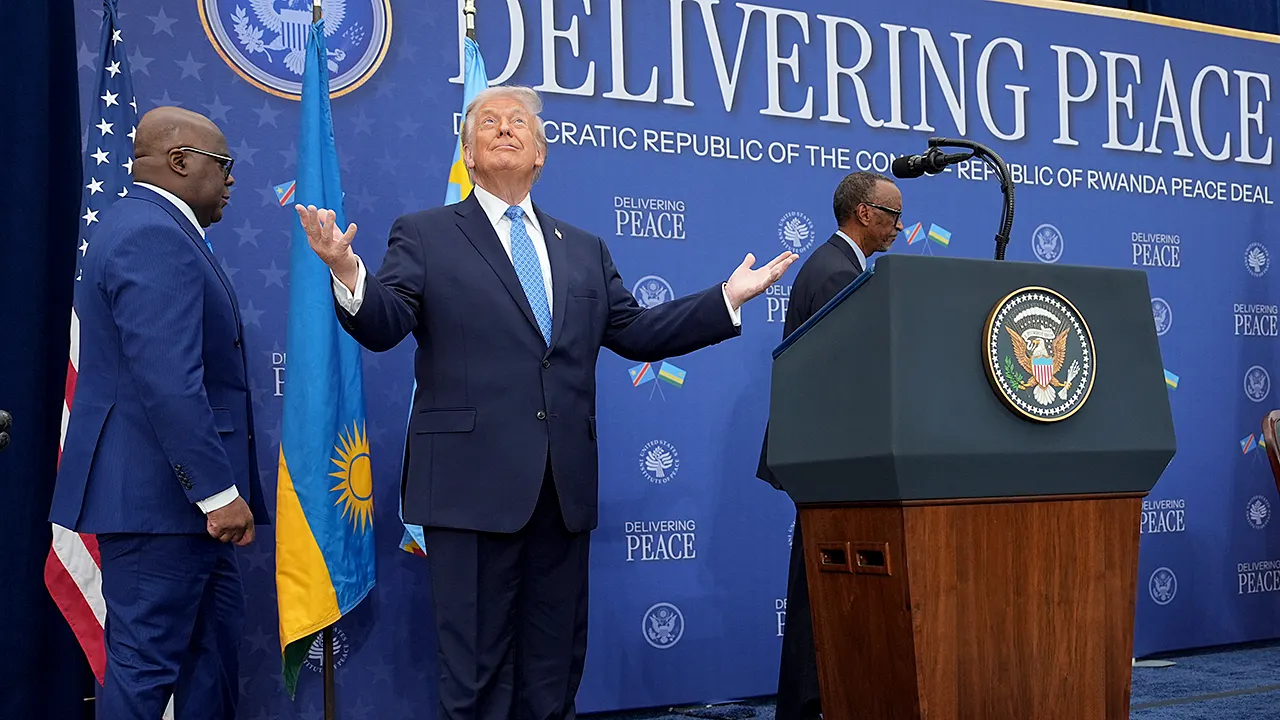
In direct response to this strategic imbalance, the Trump administration has embarked on a bold diplomatic offensive, culminating in the historic signing of the Washington Accord at the White House last December. During the signing ceremony, President Donald Trump made it undeniably clear that the United States is no longer content to sit on the sidelines of global resource competition, declaring the partnership to be “a great day for Africa, a great day for the world.” This comprehensive accord represents a new paradigm in American foreign policy, one that seeks to match economic statecraft with active regional stabilization by directly linking critical mineral security with diplomatic efforts to end the persistent conflict between the DRC government and Rwandan-supported rebel forces. The administration’s policy, championed intensely by President Trump and Secretary of State Marco Rubio, represents a direct challenge to the established order, aiming to provide a viable counterweight to Chinese economic leverage through direct private-sector investment backed by the full diplomatic and financial muscle of the American government. By treating the securing of cobalt and copper supply chains as a matter of vital national security, the Washington Accord attempts to dismantle the opaque, exploitative frameworks that have dominated the Congolese mining sector for a generation. This diplomatic strategy recognizes that long-term regional stability cannot be achieved through traditional humanitarian aid alone, but requires robust, transparent commercial investments that respect local sovereignty, foster genuine economic development, and provide a reliable, auditable flow of critical resources to the West. This signals to both global allies and geopolitical adversaries that America is actively returning to the African continent with a renewed, uncompromising sense of strategic purpose and a profound commitment to mutual prosperity, establishing a framework under which the DRC can leverage its mineral wealth to fund its own defense and development, transforming it from a passive recipient of aid into an empowered sovereign partner.
At the operational heart of this geopolitical maneuver is Virtus Minerals, a pioneering American mining company that, with robust backing from the U.S. government, has proudly claimed the title of the first American-owned operator to return to the DRC in more than ten years. Virtus’s primary acquisition involves a substantial investment in Chemaf, a well-established local cobalt and copper producer with two premier mining operations under development: the Étoile mine in Lubumbashi and the Mutoshi mine in Kolwezi. Individually, these sites represent massive geologic anomalies of immense value; together, under Virtus’s management, they are projected to produce an astounding combined layout of 75,000 tonnes of copper and 20,000 tonnes of cobalt annually. The vast processing plants required to turn raw, red-earth ore into export-ready high-grade minerals are currently under intense, accelerated construction and are scheduled to come online next year, creating a flurry of economic activity in the local provinces. Phillip Braun, the energetic CEO of Virtus Minerals and chairman of Chemaf, has expressed immense optimism about the future, noting that their primary, immediate goal is to bring the Étoile and Mutoshi plants to full production capacity. Beyond these initial twin jewels, Braun points out that Virtus holds a staggering fifty-six mining licenses in total across the DRC, presenting an unprecedented opportunity to explore vast mineral concessions for other strategically vital metals like tungsten, which are equally critical for defense and advanced electronics. Braun has expressed humble respect for the collaborative effort, pointing out that none of these ambitious milestones would be possible without the burgeoning partnership between the United States and the DRC, as well as the visionary leadership in both countries who recognized the enormous potential of bringing their respective nations closer together through a trusted, reliable supply of the minerals that sustain modern civilization.
A critical challenge of extracting minerals in a landlocked nation like the Democratic Republic of the Congo is the physical difficulty of moving bulk materials safely to global markets, a process that historically made mining companies dependent on long, dangerous routes controlled by adversarial actors or slow, outdated colonial-era infrastructure. To solve this travel puzzle, the United States has committed a staggering $5 billion investment toward the rehabilitation and development of the Lobito Corridor, a vital rail artery designed to transport minerals directly from the Congolese copper belt, through the heart of Angola, to the deep-water port of Lobito on the Atlantic Ocean. Unlike traditional export routes that are often cloaked in bureaucratic secrecy and shadow-market manipulations, the Lobito Corridor is designed to establish a completely secure, physically traceable, and fully auditable supply chain for the United States and its trusted global allies. This massive industrial investment has drawn high praise from independent strategic analysts, including Frans Cronje, the president of the Washington-based Yorktown Foundation for Freedom. Cronje notes that the Virtus projects, paired with the Lobito rail project, are highly significant because they demonstrate a more assertive and direct United States effort to compete dynamically with China for access to Africa’s critical mineral base, rather than passively relying on transport routes heavily influenced by Beijing. By rebuilding this historic rail line, the U.S. is not only securing a physical lifeline for copper and cobalt but is also revitalizing local economies along the tracks, proving that infrastructure can serve as a powerful tool for geopolitical alignment. This development signals a profound, long-term shift in global logistics, transforming Africa’s vast resource endowment and its geostrategic position along key Atlantic and Indian Ocean maritime corridors into a central arena for future global economic stability, trade route diversification, and international security competition.
Looking toward the horizon, the revitalized partnership between the United States and the Democratic Republic of the Congo suggests a profound shift away from a history of lopsided extraction toward a future defined by shared prosperity, technological advancement, and deep respect for human dignity. A State Department spokesperson recently reaffirmed that President Trump and Secretary Rubio remain firmly committed to supporting American companies like Virtus Minerals that seek to establish transparent, high-integrity businesses in the region, noting that this flagship investment will act as a major catalyst for further economic growth. This state-backed commercial model is designed to deliver immediate, life-altering benefits directly to local Congolese communities, who have for too long been economically marginalized and environmentally exploited by the opaque, low-wage practices perpetuated by adversarial foreign actors. By focusing on creating stable, safe, and well-paying jobs, fostering advanced technical skills development, and implementing rigorous local safety standards, the initiative aims to empower Congolese workers with the professional training and economic independence necessary to build a more prosperous, self-reliant future for their families. As these highly advanced mining operations and processing plants in Étoile and Mutoshi prepare to come fully online next year, they represent far more than just a cold strategic maneuver on a raw materials chessboard; they embody a hopeful new chapter for the Congolese people, demonstrating that in the global race to power the next generation of clean technology, human progress and economic security can go hand-in-hand, paving the way for a more balanced, secure, and equitable world. This historic alignment promises that instead of being a mere proxy battlefield for superpower resource competition, the DRC can emerge as a proud, equal cornerstone of global industrial stability and cooperative economic development for generations to come, ensuring that the wealth beneath their soil finally translates into tangible, lasting prosperity for the hands that mine it.