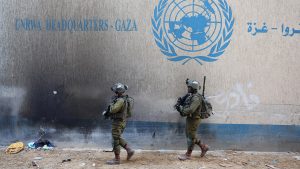


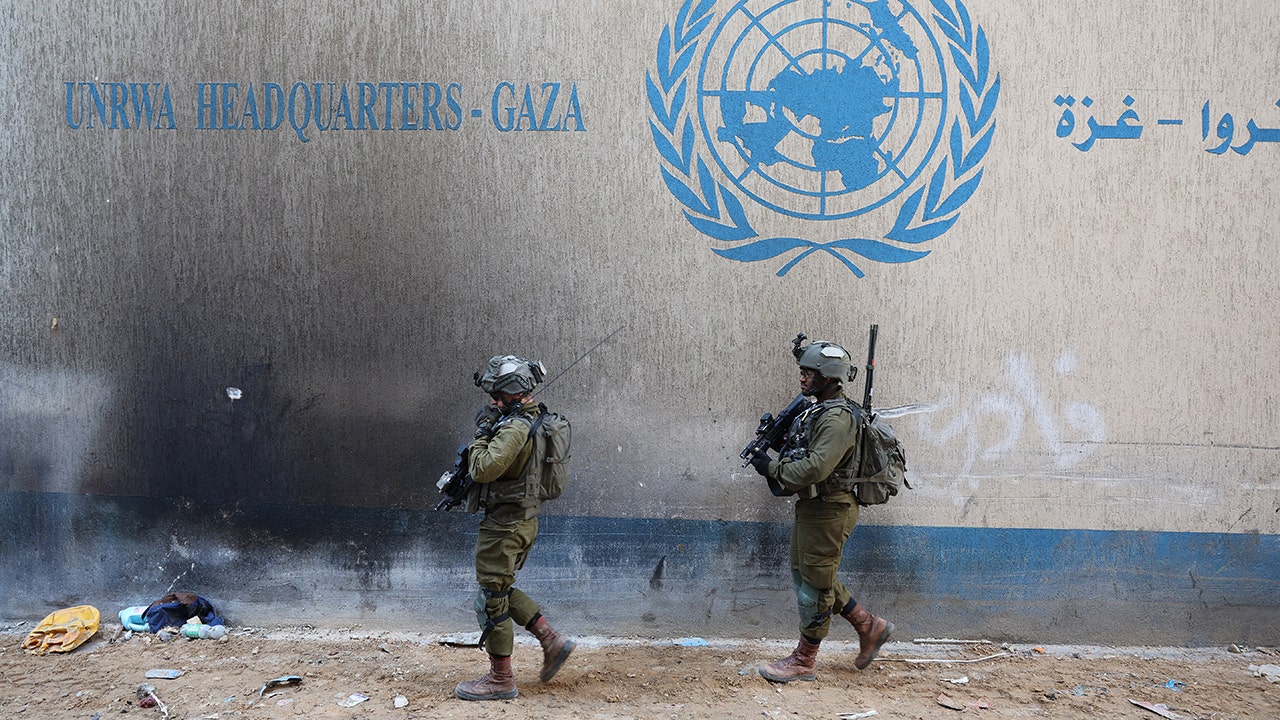
In the summer of 2024, a routine social media post became yet another flashpoint in the long, bitter argument over the United Nations’ main agency for Palestinian refugees. President Donald Trump amplified a report that referred more than 100 current and former employees of the United Nations Relief and Works Agency, or UNRWA, to U.S. government investigators over alleged ties to Hamas. The post was just a few clicks, but it captured a much deeper crisis: UNRWA, the agency created to care for generations of Palestinian refugees, has spent years trying to fend off accusations that it has been infiltrated by the very militant group that triggered the deadliest attack in Israel’s history. On October 7, 2023, Hamas fighters stormed into Israeli communities, killing roughly 1,200 people and taking hundreds of hostages. In the aftermath, Israel alleged that a number of UNRWA employees took part in the assault. Those allegations sent shockwaves through the international community, forced donor countries to pause funding, and pushed the United Nations into an urgent, defensive overhaul. But to many outside observers, the agency’s promised reforms are still more a carefully managed story than a genuine transformation.
That story is now being challenged in blunt terms by UN Watch, a Geneva-based human rights group that monitors the United Nations. On Monday, UN Watch released a report accusing UNRWA of overstating how much it has actually reformed. At the heart of the dispute is a well-known, independent review led by Catherine Colonna, the former French foreign minister. In April 2024, Colonna delivered a sweeping report that laid out 50 recommendations for UNRWA to restore trust and fix problems ranging from staff vetting to educational content. UN Secretary-General António Guterres accepted every recommendation and agreed that the agency would create an action plan to put them into practice. Since then, UNRWA has insisted that it is getting the job done. In fact, the agency claims it has completed 41 of the 50 reforms. But UN Watch says that claim does not survive close reading of what Colonna actually asked for. According to its analysis, at most 13 of the 50 reforms have been completed as written. The rest, the watchdog argues, are little more than drafts, pilot projects, plans, or hopeful intentions dressed up as finished work.
The core accusation is simple, but damning: UNRWA is grading its own homework. In the world of international institutions, that is a dangerous position to hold, especially when the stakes involve the safety of children, the credibility of the United Nations, and the thin line between humanitarian aid and political neutrality. Hillel Neuer, executive director of UN Watch, put it in plain language in a statement to Fox News Digital: “UNRWA is grading its own homework — and giving itself credit for reforms that exist mainly on paper. A policy is not a reform if it is ignored, unenforced or blocked by staff unions dominated by Hamas.” Those words point to a broader anxiety: that bureaucratic language has become a shield, allowing an agency under intense pressure to appear responsive without actually changing what happens in classrooms, in hiring offices, and in the street-level operations that touch millions of lives.
The gap between claiming and doing is especially visible in the area of staff vetting. UNRWA has pointed to a “Commercial Vetting Pilot & Costed Plan” as one of its completed reforms, along with other screening measures. But UN Watch counters that a pilot program and a costed plan do not add up to a fully operational, independent outside vetting system. A pilot is a test; a costed plan is a proposal. Neither guarantees that every employee, or even every new hire, has been properly screened against databases of known militants. The distinction matters enormously. If UNRWA says it roots out extremists but in reality has only experimented with how it might one day do so, then the agency is not meeting the standard that Colonna set. The same pattern repeats in education. UNRWA lists systematic textbook reviews and randomized classroom inspections among its completed steps. Yet it still describes a policy prohibiting problematic educational content as “in progress.” That admission is striking, because Colonna herself flagged the problem when she released her review. She said some educational material remained deeply problematic, including content that appeared to glorify “jihad,” incite violence, or portray maps without any reference to Israel. She called, in no uncertain terms, for a zero-tolerance approach. UN Watch’s report suggests that this zero-tolerance approach has not actually arrived in the classroom. Instead, children may still be exposed to the same kind of content that got the agency into trouble in the first place.
When pressed on Tuesday at the U.N. briefing in New York, the UN’s spokesperson Stéphane Dujarric defended the process. He rejected the idea that the reform effort was merely “checking boxes for the sake of checking boxes” and insisted that implementation is the real goal. Dujarric noted that UNRWA regularly reports to the General Assembly, holds integrity meetings that are open to member states, and gives governments the chance to scrutinize what the agency is doing. On the sensitive question of staff screening, he said UNRWA relies in part on the countries where it operates. “We rely on the member states also, where we operate, who have the capacity to check people to do so,” Dujarric said. He added that UNRWA shares staff lists with Israeli, Jordanian, Lebanese and Syrian authorities, and that if those nations have concerns, they are expected to raise them directly with the agency. When they do, he said, “they take action.” That response reflects the reality that UNRWA works in some of the most dangerous and politically complex places in the world, and that no organization can be expected to act as a sovereign intelligence service. But for critics, it is also exactly the problem. Relying on host countries to flag problems, and then asking those same countries to trust UNRWA’s internal follow-up, is a fragile foundation for reform. Without a truly independent mechanism to verify that policies have become practices, the difference between a completed reform and a paper reform can be hidden for years.
This is not an abstract quarrel between a watchdog and a bureaucracy. It is a question with real consequences for children, teachers, and the credibility of humanitarian aid. If UNRWA’s staffing systems still allow people with ties to Hamas to remain employed, then the agency is not just failing to reform itself; it is providing cover for militants inside one of the most sensitive relief efforts in the world. If teachers tied to terrorist organizations remain in classrooms, then the agency is not a neutral humanitarian actor, no matter how many policies it writes. If unions dominated by Hamas can block discipline and keep extremism alive from within, then the entire architecture of the reform process becomes a publicity exercise. Neuer rejected any suggestion that this disagreement is merely a matter of wording. “This is not a semantic disagreement over the meaning of ‘completed,’” he said. “UNRWA says the job is done, yet teachers tied to terrorist organizations remain in classrooms, Hamas-dominated unions obstruct discipline, and children continue to be exposed to incitement. Those are real-world consequences, not technicalities.” Those are strong words, but they reflect a broader frustration that has been building for years. Donor countries, including several in Europe, have already cut funding over the allegations. The Trump administration has touted more than $1 billion in U.N. budget cuts as part of its broader reform push. For many ordinary people watching from the outside, the question is not whether UNRWA has a good excuse. The question is whether an agency that depends on international tax dollars can be trusted to tell the truth about its own shortcomings.
In the end, the fight over UNRWA’s reforms is a fight about trust. Trust cannot be restored simply by declaring that a set of recommendations has been accepted. It cannot be built by writing a policy that nobody enforces or by launching a pilot that never becomes a system. Trust is built slowly, through transparency, independent oversight, and a willingness to be held accountable by people who do not share the same institutional interests. UN Watch’s report is a reminder that words are not actions, and that an organization under siege will often reach for the language of progress to protect itself from its critics. The United Nations may insist that it is taking reform seriously, and UNRWA may continue to say it has completed most of its work. But until outside observers can verify that classroom materials no longer glorify violence, that staff lists have been properly screened, that Hamas-influenced unions can no longer block accountability, the debate will not go away. The people who need UNRWA’s services deserve an agency that does more than manage its reputation. They deserve one that actually practices what it promises. And as long as that remains uncertain, every report, every audit, and every social media post will only deepen the same uneasy question that has hung over UNRWA since October 7: Can an agency that has lost the confidence of so many ever truly reform itself? The answer, for now, is still buried somewhere beneath the paperwork.