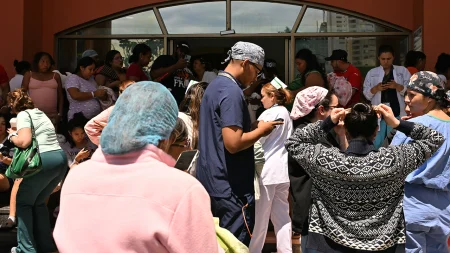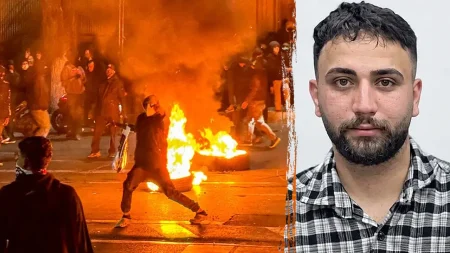



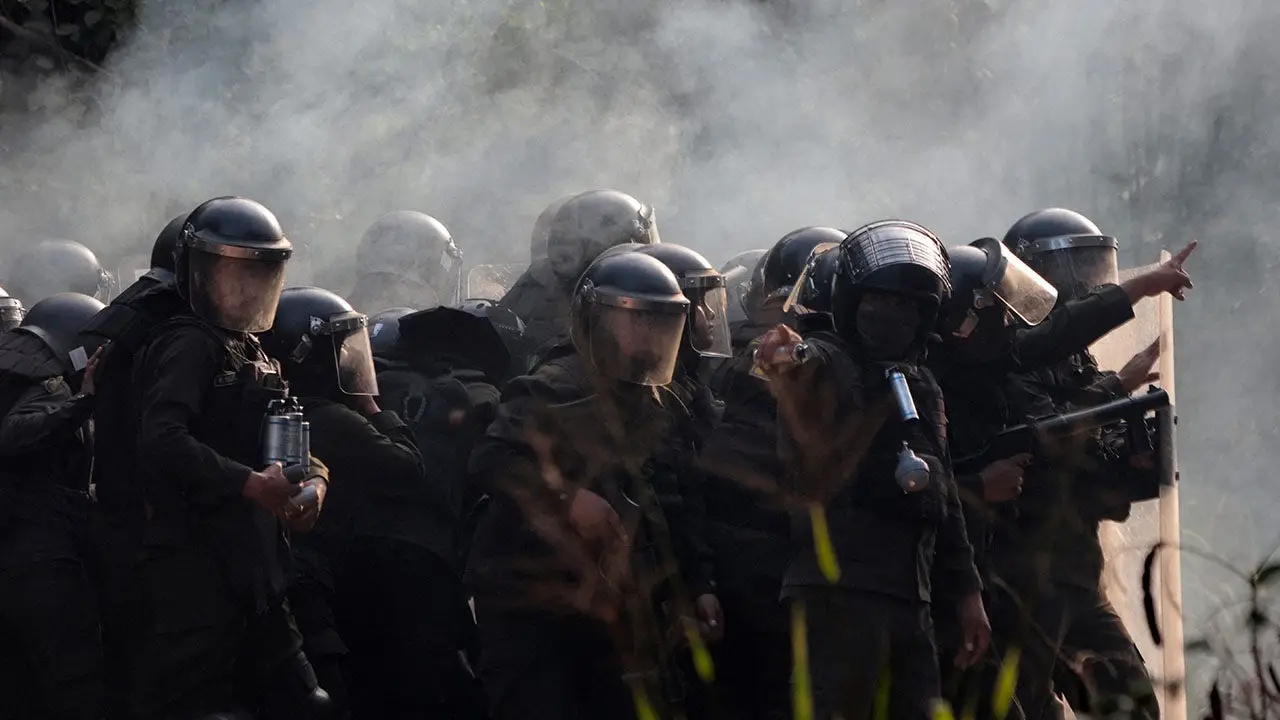
For nearly two months, the highways winding through the rugged, high-altitude landscapes of Bolivia lay eerily silent, choked not by the natural elements, but by insurmountable walls of dirt, stones, and burning tires. These blockades—stretching across the landlocked, mineral-rich nation—paralyzed the daily lives of millions of ordinary citizens who found themselves caught in the crossfire of an explosive political struggle. Mothers searched frantically through empty markets for basic infant formula, pharmacies ran out of life-saving medications, and small-scale farmers watched in quiet despair as their entire harvests rotted in the back of stranded trucks. This fifty-day national paralysis was orchestrated by radical factions loyal to former socialist President Evo Morales, designed to systematically choke the economy and force the collapse of the newly elected conservative government. In response to this escalating humanitarian and democratic crisis, President Rodrigo Paz took the controversial but decisive step of declaring a national “State of Exception” on June 20. This state of emergency was a desperate bid to deploy security forces, clear the arterial roadways, and restore a semblance of order to a nation teetering on the edge of anarchy. The immediate physical blockades may have recently cleared, but they have left behind a deeply traumatized populace and a country grappling with one of its most profound identity crises in decades.
To understand the raw emotion fueled by these protests, one must look at the deep ideological and cultural schisms that have defined Bolivia for the last twenty years. For nearly two decades, the country’s political, social, and economic landscape was dominated by Evo Morales and his Movement Toward Socialism (MAS) party, which championed the rights of the indigenous majority, nationalized key natural resources, and aligned the nation with regional leftist regimes. However, years of mounting economic stagnation, accusations of democratic backsliding, and internal fractures within the socialist movement eventually eroded their dominance, opening the door for the rise of Rodrigo Paz’s conservative, pro-U.S. administration. The new government’s market-oriented reforms, fiscal discipline programs, and efforts to rebuild relations with Western partners represent an existential threat to Morales’s legacy and his hopes of returning to power. For Morales’s core supporters in the rural and indigenous heartlands, Paz’s reforms feel like a betrayal of their hard-won rights, while for urban center residents, the socialist blockades felt like a hostage situation holding their future captive. This clash of worldviews is not merely a debate in the halls of congress in La Paz; it is a visceral, daily struggle played out on the cobblestone streets and dirt roads of the Andes, where two vastly different visions for Bolivia’s future are fighting for survival.
The political tremors shaking Bolivia have reverberated far beyond the Andes, drawing the attention of global superpowers who view the country as a crucial piece on the geopolitical chessboard. Recognizing the strategic importance of a stable, democratic ally in South America, the United States government has stepped forward with strong, public support for President Paz’s administration. U.S. Secretary of State Marco Rubio issued a stern warning to those attempting to destabilize the country, declaring that the United States will not permit criminals and narco-terrorists to violently overthrow democratically elected leaders in the Western Hemisphere, while affirming Washington’s deep commitment to the security and prosperity of the Bolivian people. This sentiment was echoed by a State Department spokesperson, who praised the Paz administration’s decision to utilize the State of Exception as a constitutional necessity to restore the flow of food and essential goods. Underneath this diplomatic support, however, is a high-stakes race for global resource dominance. Bolivia sits atop the “lithium triangle,” holding some of the world’s most massive deposits of the mineral essential for electric vehicle batteries and next-generation technology. As the United States and China compete for influence over these critical supply chains, the stability of Bolivia’s government is a matter of vital national security for Washington, which fears that a return to radical socialist rule would hand control of these precious resources directly to America’s geopolitical adversaries.
While the geopolitical stakes are incredibly high, the immediate domestic economic fallout of the fifty-day siege is nothing short of catastrophic for the average Bolivian. According to prominent financial analyst Mauricio Ríos García, the prolonged blockades resulted in an estimated $2.5 billion in lost economic activity and forced the permanent closure of roughly 13,000 businesses, wiping out the livelihoods of thousands of families. Rios García warns that the sudden release of pent-up consumer demand, combined with excess market liquidity, will likely trigger a painful wave of inflation, making everyday survival even more difficult for low-income citizens. Furthermore, the Paz government is currently navigating intense negotiations with the International Monetary Fund (IMF) for a massive financial lifeline estimated between $3.3 billion and $5 billion. While this emergency funding is desperately needed to stabilize the economy, it will likely require a significant devaluation of the Bolivian currency and painful structural adjustments. This growing economic reliance on Western financial institutions and the United States marks a dramatic departure from the previous socialist administration’s policies, but it leaves the government with virtually no room for error, as any further instability could plunge the country into a full-scale economic depression.
Defending the administration’s tough security measures, José Luis Lupo, Bolivia’s Minister of the Presidency and chief of staff, emphasized the profound human responsibility weighing on the shoulders of the government during the crisis. Lupo explained that his administration spent weeks patiently exhausting every avenue of peaceful dialogue with the protesting sectors, believing that a healthy democracy must always prioritize mutual understanding over force. However, when the blockades began to directly threaten the lives of citizens by cutting off access to essential medicine, food, and fuel, the state of emergency became an unavoidable, constitutional obligation to protect the vulnerable. Lupo strongly rejected accusations that the emergency decree was a heavy-handed authoritarian power grab, clarifying that its sole purpose was to restore basic human freedoms, secure critical infrastructure, and defend the democratic order from being sabotaged by political extremists. Yet, even as he defended the security crackdown, Lupo acknowledged a deeper, structural truth: lasting peace cannot be built on force alone, and true national stability is impossible as long as systemic poverty, inequality, and government neglect continue to marginalize the rural provinces, particularly within the department of La Paz.
As the physical barricades are dismantled and emergency humanitarian aid from the United States begins to flow into the country to alleviate food and medical shortages, Bolivia stands at a pivotal historical crossroads. The end of the blockade marks the conclusion of a dangerous chapter, but the path toward genuine national healing remains incredibly fragile and uncertain. Minister Lupo has called for the immediate initiation of a comprehensive political and social pact—a grand coalition bringing together government officials, opposition parties, regional leaders, private business owners, and grassroots civil society organizations. This proposed consensus is vital to enacting sweeping legislative reforms that will establish clear legal rules, attract foreign investment, and modernize strategic national industries such as hydrocarbons, mining, lithium development, and a historically corrupt judicial system. The ultimate challenge for Bolivia is to permanently replace the destructive politics of confrontation and violence with a culture of democratic dialogue and mutual respect. Only by building a robust, inclusive economy that offers genuine opportunities to all its citizens, regardless of their political or ethnic background, can this beautiful, divided country finally secure its democracy and build a stable, prosperous future.