






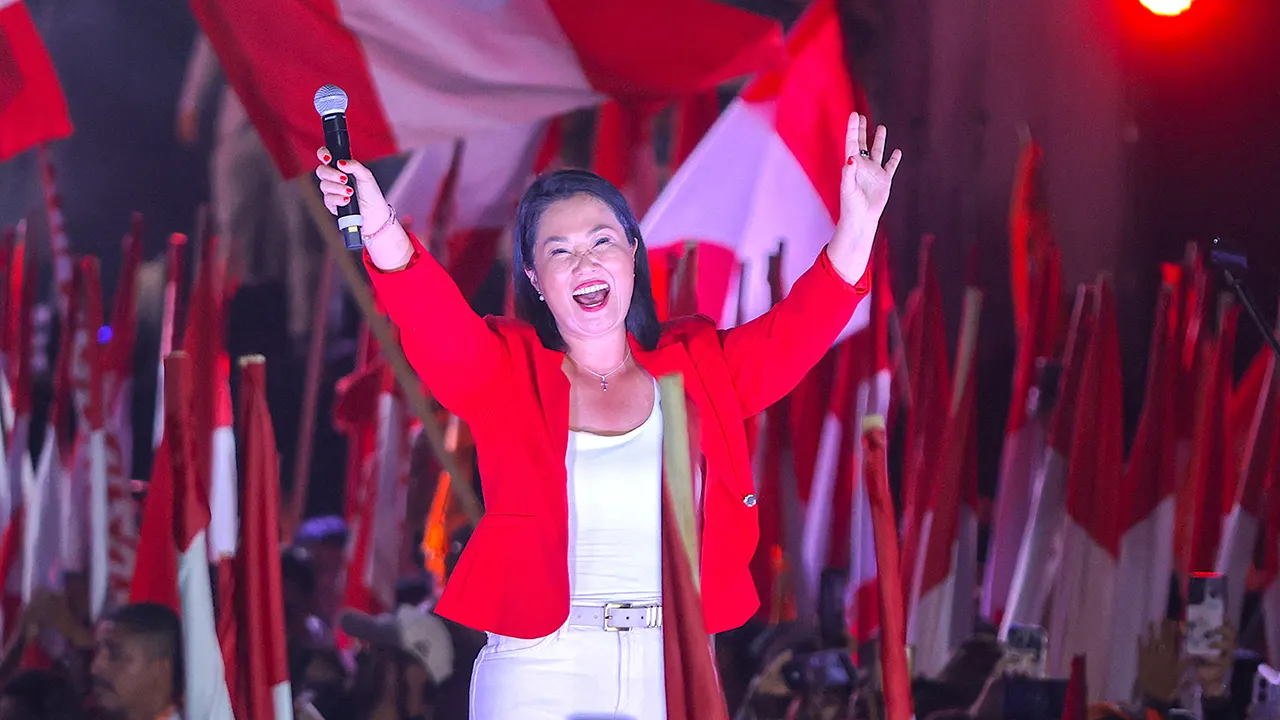
The long, anxious wait for Peru’s future came to a head when the final votes of an intensely tight presidential runoff were tallies, revealing a victory that was as historic as it was microscopic. Keiko Fujimori, a veteran of the country’s turbulent political arena, emerged victorious by securing 50.1% of the vote—a razor-thin margin of fewer than 50,000 votes out of some 18 million cast. This triumph, recognized by Peru’s National Office of Electoral Processes (ONPE), represents a monumental personal milestone for Fujimori, marking her successful capture of the presidency on her fourth attempt and establishing her as the first female president-elect in Peru’s history. For millions of Peruvians who watched the slow, agonizing trickle of returns, the result was a reminder of just how deeply polarized their society remains, split almost exactly down the middle between two starkly contrasting paths forward.
For the everyday citizens of Peru, this election was not merely an abstract ideological debate; it was a desperate plea for stability and safety in a country weary of chaos. Having endured the frantic revolving door of nine different presidents over the course of a single decade, the Peruvian public went to the polls against a grim backdrop of escalating community violence, rampant extortion schemes, and persistent economic anxiety. Fujimori’s campaign spoke directly to these immediate, daily fears, promising an “iron fist” approach to re-establish law and order while fiercely defending the country’s established free-market economic model. In contrast, her leftist opponent, Roberto Sánchez, mobilized voters by tapping into the deep-seated grievances of the neglected rural interior, highlighting a profound geographic and social divide that the incoming administration must now find a way to heal if it hopes to govern effectively.
Towering over this election, however, was the complicated, lingering ghost of “Fujimorismo”—a powerful political brand deeply intertwined with Keiko Fujimori’s own family history. She is the daughter of former President Alberto Fujimori, whose highly controversial rule during the 1990s continues to evoke intense emotions across generations of Peruvians. To his supporters, the elder Fujimori is a savior who rescued Peru from hyperinflation and crushed brutal communist guerrilla insurgencies; to his critics, he remains an autocrat who dismantled democratic institutions and left behind a dark legacy of human rights violations. For more than twenty years, Keiko Fujimori has waged a highly personal, uphill battle to reshape this legacy, attempting to transform her family’s name into a symbol of a modern, conservative, law-and-order movement that respects democratic institutions while retaining its trademark strength and decisiveness.
The global significance of her victory was quickly acknowledged by Washington, where the U.S. State Department issued a warm, prompt congratulatory message. The Trump administration’s swift embrace of Fujimori highlights a shared concern over a rapidly changing political landscape in Latin America, signaling Washington’s eagerness to work closely with a reliable, market-oriented ally. In its official message, the State Department expressed a strong desire to deepen bilateral collaboration, specifically focusing on regional security operations, anti-trafficking measures, and mutually beneficial trade and investment. This diplomatic warmth reflects a sigh of relief in Washington, which has been searching for dependable partners in the hemisphere to help counter the spread of authoritarianism and foster a stable environment for international commerce.
Beneath the diplomatic pleasantries lies a high-stakes geopolitical tug-of-war, as the United States watches with growing concern as China deepens its influence across Latin America. This concern is epitomized by Peru’s newly completed Chancay deepwater port—a massive, $1.3 billion mega-project funded by Beijing that now serves as a key logistical gateway for Chinese trade on the Pacific coast. The U.S. government has previously issued explicit warnings to Peru, counseling the nation that deep economic dependency on such massive foreign infrastructure projects could lead to a quiet erosion of its national sovereignty. Fujimori’s tough, security-focused posture aligns neatly with Washington’s desire to keep a watchful eye on these massive foreign investments and ensure that regional trade networks remain secure and independent of coercive foreign influence.
While the vote count has concluded, the road ahead for the president-elect remains fraught with complex challenges as she waits for the National Jury of Elections (JNE) to issue its final, formal proclamation. Winning an election by such a narrow fraction of a percent means that Fujimori inherits a highly skeptical electorate and a deeply fragmented parliament, where every policy decision will be fiercely contested. To successfully lead Peru out of its cycle of systemic instability, she must transcend her polarizing family legacy and prove to her detractors that her “iron fist” security policies can coexist with a deep respect for human rights and democratic norms. Ultimately, her presidency will not just be judged by her ability to court foreign investment or secure the borders, but by her capacity to restore a sense of unity, trust, and common purpose to a nation that has spent too long on the edge of political collapse.