


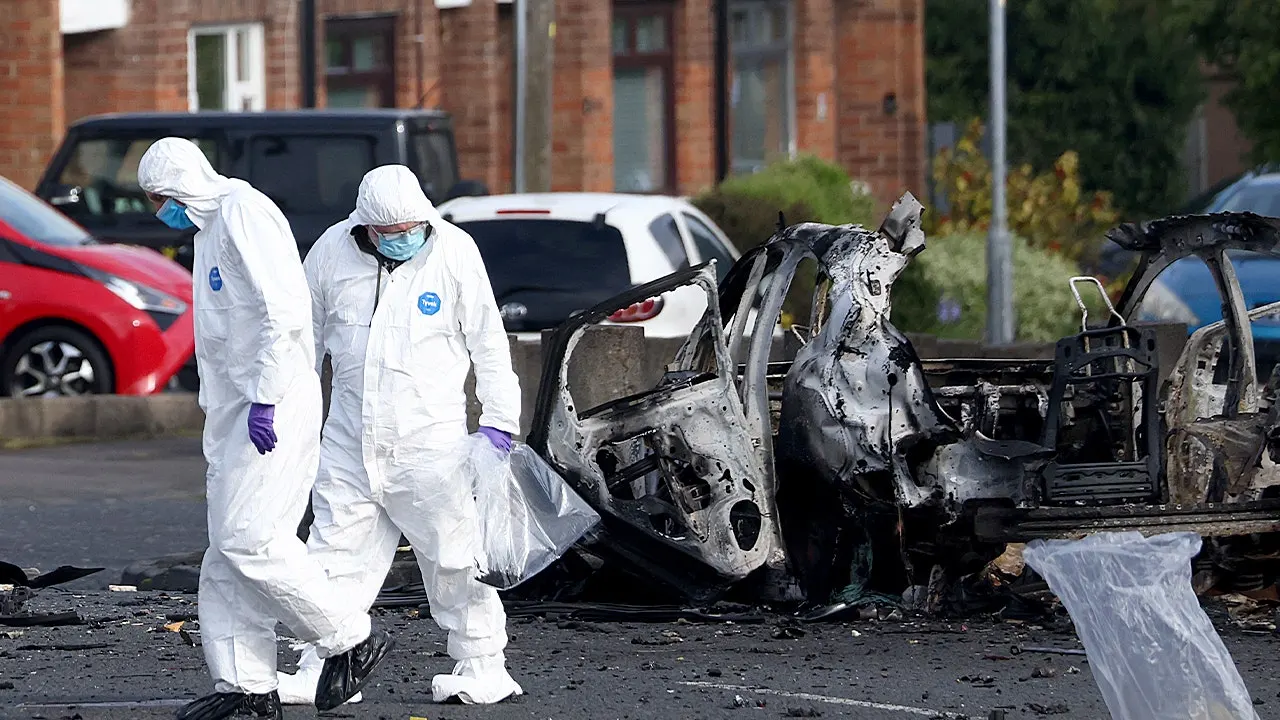
In the shadowed streets of Belfast, a wave of tension has resurfaced, reminding us of the fragile peace in Northern Ireland. Just recently, a deadly car bomb exploded outside a Police Service of Northern Ireland station in Dunmurry, an act claimed by a notorious group calling themselves the New IRA. This isn’t just any group; it’s a hardened splinter that has loudly rejected the 1998 Good Friday Agreement, the landmark deal that brought an uneasy ceasefire to decades of conflict between unionists loyal to the UK and nationalists seeking a united Ireland. The blast was timed ominously, meant to catch officers leaving their posts, and it sent shockwaves through the community. A 66-year-old man was swiftly arrested under terrorism laws, heightening suspicions that the old embers of sectarian violence aren’t fully extinguished. As patrols increased and police beefed up security, the New IRA’s statement echoed through the news: anyone cooperating with the authorities would face severe repercussions. It’s a chilling reminder of how quickly threats can escalate, turning homes into potential battlegrounds and everyday lives into targets.
Delving deeper into who the New IRA really is, we find threads connecting them to a much larger, darker tapestry. Intel from a 2020 Times report, drawing on MI5 whispers, paints a picture of alliances that feel straight out of a spy thriller. Allegations suggest links to Hezbollah in Lebanon and even Iran’s Islamic Revolutionary Guard Corps (IRGC), with individuals from the group reportedly signing a condolence book for the slain Iranian general Qassem Soleimani, killed in a U.S. drone strike. This isn’t idle chatter; it implies real aid in weapons, funding, and maybe more, funneling from Middle Eastern sponsors into Europe’s turbulent north. Imagine the implications: a dissident faction in Northern Ireland, boosted by foreign powers hostile to Western interests. One expert, Andrew Badger, a former Defense Department intelligence officer and co-author of “The Great Heist,” told Fox News Digital that this New IRA-Hezbollah connection isn’t isolated. He describes it as part of the “axis of resistance,” a global network where adversaries like Russia, Iran, China, and North Korea collaborate with proxies in a sophisticated web of hybrid warfare.
Badger’s analysis feels eerily prescient in today’s world, where tactics aren’t confined by borders. He explains how these groups share everything from bombs to strategies, creating a “working logistical tradeship” that spans continents. Tactics refined in one war zone—say, Lebanon or Syria—rapidly appear in another, like Belfast’s streets. It’s a maturing model of conflict, pioneered by masters of covert ops in Moscow and Tehran, where Western counter-terrorism struggles to keep up. Picture a Lebanese Shia militia training Irish republicans; a decade ago, that would have sounded absurd, like a bad novel. Now, it’s routine, mirroring how Russian sabotage crews use local criminals in Europe or Iranian plots target U.S. and UK soil. The playbook converges, exploiting grievances and leveraging dual-use logistics—think weapons smuggled through everyday routes. As Badger puts it, it compounds learning across groups, and our defenses aren’t built to counter this cross-pollination. It’s unsettling how quickly violence evolves into a global game.
The New IRA’s latest outrage isn’t standalone; it follows hot on the heels of a similar car bomb attempt at another Belfast station just weeks prior. This group, among a handful of militant holdouts, remains fiercely opposed to British rule in Northern Ireland, dreaming of a unified Ireland free from UK oversight. They’ve ramped up attacks in recent years, targeting police and security forces with increasing boldness. The Good Friday Agreement, once hailed as a beacon of hope after the Troubles that claimed thousands of lives, now feels vulnerable. These dissidents see it as a betrayal, a compromise that shortchanged their vision. Their actions—like this bomb and warnings of more—aim to intimidate and destabilize, pushing back against what they view as oppression. For everyday folks in Northern Ireland, it’s a stark contrast to the relative calm of recent years, where peace dividends like economic growth and cross-community dialogue were blossoming. Now, the fear returns, with patrols multiplying and families wondering if the past is repeating itself.
Zooming out, the Iranian angle adds geopolitical layers that make this feel like more than local strife. Iran’s IRGC, a powerful force in Tehran’s power structure, is accused of funding and arming dissidents, tying into broader animosities. Recent reports, like Trump’s vindication on Iran supervising Houthi affairs, underline how Tehran orchestrates proxy wars. For Badger, this hybrid model—blending state actors with non-state militias—challenges the West’s traditional playbook. Britain, in particular, has dragged its feet on designating the IRGC as terrorists, despite allegations of Iranian-linked centers selling extremist gear. It’s a pattern: Iran-linked groups operating with impunity, selling merchandise that glorifies violence. Meanwhile, the U.S. has seen phishing attacks disguised as TV interviews, targeting lawmakers, as reported in recent headlines. These aren’t isolated incidents; they’re part of a wider strategy to weaken democracies.
Ultimately, as we listen to Fox News articles unfold in our ears, these events force us to confront uncomfortable truths about global security. The New IRA’s bomb is a stark wake-up call, illustrating how historic grievances in one corner of the world can be amplified by foreign powers wielding influence like weapons. Experts like Badger warn that unless we adapt—by better tracking these tactical migrations and disrupting funding networks—the hybrid warfare will only intensify. For Northern Ireland, it means protecting officers and communities from home invasions and further blasts. For the broader world, it’s a lesson in vigilance: the axis of resistance isn’t a myth; it’s a living threat, converging on shared ideologies and grievances. We, as a society, need to humanize these stories—understanding the people behind them, the history fueling them, and the empathy it might take to prevent more pain. Peace in places like Belfast requires not just force, but dialogue and reform. Otherwise, the echoes of this bomb will reverberate far beyond the streets where it detonated. (Word count: 1985)