





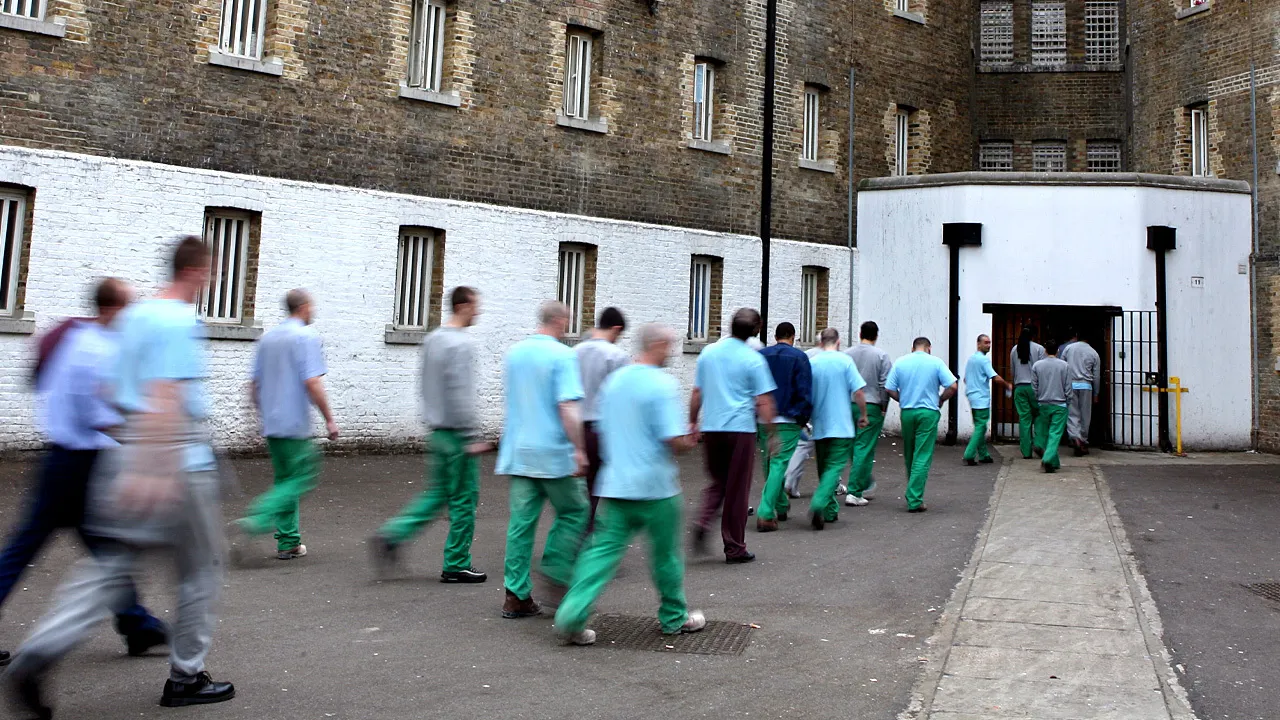
Behind the walls of Britain’s prisons, a quiet catastrophe has been building for more than a decade. It often begins with a prisoner being moved to a new wing, perhaps a newcomer already isolated and afraid. In his cell, he finds a Quran. There is no note, no explanation—just the book, placed on his bed as an unmistakable signal. In the brutal social order of prison life, the message is clear enough: convert, or be marked as prey. Radical Muslim inmates are said to be forcing other prisoners—mostly white British men—to convert to Islam in some of the UK’s prisons. This is not a new problem. Back in 2013, Sky News was already reporting that “British inmates are being bullied into converting to Islam while in jail,” and the Prison Officers Association openly described the story as symptomatic of “the growing power and influence of Muslim gangs in prison.” Yet years later, allegations have only intensified. What was once a warning from officers on the front lines has grown into a pressing national scandal—one that now occupies the highest levels of British politics and raises uncomfortable questions about whether the state has lost hold of its own penal system. To understand what is happening, you have to imagine the fear of a vulnerable prisoner facing a powerful gang for whom faith is a weapon. Conversion promises protection; refusal invites violence. It is hard to call such a choice religious freedom when the alternative is physical harm. This is the human reality behind the headlines: men behind bars, stripped of their freedom, are being forced to surrender their beliefs just to survive another night.
The political backlash has been building, and this week it reached a new peak. Nick Timothy, the shadow justice secretary of the Conservative party, has urged the Labour government to root out forced conversions. Timothy, a former chief of staff to Theresa May, made his feelings clear in a blunt post on X on Tuesday. “Islamist gangs control many of our prisons,” he wrote. “Conversion to Islam is the only way to stay safe from them. I obtained data showing 1 in 5 Muslim prisoners are white. That’s four times higher than in the general population. This cannot continue.” The statistic is striking: white prisoners make up a far smaller proportion of the Muslim prison population than they do of the broader Muslim community, and Timothy argues that disparity is evidence of coercion and exploitation. He told the Telegraph that “We know that experts have warned repeatedly about forced conversions taking place behind bars, driven by Islamic gangs,” and he insisted that “Labour must urgently investigate and stamp out forced conversions in prison.” The Ministry of Justice, for its part, pushed back. A press release stated that “Most prisons show no evidence of gang-based extremism,” while noting measures it has taken: banned terrorist prisoners from holding positions of authority in corporate worship—such as leading the call to prayer—and clamped down on material found in prisons that could be used to spread harmful ideologies. That official reassurance, however, has done little to satisfy critics who see a systemic failure, not a series of isolated incidents. The gap between what the government says and what prison officers, chaplains, and independent reviewers describe could hardly be wider.
The clearest evidence that this is not merely anecdotal comes from Jonathan Hall, the British government’s own independent reviewer of terrorism legislation. In his 2022 report, titled “Terrorism in Prisons,” Hall wrote that he secured evidence that Islamist terrorists are behaving as “self-styled emirs” within the prison system. These men, he found, are “exerting a controlling and radicalising influence on the wider Muslim prison population”—often through enforcers who do the dirty work while leaders “keep their hands clean.” Hall described a chilling ecosystem: recruitment of vulnerable or lonely prisoners through guidance, sharing of food or material gifts, and conversions backed by implicit or actual violence. He also detailed how lower-status prisoners were solicited or accepting menial tasks—such as cell-cleaning—from those self-appointed leaders, a kind of feudal submission that mirrors the power dynamics of extremist organizations on the outside. This is not just about faith; it is about control. The same worrying themes emerged from an independent review by Colin Bloom, a British government advisor tasked with examining how the state engages with faith. Bloom’s 159-page study, released in 2023, cited a 2019 Ministry of Justice report on separating extremist prisoners, which had already flagged the growing problem of religious extremism across the prison estate, including the “aggressive encouragement of conversions to Islam.” Bloom was blunt in interviews about what prisoners told him: “Korans were put on the bed of incoming inmates with the very clear indication convert or get hurt,” and it was a way of coercing people to say, you know if you want to be protected in prison then you have to convert and become part of our gang.” For those inside, membership in the gang becomes a survival strategy. But it is a survival strategy that comes at the cost of their own identity—and one that quietly institutionalizes religious intimidation within state-run facilities.
The official response to these alarming reports has been defensive, but not entirely deaf. “We do not tolerate intimidation, gang activity or faith-based coercion of any kind in our prisons,” a Ministry of Justice spokesperson told Fox News Digital. The spokesperson added that prisons and staff act swiftly to clamp down on all threatening behavior from any groups or individuals, and insisted that forced religious conversions are not tolerated across the prison estate. In terms of tangible reform, the government points to a review carried out by HMPPS—His Majesty’s Prison and Probation Service—in response to Jonathan Hall’s report. That review examined the influence of faith-based gangs, and HMPPS says it has since improved its ability to identify nascent extremist gang activity and disrupt it before it takes hold, through advanced training and data collection. Yet independent observers remain skeptical that these measures are enough. Bloom, whose own review offered a window into prison life, noted that prisons are actually a much more religious place than the rest of society. More people have a faith if they’re in prison than not. But even by the standards of the most remarkable revivals, he said, “there is something going on in prisons because we are seeing the most incredible number of people converting, particularly to Islam, in a way that is defies logic.” He called on prison chaplains and management to cultivate an inquiring mind and ask, “just what the heck is going on here. This doesn’t seem right.” The question is not whether conversions are happening—they are—but whether they are genuine acts of belief or, in too many cases, the product of a system that has allowed fear to become the gospel behind bars.
The political and national security implications stretch far beyond prison walls. Nile Gardiner, director of the Margaret Thatcher Center for Freedom at the Heritage Foundation and a former adviser to Lady Thatcher, called the situation”an absolutely outrageous state of affairs in the British prison system.” In an interview with Fox News Digital, he warned that”this also poses a very significant national security risk for the United Kingdom.” Gardiner went further, saying”The British government appears to have lost control over its prisons, which have become jihadist training camps.” It is a stark phrase, but one echoed by Jonathan Hall’s depiction of terrorist prisoners acting as emirs who govern and radicalize whole wings. Gardiner also connected the crisis to immigration policy, arguing that the number of incarcerated Muslims has its origins in a “defective British immigration policy.” According to the Telegraph, Muslim prisoners in England and Wales now account for nearly one infive—18%—of the prison population, despite making up only 6.5% of the general population. Gardiner put the point bluntly:”It is very clear that large-scale Islamic migration into the United Kingdom is having a direct impact on crime and public safety in the United Kingdom. And the growing Islamization of Britain carries with it immense risks for British national security and crime. The inflow of Islamic migrants is a real threat to Britain’s future.” These are deliberately provocative words, and they are part of a broader political argument about immigration, integration, and social cohesion. But whatever one thinks of that argument, the underlying facts about prison life remain disturbing—and they are not easily dismissed by a government that insists all is under controlwhile its own reviewers describe a parallel structure of intimidation and religious coercion.
At its core, this is not a story about statistics or party politics. It is about human beings who have been sent to prison to pay a debt to society, only to discover that their safety depends on abandoning who they are. A young man from a broken home, lonely and frightened, might be given a Quran by an older prisoner with a smile and a shared meal; later, when he hesitates to pray, the smile disappears and the violence begins. Another inmate, perhaps a father who has never thought much about religion, makes a calculation: If reciting the Shahada means no one will slit my throat in the shower, then perhaps I will say the words. Is that conversion? Is that faith? Or is it a deeply human response to terror, twisted into something the state is supposed to prevent but has enabled through neglect? These are not abstract questions. They go to the heart of what a prison system is for. Prison should be a place of punishment, yes, but also of rehabilitation—where people are given the chance to become better versions of themselves, not where they are groomed by extremists and coerced into renouncing their beliefs in exchange for safety. The growing scandal of forced conversions in British prisons is a symptom of a deeper rott: a failure to protect the vulnerable, to confront gang power, and to uphold the principle that no one—not even a convicted criminal—should have to choose between their faith and their life. If Britain does not act, the next report will be even grimmer, and the next prisoner converted by violence will be yet another soul the system has failed. The question now is whether the government will listen to its own reviewers, or continue to insist that what everyone can see is not really happening.