





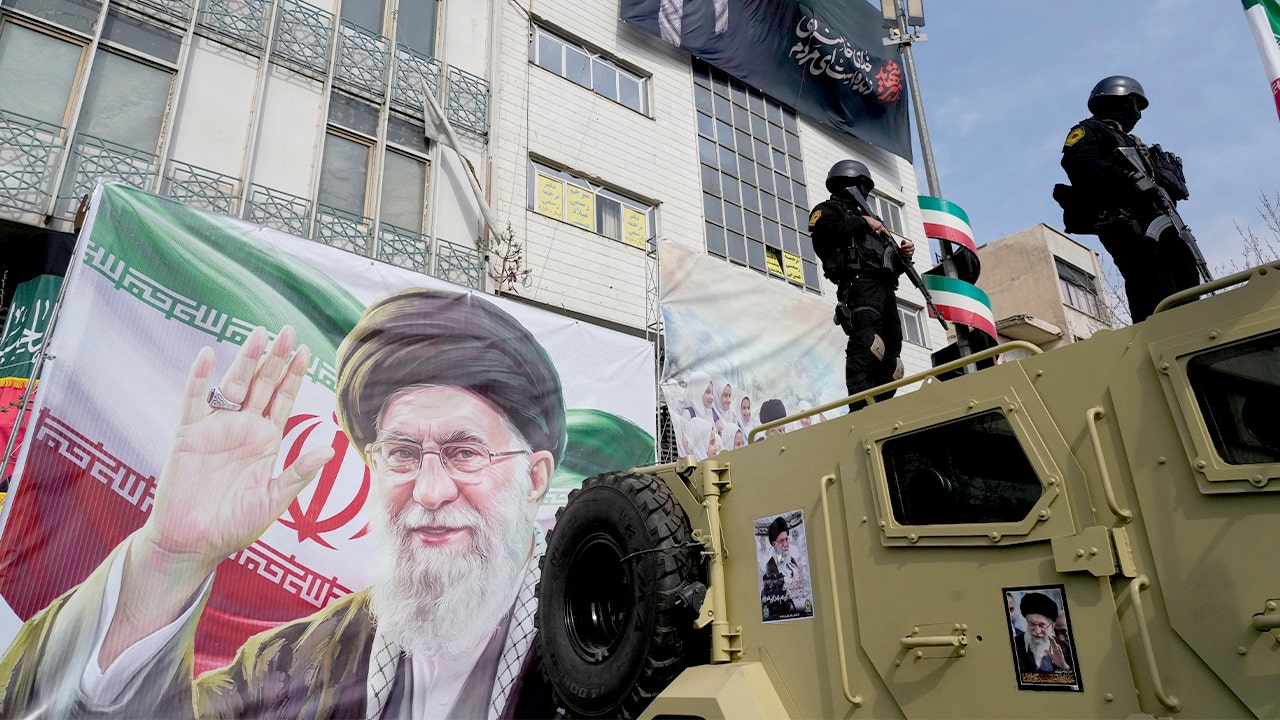
In the shadow of a changing Middle East, the announcement of a multi-day state funeral for Iran’s long-standing Supreme Leader Ayatollah Ali Khamenei has set off a geopolitical earthquake, signaling a breathtakingly high-stakes gamble by a regime that has spent decades navigating the knife-edge of survival. Scheduled to begin on July 4th in the bustling, tense streets of Tehran and culminate with a sacred burial in the holy metropolis of Mashhad on July 9th, the elaborate ceremonies represent much more than a routine transition of power or a nation in grief. Instead, according to counterterrorism analysts and international observers, the event is a deliberate, highly calculated show of confidence designed to test the durability of an imminent, fragile peace agreement with the United States. Following the devastating airstrikes on February 28th that claimed Khamenei’s life at the age of eighty-six, bringing an end to his influential thirty-six-year reign, Tehran’s leadership retreated into deep paranoia, shuttering offices, dispersing key personnel, and operating from heavily fortified subterranean bunkers. The decision to convene a massive, public gathering of the country’s most isolated and hunted political and military figures is a move that would have been unthinkable just weeks ago, presenting what defense experts describe as the most “target-rich” target environment imaginable for Western and Israeli intelligence services. The regime’s willingness to expose its entire upper echelon to the open skies of the capital suggests that they are betting their very survival on the premise that a new diplomatic breakthrough will hold. With President Donald Trump indicating that a highly anticipated peace deal, brokered through intense behind-the-scenes negotiations, is on the verge of being signed, Tehran is using the funeral as an audacious physical declaration of security. It is a stunning visual message aimed squarely at Washington, signaling to the world that the Islamic Republic no longer fears sudden annihilation from above, even as it prepares to bury the man who spent his life projecting defiance against Western hegemony.
The intentional four-month delay between the Supreme Leader’s death in February and the planned mid-summer funeral serves as a masterclass in strategic narrative framing, demonstrating how a wounded regime can weaponize time to transform a devastating military defeat into a powerful myth of ultimate victory. In the immediate aftermath of the U.S. and Israeli airstrikes, the clerical establishment faced a profound existential crisis, threatened by internal dissent and the terrifying reality that their supreme authority was vulnerable to high-tech foreign weaponry. Rather than rushing to bury Khamenei in a moment of vulnerability and grief, which would have cemented his legacy as a victim of foreign aggression, the regime painstakingly orchestrated a political holding pattern, waiting for the geopolitical dust to settle and for diplomatic negotiations to yield tangible results. By waiting for the precise moment when a peace deal with the United States was formalized, the ruling elite has cleverly reframed the entire trajectory of the conflict, painting the upcoming treaty not as a compromise or a surrender, but as a hard-fought capitulation by Washington. In this carefully curated narrative, Khamenei does not go into the earth as a leader who was successfully assassinated by his adversaries; instead, he is portrayed as the ultimate Islamic revolutionary whose unwavering resistance forced the world’s greatest superpower to sue for peace on Tehran’s terms. This psychological inversion turns the signing of the peace treaty into a victory monument, allowing the regime to tell its domestic population and its regional proxies that the Supreme Leader’s martyrdom was the divine catalyst that secured Iran’s long-term survival and leverage. By delaying the burial until they could secure a diplomatic “win,” the regime has sought to ensure that the peace deal is viewed merely as a tactical pause—an era of deferred revenge rather than the abandonment of their revolutionary struggle.
To maximize the emotional and political impact of this transition, the regime has meticulously aligned the funeral schedule with deeply evocative religious and historical symbols, creating a highly charged drama designed to resonate across the Shia world and send a provocative message to the West. The decision to launch the public ceremonial processions on July 4th—the exact day the United States celebrates the historic milestone of its 250th anniversary of independence—is a calculated piece of geopolitical theater, a deliberate attempt to overshadow American national pride with an exhibition of revolutionary defiance. This temporal positioning suggests that while America celebrates its historic democratic experiment, the Islamic Republic is inaugurating a new era of resistance, casting the leader killed by American actions as an immortal martyr whose influence will outlast his executioners. Furthermore, the schedule deliberately capitalizes on the religious fervor of Muharram, the sacred Shia month of mourning that commemorates the historical martyrdom of Imam Hussein at the Battle of Karbala, an event that forms the psychological foundation of Shia theology and its emphasis on righteous struggle against overwhelming tyranny. By embedding Khamenei’s funeral within this sacred window, the regime is effectively elevating him from a contemporary political figure to a cosmic hero of the faith, transforming his burial into a modern-day passion play. The procession’s path from the political capital of Tehran, through the clerical bastion of Qom, and finally to the holy Imam Reza shrine in Mashhad—the only final resting place of one of the twelve Shia Imams located within Iran—is designed to institutionalize his memory. By laying him to rest within the holiest shrine in Iranian Shiism, the state is establishing a permanent, highly potent mobilization site that will serve as a physical and spiritual rallying point for generations of loyalists to come.
At the absolute center of this monumental security and political gauntlet lies the shadowy, high-stakes succession of Mojtaba Khamenei, the late leader’s son, who now faces an agonizing personal and political dilemma that could decide the fate of the dynamic ruling family. Since the devastating outbreak of hostilities and the subsequent targeted strikes that eliminated his father, Mojtaba has been a ghost, vanishing entirely from the public eye and orchestrating the delicate affairs of state through an intricate network of trusted couriers and secure communications. His prolonged absence, driven by an acute awareness that his coordinates are highly sought after by foreign intelligence agencies, has cast a shadow of uncertainty over his legitimacy as the successor to the theoretical throne of the Islamic Republic. According to rigid Shia tradition, the transition of spiritual and political authority is consecrated at the graveside, where the son must step forward in front of the assembled masses to lead the funeral prayers and personally commit his father’s body to the earth. This sacred ritual is not merely symbolic; it represents the formal passing of the mantle, a crucial public validation that legitimizes the dynastic succession in the eyes of both the clerical establishment and the general populace. Yet, for a man who has lived under the constant threat of targeted elimination and whose rare public appearances are treated by adversaries as precise target coordinates, attending the July 9th burial in Mashhad represents an extraordinary physical risk. The regime find themselves severely constrained by this cultural expectation, trapped in a dangerous paradox: if Mojtaba refuses to emerge from his bunker, the absolute authority of his new reign will be severely compromised by his perceived weakness and absence; however, if he chooses to stand at the graveside, he exposes himself to a precision strike in a pre-announced time and place, risking the decapitation of the newly established dynasty before it can even take root.
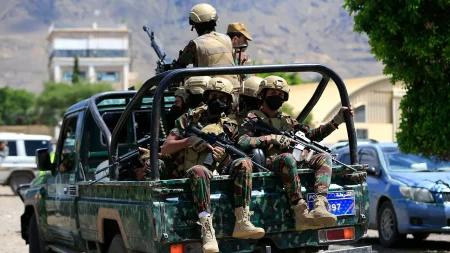
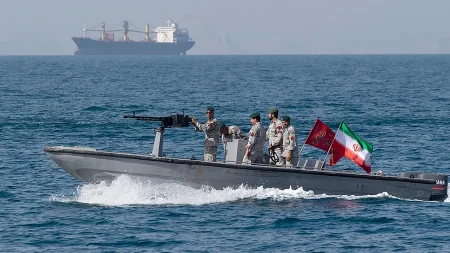
This unprecedented security challenge is further complicated by the sheer physical scale and multi-city route of the funeral procession, which creates a logistical nightmare for Iran’s elite internal security forces, who must secure hundreds of miles of open roads and volatile urban centers. The planned route, spanning from the dense metropolis of Tehran to the conservative theological academies of Qom, before finishing in the far northeastern holy city of Mashhad, offers potential adversaries an incredibly vast array of vulnerabilities to exploit. Iran’s security apparatus, already reeling from the intelligence failures that allowed foreign forces to breach their airspace and locate the Supreme Leader in February, must now safeguard a highly visible, slow-moving cortege surrounded by millions of emotional mourners. The atmosphere within the regime’s inner circle is undoubtedly thick with apprehension, as senior military commanders, intelligence officials, and political elites prepare to step out into the daylight for the first time in months, relying entirely on the fragile diplomatic guarantees of a peace treaty that has yet to be fully tested. Many of these figures are highly wanted individuals who have spent their careers in the shadows, and their sudden aggregation in a single, public space represents an unprecedented concentration of high-value targets. The state must deploy every available resource—including elite electronic warfare units, anti-aircraft defense systems, and the secretive “black-clad” security details loyal to the Khamenei family—to form a protective shield over the proceedings. Yet, in the modern landscape of warfare, where drone technology and deep-penetration intelligence can bypass traditional physical defenses, the regime’s planners are fully aware that any lapse in security during these six critical days could result in a catastrophic blow from which the Islamic Republic might never recover.
Ultimately, the upcoming funeral is much more than a somber farewell to a polarizing historical figure; it is a major pivot point that will shape the future of Iranian sovereignty, domestic stability, and the broader geopolitical equilibrium of the entire Middle East. By utilizing this delicate moment of transition to secure a sweeping peace agreement, the regime is attempting to demonstrate a surprising level of pragmatic resilience, proving that it can absorb devastating blows and still emerge with its core power structures intact. This calculated gamble reflects a deep understanding of political survival, utilizing the deep-seated religious devotion of the Iranian populace to consolidate domestic support while simultaneously engaging in sophisticated international diplomacy to neutralize external threats. The success of this transition rests entirely on the assumption that the impending peace deal with the United States will provide a durable shield against foreign intervention, allowing the newly established leadership under Mojtaba Khamenei to stabilize the economy, suppress domestic unrest, and reinforce its regional alliances. If the ceasefire holds and the funeral proceeds without interruption, the regime will have successfully converted a moment of profound national tragedy into a foundation for renewed legitimacy, projecting an image of an invincible state that can withstand the worst of conflict and emerge victorious. However, if the fragile peace collapses, or if the deep-seated vulnerabilities of the succession process are exposed to the world, the events of July could trigger a rapid descent into internal chaos and regional escalation. As the world watches the preparations unfold, the looming state funeral stands as a powerful testament to the volatile intersection of faith, power, and survival in one of the world’s most fiercely contested geopolitical arenas.