




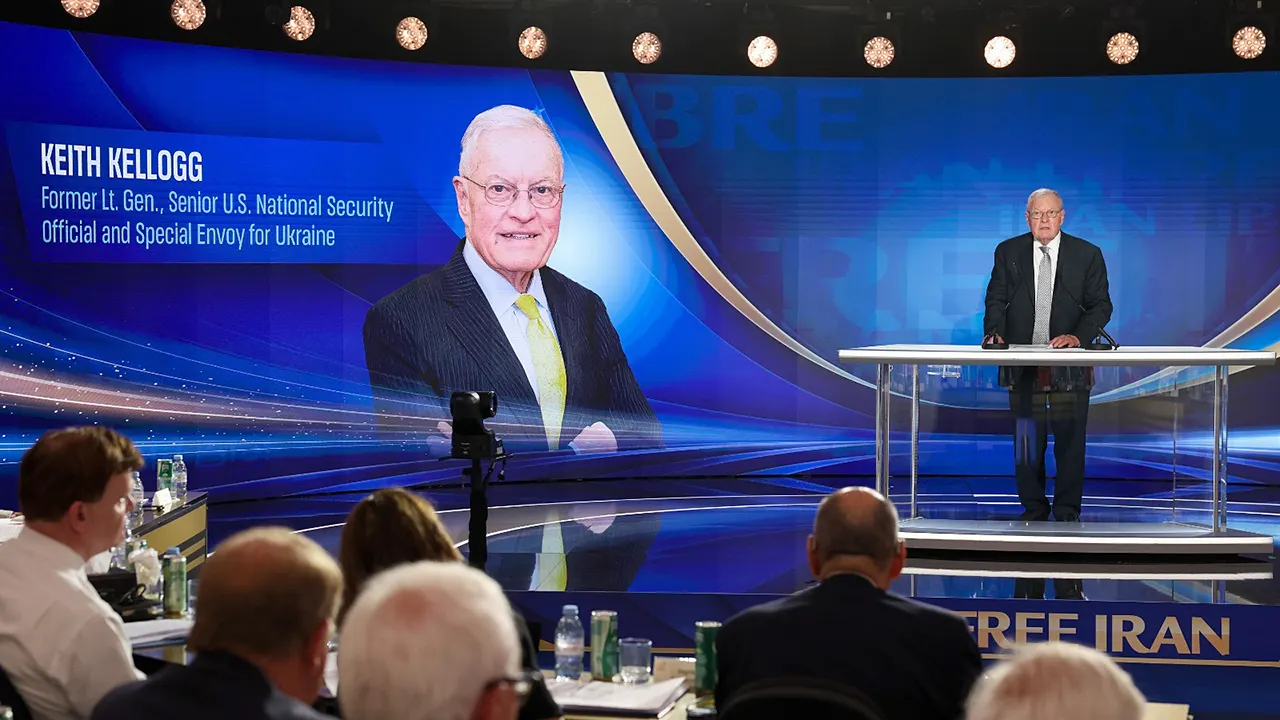
In a world where geopolitical landscapes are constantly shifting and the cries for freedom often get drowned out by the harsh noise of international diplomacy, a pivotal and deeply emotional gathering took place in Paris. This meeting, organized by the National Council of Resistance of Iran (NCRI)—a prominent exiled Iranian opposition coalition closely aligned with the People’s Mujahedin Organization of Iran (MEK)—served as a striking stage for urgent calls for revolutionary change. Among the most prominent voices was retired U.S. Army Lieutenant General Keith Kellogg, a former special envoy for Ukraine, who delivered a stirring address warning the assembly that the current tyrannical regime in Tehran is weaker and more vulnerable than it has been in several decades. Speaking with the raw authority of a seasoned military strategist, Kellogg urged the assembled dissidents to seize what he characterized as a rare, brief, and historic opening to dismantle the theocracy. He spoke not merely of policy adjustments or delicate diplomatic maneuvers, but of a generational transition, declaring that the window of opportunity is open wider now than at any point in decades and warning that such moments in history do not last forever. Kellogg made it clear that the ruling mullahs would never relinquish power voluntarily and that it is up to the organized resistance to actively push them out, transforming any potential future disarmament agreements from simple bureaucratic endpoints into the foundational first steps of building an entirely new, democratic, and free Iranian nation.
Standing at the heart of this movement is Maryam Rajavi, the charismatic president-elect of the NCRI, whose leadership represents the enduring hope of millions of Iranians living both inside the country under oppressive rule and abroad in painful exile. During the conference, Rajavi articulated a profound truth that has long eluded global policymakers: neither the devastation of foreign war nor the endless, often empty cycles of international negotiations have succeeded in neutralising the existential threat posed by Tehran’s rulers. With quiet resolve, she argued that a peaceful, non-nuclear Iran can only be achieved through the direct actions of the Iranian people themselves under the banner of their organized opposition. She demanded that any future international accords directly address the regimes internal atrocities, specifically calling for an immediate end to the execution of political prisoners and the brutal silencing of peaceful domestic protesters. Reinforcing this call for accountability, Kellogg reminded the audience of the NCRI’s critical historical legacy, pointing back to their landmark 2002 disclosure that exposed the hidden nuclear facilities at Natanz and Arak to a sleeping world. He challenged the council to remain the unyielding moral conscience of the global community, ensuring that any future diplomatic agreements are strictly verified, that every single barrel of enriched uranium is removed, every centrifuge silenced, and every promised reform fully realized on the ground.
However, the immense hope and emotional intensity of the summit were quickly met by the harsh realities of real-world geopolitics and security threats, casting a long, sobering shadow over the streets of Paris. Organizers had anticipated that tens of thousands of passionate Iranian expatriates from across North America and Europe would flood the French capital to raise their voices in unison, but their plans were abruptly halted when French authorities issued a controversial ban on the scheduled outdoor rally. The French government defended its decision by pointing to highly sensitive intelligence reports warning of imminent security threats, including potential bomb plots and risks of targeted violence orchestrated either by actors linked directly to the Tehran regime or by rival opposition factions, such as monarchist groups. The ban was subsequently upheld by a French court, a stark and painful reminder of the very real physical dangers that follow these dissidents even when they are thousands of miles away from their homeland. For many of the activists gathered in Paris, this was a familiar and terrifying echo of the past, particularly remembering the foiled 2018 bomb plot targeting their massive rally outside Paris—an attack that was traced back to an active Iranian state-sponsored operation.
The decision by the French government to restrict the outdoor demonstration sparked instant outrage and defiance, revealing a deep and painful division between the European hosts and the exiled freedom fighters. Despite the heavy police presence and the explicit legal ban, hundreds of determined demonstrators still gathered in the historic streets of Paris, refusing to let their voices be completely silenced by fear or bureaucracy. Their act of civil disobedience was met with swift state intervention; French police quickly moved to disperse the crowds, resulting in the arrest of approximately twenty activists and creating a tense atmosphere of confrontation. Ali Safavi, a dedicated member of the NCRI’s Foreign Affairs Committee, expressed the deep frustration of his community, condemning the French ban as an unjustifiable act of capitulation to the terrorist-sponsoring regime in Tehran. Safavi argued passionately that a democratic nation like France had a moral obligation to protect peaceful assembly rather than yielding to the intimidation tactics of foreign dictators. This sentiment was echoed on the international stage by former British Prime Minister Boris Johnson, who delivered a speech criticizing the French government’s actions as a tragic mistake and asserting that if the flame of freedom is ever to be ignited within Iran, Western democracies must have the courage to allow those dissenting voices to be heard clearly within their own capital cities.
The struggle of the Iranian dissidents was further elevated into a broader, interconnected global fight by an emotional and deeply impactful address from Ukraine’s former Foreign Minister, Dmytro Kuleba. Kuleba, whose own nation has been ravaged by a brutal Russian invasion, drew powerful, direct parallels between the Ukrainian defense of sovereignty and the Iranian opposition’s exhaustion with domestic tyranny. He told the gathering that the people of Ukraine, who have experienced the horrors of targeted state violence, stood in deep solidarity with the Iranian resistance and were appalled by the restrictions placed on their peaceful assembly in Paris. In a moments of stark clarity, Kuleba humanized the geopolitical alliance between Russia and Iran, pointing out that the very same regime terrorizing citizens in Tehran is actively contributing to the destruction of Ukrainian families. He described how Russian ballistic missiles and kamikaze drones—built using technology deliberately provided by the Iranian regime—frequently rain down on peaceful civilian areas in Kyiv. This shared suffering created an instant, unbreakable bond of empathy in the conference hall, as Kuleba spoke of knowing intimately what it feels like to see loved ones targeted, killed, and displaced by the destructive policies of the very same authoritarian rulers currently holding the people of Iran hostage.
Ultimately, the events in Paris underscored the incredibly complex, dangerous, and deeply personal journey of the Iranian opposition as they navigate a hostile world. The NCRI’s primary member organization, the MEK, has a long and highly controversial history, having spent years on Western terrorist watchlists before being officially delisted by the United States, the United Kingdom, and the European Union in 2012. Today, they represent holding a mirror of truth up to the international community, highlighting the ongoing human rights abuses, the systematic execution of dissidents, and the transnational repression carried out by the Iranian state. Despite being banned from the streets of Paris, subjected to arrests, and constantly living under the threat of assassination and terror, these exiled men and women demonstrated that their thirst for self-determination remains entirely unbroken. As the geopolitical gears turn and Western powers contemplate new treaties and diplomatic agreements, the voices from the Paris conference serve as a powerful and urgent reminder that true peace and security cannot be manufactured in closed negotiation rooms. Instead, it must be earned through the resilience of ordinary people who, despite facing overwhelming odds, refuse to let their generational window of freedom close without a fight.