





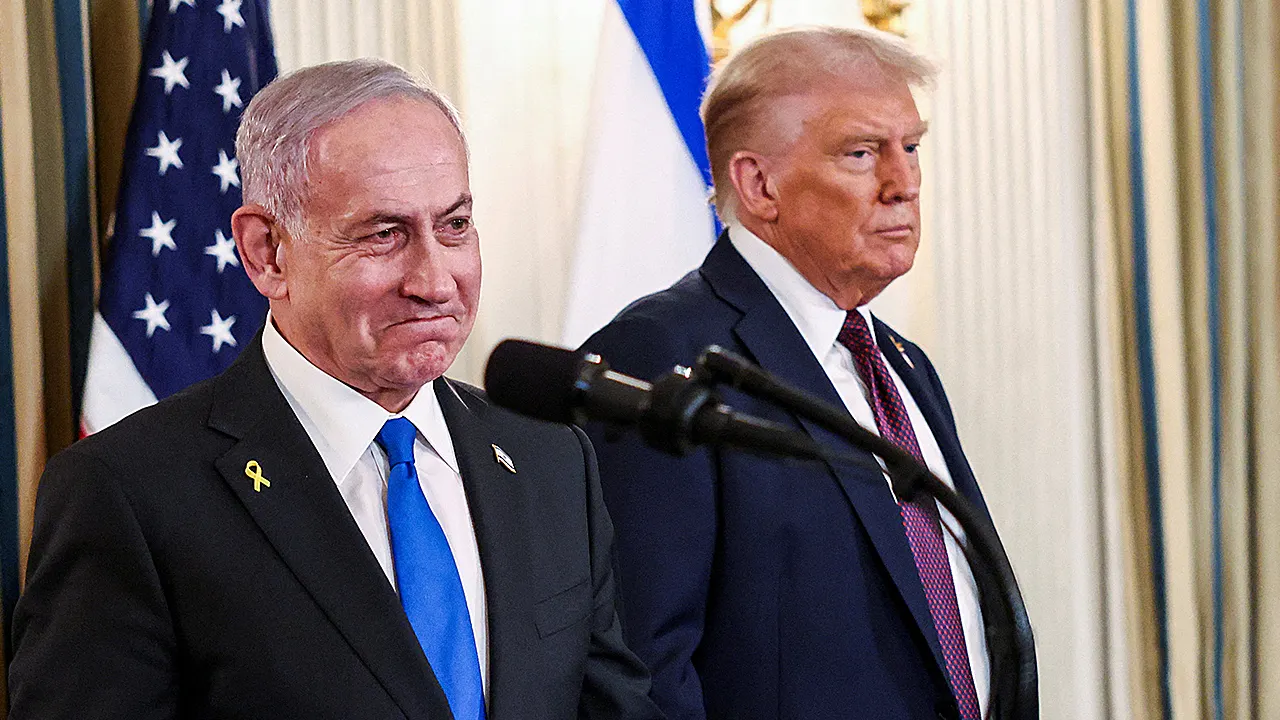
Behind the closed doors of official government offices in Jerusalem, a profound and deeply unsettling anxiety is beginning to take root, characterized by a growing realization that United States President Donald Trump might be on the verge of dramatically turning his back on Israeli Prime Minister Benjamin Netanyahu. This volatile shift in the long-standing geopolitical dynamic has been thrust into the spotlight following a series of highly controversial Israeli military actions, most notably a second devastating airstrike on Beirut by the Israel Defense Forces. This strike was executed in direct defiance of explicit, high-level warnings from Washington, which cautioned that such unilateral military aggression would catastrophically derail delicate, high-stakes progress toward a historic peace agreement between the United States and Iran. For Netanyahu and his security cabinet, the timing of the strike was a high-stakes gamble, occurring just as the prime minister prepared to convene his inner circle and immediately after Trump enthusiastically proclaimed that a groundbreaking memorandum of understanding with Tehran was on the verge of being finalized. The fallout from the military strike was instantaneous and severe, leaving international diplomats scrambling to salvage months of meticulous covert negotiations and raising urgent questions about whether Israel was actively attempting to undermine American foreign policy. Inside the White House, the response was one of unbridled fury, with Trump taking to his digital platform, Truth Social, to launch a searing public condemnation of Israel’s actions, while privately venting his frustration to reporters, reportedly declaring with characteristic bluntness that Netanyahu possessed absolutely no strategic judgment. This public and private combustion represents not just a temporary diplomatic spat, but a fundamental fracture in a relationship that has defined Middle Eastern politics for years, revealing how quickly personal alliances can disintegrate when the pursuit of an immediate, legacy-defining peace deal clashes with the realities of an ongoing, existential regional conflict.
The diplomatic backchannels facilitating these high-stakes negotiations have become a pressure cooker of mutual suspicion, with anonymous officials close to the talks openly accusing the Israeli leadership of executing a deliberate strategy of sabotage. According to a senior diplomat deeply embedded in the Pakistani-mediated discussions with Tehran, the untimely strikes on the Lebanese capital were not merely tactical maneuvers against Hezbollah, but a calculated effort designed to blow up President Trump’s impending diplomatic triumph and drag a reluctant United States back into a direct military confrontation with Iran. This narrative of deliberate obstruction paints a picture of a desperate Israeli administration willing to push the boundaries of its alliance with Washington to prevent any normalization of relations between the West and its arch-nemesis in Tehran. In response to these grave accusations and the sudden momentum of the U.S.-led peace initiative, Netanyahu’s office was forced into a stance of defensive damage control, issuing a stern public clarification stating that Israel was absolutely not a party to the proposed memorandum of understanding between Washington and Tehran. For Netanyahu, who has spent the entirety of his political career framing himself as the ultimate guardian of the Jewish state against Iranian aggression, the prospect of a surprise American-Iranian detente represents an existential nightmare that threatens to validate his deepest suspicions. Netanyahu’s subsequent public addresses have doubled down on this existential framing, passionately reminding the Israeli public of Iran’s explicit goal to dismantle Israel and asserting that his life’s work remains dedicated to preventing such a catastrophe at any cost. Meanwhile, on the ground, the reality of constant conflict continues to grind on, with senior Israeli officials pointing out that Hezbollah rockets have relentlessly targeted civilian populations for days, creating a chaotic and dangerous backdrop that Netanyahu argues justifies preemptive self-defense, regardless of the diplomatic sensibilities of his American counterparts.
This escalating friction exposes the profound risks of the strategic gamble Israel made when it decided to tie its long-term national security prospects almost exclusively to the unpredictable political fortunes of Donald Trump. Historically, the Israeli political establishment viewed Trump as a leader capable of delivering unprecedented geopolitical gifts—including the recognition of Jerusalem as Israel’s capital and the facilitation of the historic Abraham Accords—while also possessing a willingness to wield massive diplomatic and military sticks against their mutual adversaries. This transactional relationship seemed highly beneficial during the early phases of coordinated military campaigns, such as Operation Epic Fury and Roaring Lion, when Washington and Jerusalem appeared to march in lockstep against regional threats. However, foreign policy experts, including Natan Sachs of the Middle East Institute, suggest that Netanyahu may have committed a historic and potentially irreversible strategic error by putting all of Israel’s geopolitical eggs into a single, highly volatile basket. The core of this miscalculation lies in a fundamental misunderstanding of Trump’s political DNA, which is inherently transactional, fluid, and focused on rapid, high-visibility victories rather than sustained, grueling campaigns that offer no immediate political payoff to his domestic base. Netanyahu has always prepared his nation for a marathon conflict—a decades-long struggle of attrition against regional hostile actors—whereas Trump operates on a much shorter, media-driven timeline that demands swift resolutions and grand ceremonial signings. When these anticipated quick wins fail to materialize on schedule, Trump’s enthusiasm quickly sours, transforming his initial support into frustration and leaving his allies exposed to sudden, unpredictable shifts in American policy that can leave them strategically isolated on the world stage. This leaves Jerusalem in an incredibly vulnerable position, forced to grapple with the reality that an American administration could shift its entire alignment overnight if it aligns with the immediate interests of the commander-in-chief, rendering long-held diplomatic assumptions totally obsolete.
At the heart of the current crisis is a profound and perhaps irreconcilable divergence in the strategic doctrines of the two nations’ leaders, illustrating how different their visions are for the future of the Middle East. Netanyahu’s security doctrine is built upon a foundation of relentless, long-term military pressure designed to exhaust and eventually dismantle hostile proxies like Hezbollah and Hamas, a slow-burning strategy that requires patience, immense resources, and a willingness to tolerate prolonged instability. In stark contrast, Trump’s foreign policy worldview is guided by an intense desire to avoid protracted, costly foreign wars and a preference for striking dramatic diplomatic compromises that can be presented to the world as sweeping peace deals. While the two leaders might share broad, high-level objectives on paper—such as containing Iran’s nuclear ambitions, weakening Hezbollah, and shaping a post-Hamas governance structure in the Gaza Strip—their definitions of what constitutes a successful outcome and their willingness to commit to the hard work required to achieve those goals are worlds apart. Sachs points out that having a shared “wish list” of diplomatic desires is entirely different from possessing a unified strategic goal that dictates coordinated, day-to-day military and diplomatic operations in a volatile theater of war. Trump’s conception of a successful deal with Tehran is likely far narrower and more transactional than anything Netanyahu could ever comfortably accept, as the American president is primarily concerned with securing agreements that neutralize immediate threats to American interests rather than engaging in the comprehensive, regime-altering campaign that Israel believes is necessary for its long-term survival. This fundamental mismatch in expectations has created an atmosphere of deep distrust, with Israeli planners fearing that Trump’s impatience will lead to a premature agreement that leaves Iran’s regional influence intact and Israel’s security severely compromised, exposing the deep divide between Washington’s pursuit of a swift diplomatic exit and Jerusalem’s reality of perpetual vigilance.
To fully understand the current diplomatic impasse, one must look beyond geopolitical doctrine and examine the starkly contrasting personalities, temperaments, and intellectual backgrounds of the two protagonists at the center of this global drama. Netanyahu views himself as a consummate historical strategist, an extraordinarily erudite, highly educated, and deeply cautious leader who approaches international relations with a profound sense of pessimism and a historical memory shaped by Jewish suffering. He is a man who prides himself on his intellectual depth, often cultivating an image of a scholarly leader who spends his rare quiet hours reading dense historical volumes and meticulously analyzing complex, long-term security threats. He is intensely suspicious of everyone around him, relying on a small, insular coterie of trusted advisors who have stood by him for decades, and he operates on the belief that most geopolitical problems cannot be permanently solved, but must instead be managed, contained, and perpetually kicked down the road. Donald Trump, on the other hand, is the absolute antithesis of this methodical approach, operating almost entirely on instinct, personal relationships, immediate feedback loops, and a relentless presence on modern social media platforms where he communicates directly with millions of followers. It is almost impossible to imagine Netanyahu spending hours late at night posting raw thoughts on social media, just as it is difficult to picture Trump immersing himself in academic literature; their personal daily rhythms, information sources, and communication styles belong to completely different cultural universes. This temperamental divide directly influences their political decision-making, as Netanyahu’s deeply ingrained pessimism leads him to believe that peace is a fragile illusion that must be constantly defended with military force, while Trump’s natural optimism and supreme self-confidence convince him that any conflict, no matter how ancient or complex, can be resolved through the sheer force of his personal deal-making ability.
Ultimately, this growing rift underscores the painful geographical and existential realities that define the limits of the United States-Israel alliance, highlighting a fundamental inequality in their respective priorities. For the United States, a global superpower protected by two vast oceans, the Middle East is a distant theater of operations where it can choose to engage or withdraw depending on the shifting winds of domestic politics and strategic convenience. If a peace initiative fails or a conflict becomes too costly, an American administration always retains the luxury of turning its attention elsewhere, focusing on domestic issues or other rising global competitors while leaving the region to its own devices. Israel, however, possesses no such luxury; it is a small nation physically embedded in a highly hostile neighborhood, where the consequences of a failed policy or a premature peace agreement are not measured in lost political capital, but in civilian casualties and existential threats to the state’s survival. This stark geographical reality means that Netanyahu and his security establishment operate on a completely different time horizon than any American president, believing they must look decades into the future to ensure their nation’s survival, even if it means clashing with their most vital international benefactor. As the Pakistani-mediated talks continue and the shadow of an imminent U.S.-Iran agreement looms large over Jerusalem, the fear that Trump might ultimately choose to flip on Israel represents a rational and healthy response to a changing global order where personal loyalty is often sacrificed on the altar of political expedience. The unfolding drama serves as a stark reminder that even the most enduring alliances can be strained to the breaking point when the contrasting personalities of powerful leaders, divergent strategic timelines, and the harsh realities of geography collide in the pursuit of peace and power, forcing Israel to prepare for a future where it must stand completely alone.