




The quiet, snow-draped peaks of Bürgenstock, Switzerland, have long served as a silent, detached witness to some of the world’s most delicate diplomatic ballets, but the atmosphere on Sunday felt uniquely charged with a historic gravity that extended far beyond the pristine Alpine landscape. This serene setting became the high-stakes arena for the first round of critical technical talks between the United States and Iran, marking a crucial, highly anticipated follow-up to a surprise memorandum of understanding recently signed by Presidents Donald Trump and Masoud Pezeshkian. For a region that has spent several decades on the knife-edge of devastating conflict, caught in a seemingly endless cycle of proxy warfare, severe economic sanctions, and volatile nuclear posturing, these talks represent a moment of both immense promise and deep-seated apprehension. Political observers, military strategists, and ordinary citizens throughout the Middle East watched the arrival of the respective delegations with a mixture of hope and intense skepticism, deeply aware that the stakes could not possibly be higher for the future of global security and human life. The path to this Swiss retreat was paved with intense uncertainty; initial follow-up discussions had been abruptly postponed, sending waves of anxiety through global energy markets and diplomatic circles, only to be resurrected under a cloud of intense scrutiny. According to seasoned counterterrorism experts, such as Dr. Omar Mohammed, director of the Program on Extremism at George Washington University, this represents the most consequential and complex round of Middle Eastern negotiations the United States has entered in several years. The overarching consensus among observers is that Tehran is approaching these interactions not as a vulnerable supplicant seeking mercy under the crushing weight of Western economic pressure, but rather as a highly structured, calculating power arriving to collect on its strategic assets, fully prepared to exploit every operational leverage point it holds from the very beginning of the negotiations.
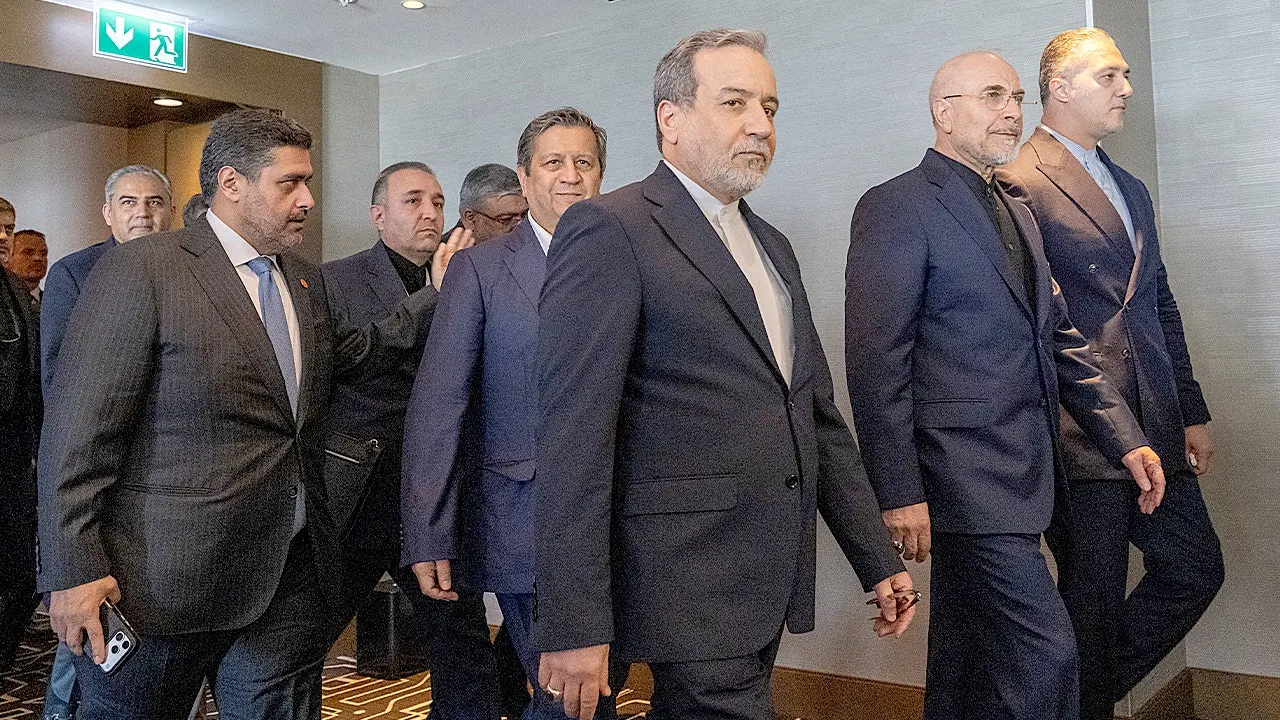
To understand Iran’s true objectives in Switzerland, one must look beyond the standard diplomatic rhetoric and examine the sheer weight, seniority, and deliberate composition of the delegation it sent to the bargaining table. Rather than dispatching a routine, insular group of career foreign ministry diplomats, Tehran arrived with an expansive, “whole-regime” apparatus that represents the absolute pinnacle of its security, financial, legal, and political establishments. Led by chief negotiator Mohammad Baqer Qalibaf and Foreign Minister Abbas Araghchi, the team functions as a highly integrated unit designed to defend the Islamic Republic’s core interests at every level of international governance. Key figures within this imposing delegation include Abdolnaser Hemmati, the seasoned governor of the Central Bank of Iran, who heads the economic committee, alongside Ali Bagheri Kani, the influential deputy secretary of the Supreme National Security Council, and Kazem Gharibabadi, the deputy foreign minister overseeing complex legal affairs. Furthermore, senior officials from the state’s oil and energy sectors were prominently positioned within the group, making it clear that this was not a symbolic team sent to exchange pleasantries but an implementation-oriented deployment. Analysts point out that this diverse composition was a deliberate tactic by the Iranian leadership to safeguard its domestic leverage, ensuring that the diplomats are closely watched and guided by the security state. With the Foreign Ministry representing the public face, the Supreme National Security Council maintains strict oversight to prevent any unauthorized compromise, while the financial and legal experts construct a regulatory fortress to ensure that any agreement reached is immediately translated into tangible, domestic relief for the regime’s survival, minimizing any potential political vulnerability back home.
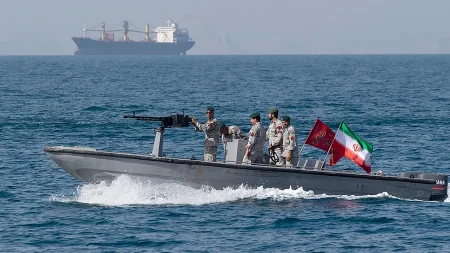
The strategic brilliance—and potential danger—of the Iranian delegation lies in its hyper-focus on securing rapid, tangible economic concessions as an absolute prerequisite for any long-term diplomatic progress. The presence of Central Bank Governor Abdolnaser Hemmati at the negotiation table is perhaps the most explicit signal of Tehran’s priorities, serving as a reminder that for Iran, the primary measure of diplomatic success is immediate cash flow. In the high-stakes theater of international diplomacy, a central bank governor is not deployed to debate abstract theories of international law; he is there to negotiate the technical mechanics of releasing frozen assets, lifting banking restrictions, and establishing verifiable, sanctions-free financial pipelines. Alongside Hemmati, the inclusion of top oil and energy officials brings the strategically vital Strait of Hormuz directly into the negotiating room, presenting American decision-makers with a stark reminder of Iran’s ability to disrupt global energy markets and maritime security. For policymakers in Washington, “energy leverage” is not a political talking point but a practical reality that directly affects maritime security, global shipping lanes, and domestic fuel prices. Meanwhile, the legal expertise of Kazem Gharibabadi is specifically targeted at the precise wording of any future agreement, establishing a complex legal framework designed to help Iran verify compliance while simultaneously building loopholes that could shield the regime from future snapback sanctions. Through this comprehensive approach, Iran seeks to ensure that it does not walk away with mere promises on paper, but rather with actual, spendable currency, sanctions immunity, and guaranteed access to international markets from the very outset of the process, leaving the structural issues for later.
Across the table, the American delegation presents a starkly different profile, blending high-level political representation with key players from President Trump’s trusted inner circle. Led by Vice President JD Vance, the U.S. team is anchored by Special Envoy for Peace Missions Steve Witkoff and former senior White House adviser Jared Kushner, a figure central to previous Middle Eastern diplomatic breakthrough initiatives like the historic Abraham Accords. This high-profile American presence underscores the immense priority the new administration places on resolving the Iranian dilemma, seeking to apply a fresh, transactional approach to one of the world’s most stubborn geopolitical challenges. Vice President Vance expressed a cautious optimism as the talks commenced, indicating that the administration believes it can make simultaneous, constructive progress on both the long-standing nuclear dispute and the rapidly escalating humanitarian and military crisis in Lebanon. In his public statements, Vance highlighted President Trump’s desire to “turn over a new leaf,” suggesting a bold willingness to fundamentally transform the historically hostile relationship between Washington and Tehran through direct, pragmatic negotiation. This American posture reflects a deeply human hope for a clean slate, a desire to break free from the cycle of mutual distrust and build a more stable regional architecture that benefits all sides. However, critics and security analysts caution that this optimistic vision must be tempered by a realistic assessment of Iran’s historical behavior, warning that the Trump administration’s desire for a swift, landmark deal must not blind them to the cold, calculating nature of the regime they are dealing with and their history of exploiting diplomatic pauses to advance their nuclear ambitions.
The drama unfolding in the quiet conference halls of Switzerland is mirrored by an equally intense, often public struggle occurring within the corridors of power in Tehran, where domestic political survival is inextricably linked to the outcome of these negotiations. This internal friction was laid bare for the world to see when hardline Iranian lawmaker Mahmoud Nabavian suddenly appeared on state television to read what he claimed were top-secret letters from Supreme Leader Mojtaba Khamenei. In a moments-long broadcast that was abruptly cut short by state censors, Nabavian revealed a deep well of opposition within the ultra-conservative establishment, alleging that the country’s highest religious and political authority strongly opposed the resumption of nuclear talks. These hardline factions demand that the United States pay massive reparations for past economic damages caused by sanctions and insist on absolute, uncompromising Iranian control over the Strait of Hormuz before any diplomatic progress can be made. This dramatic television interruption highlights the fragile political tightrope that President Pezeshkian and his moderate allies must walk, as any perceived capitulation to Western demands could trigger a severe domestic backlash from powerful clerical and military factions. The existence of these deep internal divisions within Iran serves as a crucial reminder to Western negotiators that the regime is not a monolith, and that the negotiators in Switzerland are constantly looking over their shoulders, knowing that the cost of failing to satisfy domestic hardliners could be politically—and physically—fatal for their political careers, forcing them to adopt an even more unyielding stance at the negotiating table to protect themselves.
As the initial technical talks came to a temporary pause in Switzerland, the international community was left to ponder the profound warnings raised by counterterrorism experts about the long-term consequences of this diplomatic engagement. Dr. Omar Mohammed and other analysts have voiced deep concern that Washington’s eagerness to achieve a historic breakthrough could lead to a highly unbalanced agreement, where the United States provides immediate cash, oil access, and legal protections in exchange for easily reversible Iranian commitments. If the financial benefits flow to Tehran first while concrete concessions on nuclear enrichment, ballistic missiles, and regional proxy warfare are deferred to a later date, Iran will likely interpret this not as a mutual compromise, but as a resounding victory. Such an outcome, experts warn, would not buy a lasting peace in the Middle East; instead, it would effectively finance the upcoming phase of the Iranian regime’s regional expansion, allowing them to rebuild their battered economy while keeping their strategic pressure points and aggressive nuclear options fully intact. The pause in negotiations noted by international observers suggests that both sides have retired to their respective corners to digest the opening salvos of this geopolitical chess match. For the millions of ordinary human beings whose lives and futures hang in the balance across the Middle East, the hope remains that diplomacy can find a path forward, but only if Washington can match Iran’s clinical, whole-of-regime strategy with an equally clear-eyed, unyielding dedication to regional security and long-term stability that doesn’t sacrifice future safety for a fleeting moment of peace.