


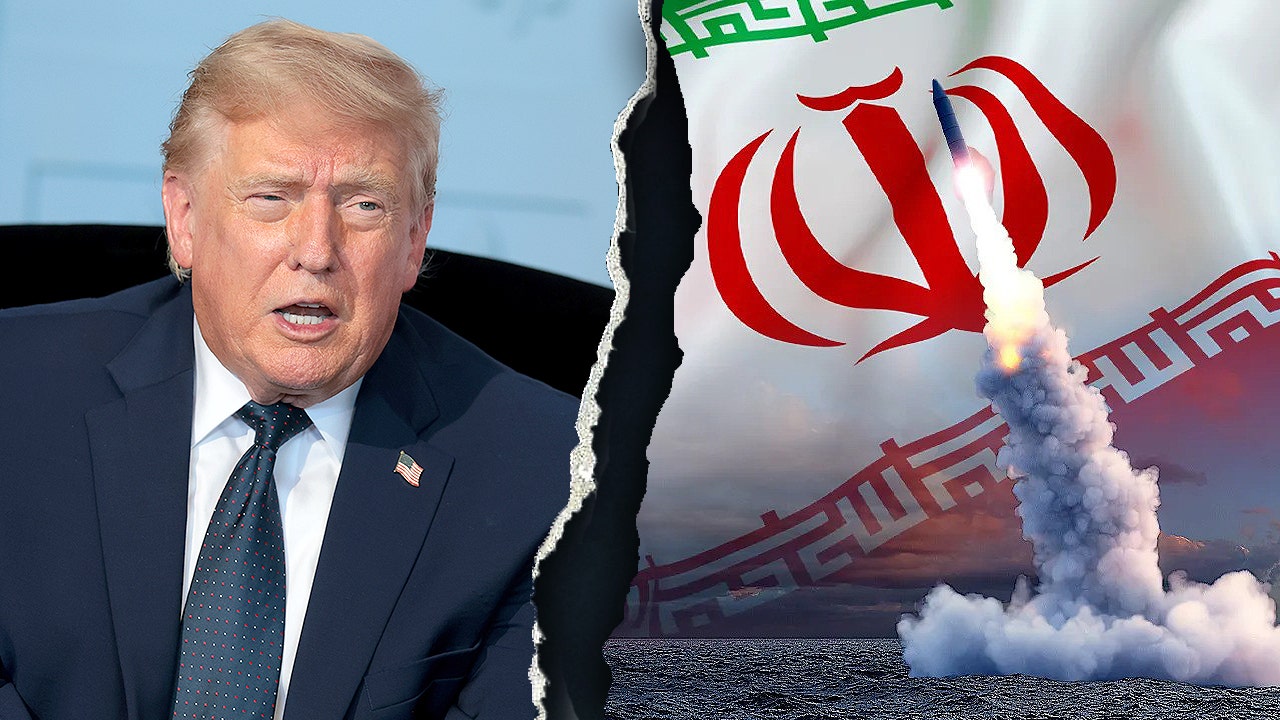
The 60-day deadline for the United States and Iran to finalize a nuclear agreement has come and gone, dissolving without the fanfare of a breakthrough or the finality of a complete collapse. Instead, the expiration on Monday marked a pivotal moment in a high-stakes standoff, with President Donald Trump signaling a hardened stance toward Tehran while his administration prepared to unleash what Treasury Secretary Scott Bessent described as an unprecedented wave of economic punishment. In a phone interview, Trump framed the situation in stark terms, suggesting that Iran ought to “put up the white flag of surrender.” He confirmed the existence of a direct back channel with the Islamic Revolutionary Guard Corps, yet maintained that he felt no urgency to secure a deal. This sets the stage for a new, more aggressive phase of pressure, one that aims to squeeze the Iranian regime financially rather than engage in further direct military confrontation.
The path to this critical juncture was paved with optimism that quickly soured. The initial memorandum of understanding, signed in June, had committed both nations to negotiate a final agreement within a maximum of 60 days, a timeline that could be extended by mutual consent. However, according to reports, the interim understanding began to unravel almost immediately due to a sharp dispute over control of the strategic Strait of Hormuz. The passage, a vital artery for global energy supplies, became a central point of contention. Trump declared the pact “over” in early July, and Tehran subsequently announced its suspension. This breakdown transforms the current moment into a test of whether the United States can leverage its military and maritime dominance in the region into meaningful political concessions, all while avoiding a wider conflict. The stakes are immense; before the war, nearly a fifth of the world’s oil and liquefied natural gas traversed that narrow waterway, meaning the standoff holds direct implications for global energy markets and, consequently, the price of fuel for American consumers.
With the diplomatic track faltering, the financial arena has become the primary battlefield. The Trump administration is preparing what Bessent has ominously dubbed a new phase of “economic fury,” promising measures unseen in the history of economic isolation. A Treasury spokesperson outlined a campaign designed to leave the Iranian regime “desperate for cash,” constraining its ability to generate and move revenue. The tangible effects are already visible in stark statistics. Average Iranian oil loadings have plummeted from 1.8 million barrels per day before the conflict to less than 500,000 barrels per day in the past month, according to Treasury figures cited by the Associated Press. The International Monetary Fund projects a 5.4% contraction for Iran’s economy, and consumer prices have soared, with food costs up over 128% year-over-year. Inflation is running at a staggering 87.9%, while the national currency continues to collapse, forcing Tehran to turn to shadow-banking networks and cryptocurrency to circumvent the tightening sanctions.
The pressure campaign is having a profound effect, but the question of who ultimately bears the brunt of the suffering remains central. Experts like Miad Maleki, a former Treasury sanctions analyst, describe the current strategy as “a maximum pressure campaign on a steroid,” noting the “brutal” numbers. He emphasizes that what distinguishes this effort is the lethal combination of financial restrictions with a physical blockade, squeezing Iran’s ability to both export oil and import critical goods. A key vulnerability lies in Iran’s domestic fuel market. The regime is acutely aware that a sharp increase in gasoline prices could ignite the kind of widespread civil unrest seen in November 2019, when protests over fuel prices rapidly broadened into a national anti-government movement. Analysts suggest Tehran is deeply “scared of another 2019,” and is therefore hesitant to impose the kind of economic austerity measures that would transfer the pain of sanctions directly onto the population in a way that threatens regime stability.
Yet, the strategy’s greatest limitation may be that the economic pain itself is not translating into political capitulation. The Iranian economic system is structured to protect a powerful elite network—the IRGC, the supreme leader, and their associated foundations—which has spent decades insulating itself from the direct impact of sanctions. This elite network has historically demonstrated an ability to absorb economic shocks by distributing the costs downwards, effectively burning the civilian population before having to make any significant concessions themselves. While financial pressure can force “tactical concessions,” as Maleki argues, broader strategic shifts depend on whether the pain can be made to reach those in power. The Washington strategy appears to be approaching the ceiling of what is possible with sanctions alone, meaning the next phase will likely rely less on new legal tools and more on aggressively enforcing existing restrictions against foreign enablers—from Chinese refineries and Hong Kong shell traders to shadow-fleet tankers and crypto exchanges.
As the situation stands, the worst may not yet be over for Tehran. The full fiscal impact of reduced oil exports is often delayed by payment cycles, meaning the most acute financial strain could be felt with full force in the autumn. A senior Iranian official has even threatened further military escalation if Washington does not fully implement the interim agreement. This leaves the United States and Iran locked in a perilous game of chicken. Washington is betting that a combination of military deterrence and unprecedented financial isolation will eventually force Tehran to make meaningful political concessions. For its part, Tehran is gambling that it can withstand the pressure, at least at the level of its leadership, and hold on until the costs of the campaign become too high for Washington to sustain. The failure to meet the June deadline has not ended the confrontation but has escalated it into a new, more dangerous phase, where the line between economic coercion and open conflict remains dangerously thin, and the capacity for either side to fully control the outcome is far from certain.