



In the swirling, often unpredictable currents of global politics, it is easy to forget that real human decisions rest behind official statements. But as the Iran-backed Houthi rebels continue to attack commercial ships in the Red Sea, the United States is facing one of those quiet inflection points where strategy meets survival. The narrow Bab-el-Mandeb Strait, a sliver of water that connects the Red Sea to the Gulf of Aden, has become a pressure point for global trade. Saudi Arabia alone pushes up to seven million barrels of oil through this passage every day. When the Houthis threaten to close it, they are not just making a political statement—they are threatening to choke a lifeline for millions of people who rely on the steady flow of energy and goods. The United States, caught in the middle of an increasingly tangled Middle Eastern conflict, now finds itself looking for firmer ground. And in that search, a small, unrecognized nation on the Horn of Africa has stepped forward, offering the U.S. access to one of the longest runways in Africa, a functioning air base, and a deep water port on the Red Sea. That nation is Somaliland, a breakaway region that has governed itself in relative peace since 1991 while the rest of Somalia has struggled through decades of conflict. Now, analysts say, the Houthi threat could finally push Washington to embrace this fragile, self-made democracy.
For years, the United States relied on Djibouti as its main military foothold in the region. Camp Lemonnier, the sprawling American base there, has served as a hub for counterterrorism operations and crisis response across East Africa. But the world has changed, and Djibouti is no longer the dependable partner it once appeared to be. China has been steadily expanding its military and commercial presence in the country, and for American strategists, that is a serious problem. Having your central Red Sea base sitting next to an increasingly assertive Chinese outpost is not just awkward—it is strategically dangerous. Edmund Fitton-Brown, a former British ambassador to Yemen now with the Foundation for Defense of Democracies, put it bluntly: There is a growing sense that Djibouti is not a reliable ally for the United States. “Somaliland’s time has probably come,” he said. Meanwhile, the Houthis are escalating their attacks. They have reportedly targeted Saudi-flagged ships, sunk an Indian commercial vessel, and on August 13 struck an Egyptian cargo ship, killing at least four crew members. These are not abstract military maneuvers. These are attacks on real men and women who wake up each morning to dangerous work on the open ocean. Every strike sends a ripple through global insurance rates, supply chains, and the price of everyday goods. But for Washington, the attacks also signal something deeper: the Houthis are willing to act on their threats, and the current strategy of relying on established partners in the region may no longer be enough.
One of the most striking voices in this debate is retired Major General Ken Ekman, who until last year led the U.S. Department of War’s West Africa Coordination Element. Ekman argues that the Houthis are deliberately building a second front in the Middle East conflict, one designed to distract the United States and stretch its military assets dangerously thin. He sees the Houthis not as chaotic militants but as strategic actors who understand exactly how to test American resolve. They are watching, waiting, and likely to make a major move when Iranian influence in the Strait of Hormuz starts to wane. For Ekman, this is a wake-up call. American Africa Command, or AFRICOM, has spent years focused on land-based counterterrorism missions against al Qaeda and ISIS-linked groups in Africa. Those missions have value, but they do not address the immediate maritime threat in the Red Sea. “To date, our Africa strategy is driven by counterterrorism missions,” Ekman said, but these groups pose a limited threat to the U.S. homeland. Red Sea basing, he noted, has been more about crisis response in East Africa and competing with Russia and China than about protecting the freedom of navigation. The Houthis, he believes, could force a dramatic shift. Reorienting the Horn of Africa strategy against the Houthis would put freedom of navigation at the center, and that is where Somaliland becomes valuable. It is close to the Bab-el-Mandeb, it is stable in a volatile region, and it is eager to work with Washington in ways that other regional hosts have not been.
The frustration with the status quo is perhaps most visible in the cautious but pointed words of U.S. Air Force Gen. Dagvin Anderson, the commander of AFRICOM. In a recent interview with a Somali journalist, Anderson was asked directly whether the United States was turning its back on Somalia. His answer was a delicate blend of reassurance and warning. The U.S. has not abandoned Somalia, he said, and he praised the country’s elite counterterrorism unit, DANAB, as “one of the most capable forces on the continent.” But then came the hard truth. It is up to Somalia to sustain that force, to build it, to make it effective, and to use it as it was designed to be used. He seemed to be signaling that Washington cannot keep pouring resources into a government that remains paralyzed by political infighting and unable to decisively confront al-Shabab, the Islamist extremist group that continues to terrorize Somali civilians. “If Somalia steps up and the government steps up and takes the lead on this, we will continue to be there because there is mutual interest,” Anderson said. “But if we can’t see that, if political instability and political infighting continues, then it’s going to be very hard for us to continue to stay engaged.” These are the words of a man who has spent years trying to build something lasting, only to watch it slip away through no fault of the soldiers on the ground. Bill Roggio, editor of the Long War Journal, believes the U.S. is genuinely fed up with Mogadishu, but not yet ready to sever ties completely. Full recognition of Somaliland would create a major rift with Somalia, he notes, but that does not rule out a second Red Sea base. “Redundancy is a good thing in military operations,” he said, even if Camp Lemonnier is better located for deterring the Houthis. The idea is slowly taking root: perhaps the United States can have both Somalia and Somaliland, or perhaps it will have to choose.
For the people of Somaliland, this is not just an abstract debate. They have spent three decades building a functioning democracy, holding peaceful elections, and carving out a corner of stability in a region known for chaos. They want recognition, and they want to be useful to the United States. Bashir Goth, Somaliland’s representative to the United States, put it plainly: “The United States needs reliable partners on Africa’s coastline. Somaliland is that partner.” He said defense officials have been in active dialogue with AFRICOM regarding Red Sea security, and he emphasized that Somaliland has the geography, the stability, and the will to work closely with Washington. But official Washington remains cautious. The State Department, at least publicly, still stands with Somalia. A spokesperson said the United States works with Somali and international partners to address terrorist threats when necessary to protect national security interests. In the Red Sea, Saudi Arabia and thirteen other nations have formed a new maritime defense coalition to counter the Houthis, but the United States, at least publicly, is not part of it. Asked about that, the State Department offered a carefully worded statement: “The United States stands firmly with the Kingdom of Saudi Arabia against Houthi terrorism. We are in close consultation with our Saudi allies and remain committed to their security.” It is the kind of diplomatic language that says everything and nothing at the same time. The reality is that the United States is caught between its old commitments and new necessities. It does not want to abandon Somalia entirely, but it cannot ignore the fact that the Houthis are reshaping the strategic map of the region.
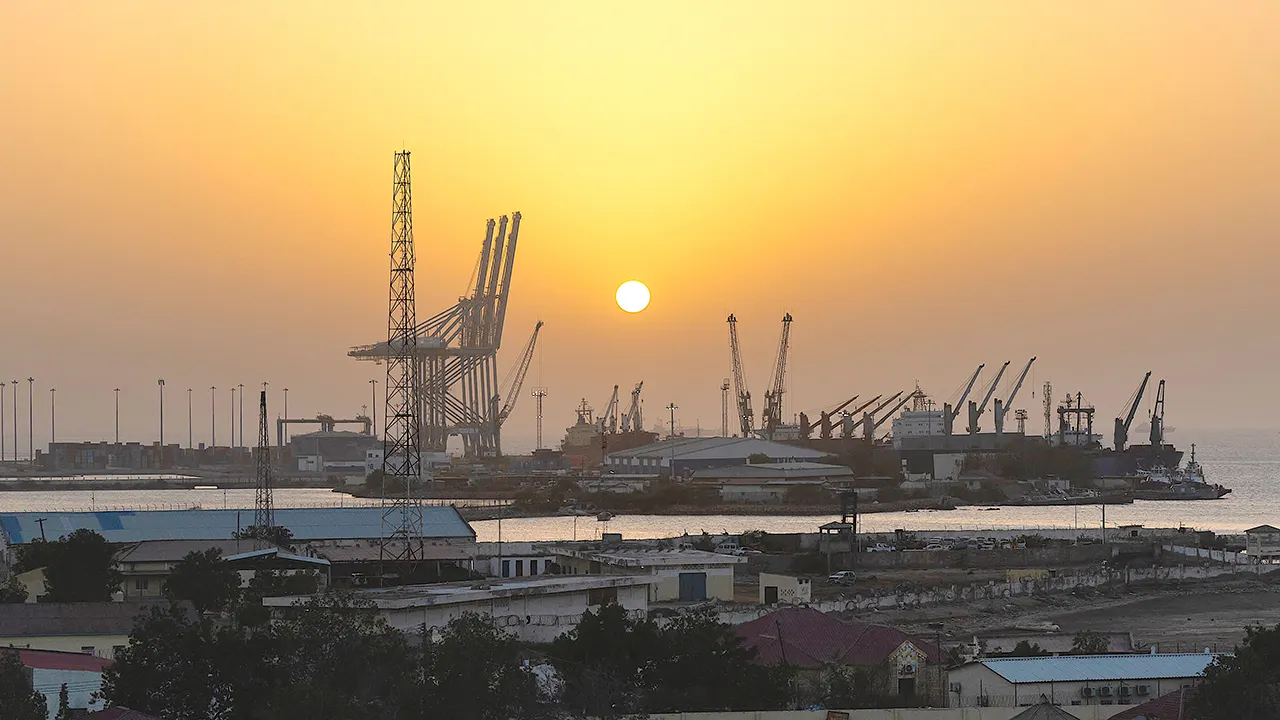
The clearest sign that things are shifting behind the scenes came in the same week that Anderson visited Somaliland, traveling to the port city of Berbera to assess the security environment and review the port’s operational capacity. That is not the kind of visit a commander makes when a country is merely an afterthought. At almost the same time, the United States reportedly hosted a delegation of Somalilanders, led by their defense minister, at AFRICOM headquarters in Stuttgart, Germany. The topic of discussion, once again, was Red Sea security. Neither AFRICOM nor the Department of War responded to requests for information about these visits, and that silence is itself meaningful. In the world of international affairs, quiet meetings and unannounced trips are often where the real decisions begin. What we are witnessing may not yet be a full embrace of Somaliland, but it is certainly a closer look. The Houthis have, perhaps unintentionally, handed Somaliland the spotlight. By threatening the Bab-el-Mandeb Strait, they have forced Washington to examine its entire network of alliances along Africa’s coast. And in that examination, Somaliland has emerged as a reliable, eager, and strategically positioned partner. Whether the United States will go so far as to formally recognize its independence remains uncertain. But one thing is becoming clear: the old assumptions no longer hold. The Red Sea is no longer just a shipping lane; it is a battleground. And in the search for allies who can help keep it open, the United States may find itself looking at a small nation that has been waiting for this moment for thirty years. The Houthis wanted to create chaos and stretch American resources. They may have done exactly that—but they may also have pushed the United States into a new relationship that changes the balance of power in the region for decades to come.