






Nestled peacefully in the scenic region of Lower Saxony in northern Germany, the historic town of Stade has long been celebrated for its quintessential Hanseatic charm, characterized by winding cobblestone streets, picturesque half-timbered houses, and quiet canals that reflect the changing colors of the northern European sky. With a modest population of approximately fifty thousand residents, Stade is the kind of close-knit community where safety is taken for granted, and life moves at a gentle, predictable pace far removed from the chaotic turbulence of major global metropolises. However, this idyllic tranquility was shattered in an instant on a sobering Monday afternoon when a sudden wave of violence erupted at a youth welfare facility on Dankersstrasse, forever altering the town’s history and leaving its residents in a state of profound, paralyzing shock. The facility, which served as a crucial sanctuary of hope and healing for pregnant women, young mothers, and their vulnerable children, became the highly improbable setting for a devastating mass shooting that claimed the lives of six individuals—four women and two men—who had dedicated their professional lives to the noble pursuit of social work and community welfare. Five of these dedicated professionals were pronounced dead at the scene amidst the terrifying chaos, while a sixth victim fought desperately for survival before tragically succumbing to mortal injuries at a nearby hospital. This sudden and unimaginable loss of life has cast a dark, suffocating shadow over the entire region, turning a quiet, ordinary workday into an agonizing landscape of grief, confusion, and collective heartbreak that will take generations to fully heal.
The six victims who perished in this senseless tragedy were not merely statistics or anonymous names in a police report; they were the compassionate lifeblood of the Stade youth welfare network and the surrounding social service organizations. In a world that often overlooks the quiet, grueling efforts of social workers, these four women and two men chose a path of deep empathy, stepping forward daily to serve as shields, counselors, and advocates for families struggling with poverty, abuse, and personal trauma. Their daily routines were defined by carrying the heavy emotional burdens of others, offering gentle guidance to terrified young mothers, ensuring infants were safe and nurtured, and providing a stable foundation of hope within a system that is frequently overwhelmed. To work in such a facility requires a rare, beautiful combination of emotional strength and gentle kindness—virtues these six individuals possessed in abundance. The cruel irony that these keepers of peace and protectors of the helpless were murdered inside the very sanctuary they worked so tirelessly to maintain is a devastating reality that has left their colleagues and the broader German social work community entirely grief-stricken. Their tragic absence leaves an irreplaceable void in the hearts of their families and friends, as well as a massive, aching deficit in the lives of the countless vulnerable mothers and children who relied on their daily support, wisdom, comfort, and protective presence.
As law enforcement authorities began the painful and complex process of piecing together the events of that fateful Monday, a deeply troubled domestic narrative emerged, pointing to a bitter child custody dispute as the tragic catalyst for the violence. The suspected gunman, a forty-five-year-old local man, had arrived at the Dankersstrasse facility earlier in the day for a scheduled appointment, carrying with him a reservoir of resentment and hostility that would soon bubble over into a homicidal rampage. At the center of the dispute was his three-month-old daughter, an innocent infant whose mother had sought the protection and assistance of the welfare center to navigate the turbulent custody arrangement. Although police thankfully confirmed that the baby girl and her mother were later located safe and physically unharmed, the absolute carnage left in the suspect’s wake stands as a grim testament to the volatile, high-stakes nature of domestic and family welfare disputes. This heartbreaking event highlights the terrifying reality of how private domestic angst can violently spill over into the public sphere, transforming a routine administrative meeting into a fatal battleground. It forces a painful confrontation with the fact that social workers, despite having no protective gear or tactical training, are consistently placed on the front lines of intense familial crises, acting as the final, vulnerable barrier between domestic desperation and unspeakable tragedy.
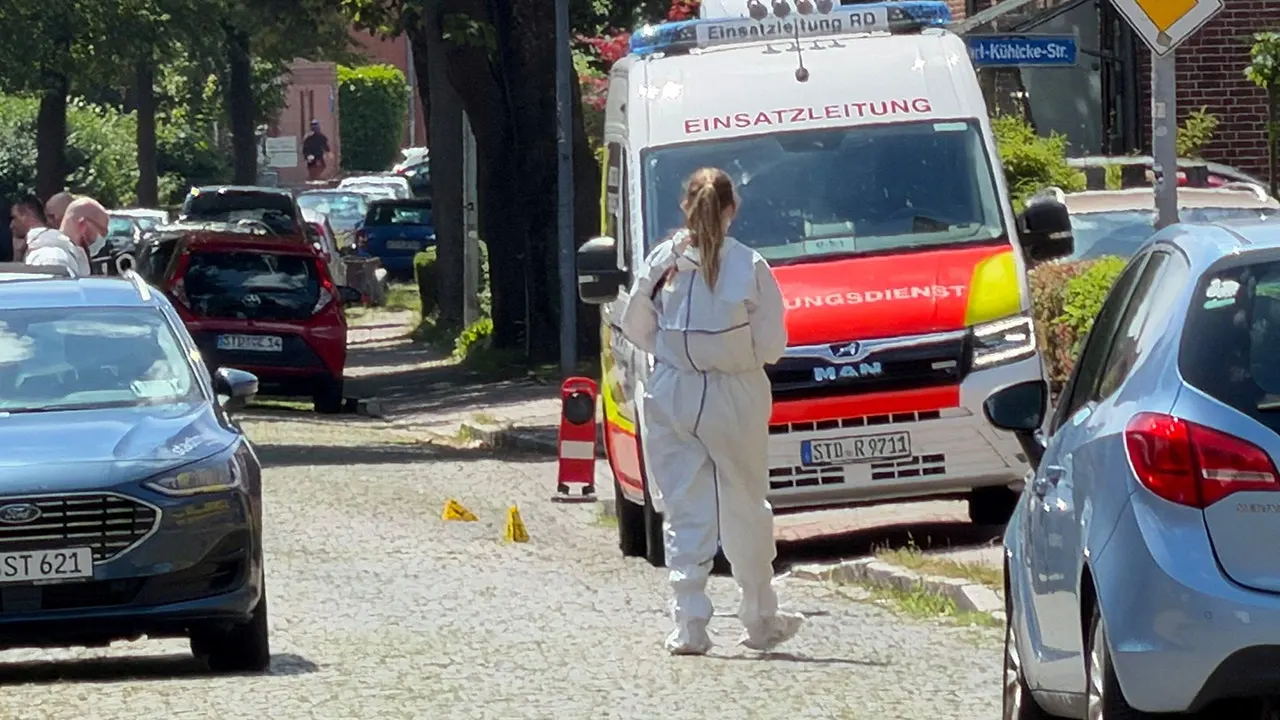
The physical response to the midday shooting was swift, massive, and characterized by the frantic, high-stakes maneuvers of an active-shooter emergency. As residents reported the terrifying sound of gunfire echoing down Dankersstrasse, heavily armed police tactical units, canine teams, and a fleet of emergency medical vehicles swarmed the area, establishing a strict perimeter and urging the frightened public to seek shelter. Law enforcement officers moved with clinical precision, quickly identifying and arresting the forty-five-year-old suspect before he could inflict further harm, while also detaining two other individuals under suspicion of involvement to determine if the shooter had received logistical help or encouragement. The immediate neighborhood was transformed into a stark, brightly lit crime scene of flashing blue lights and yellow police tape, halting the normal flow of life in Stade as forensic investigators began their meticulous work under the cold northern German sky. Throughout the night, clean-up crews and forensic specialists painstakingly cataloged ballistics and physical evidence inside the facility, their silent, methodical movements contrasting sharply with the raw, emotional devastation felt by families waiting outside behind the barricades. For hours, these families clung to dwindling hopes, only to have their worst fears realized as the names of the deceased were slowly released, turning their desperate prayers into a chorus of unbearable sorrow.
The profound shockwave generated by the tragedy in Stade rapidly ascended to the highest levels of German leadership, igniting an intense national dialogue about public safety, the vulnerability of social institutions, and the prevention of weaponized violence. German President Frank-Walter Steinmeier expressed the collective grief of the nation in a deeply moving address, stating his profound horror that an act of such immense cruelty could occur in a place explicitly designed to provide shelter, protection, and peace to women and children in need. Mass casualty shootings are exceedingly rare in Germany, a nation that maintains some of the strictest gun control laws in Europe and prides itself on a robust social safety net designed to de-escalate crises before they reach a violent peak. Because of this societal standard, when a tragedy of this magnitude does occur, it cuts deep into the national consciousness, prompting widespread introspection, intense media analysis, and urgent demands for systematic reforms. The President’s speech struck a chord with millions, offering sincere condolences to the grieving families and expressing profound gratitude to the first responders and medical staff who rushed toward danger. It also served as a catalyst for social welfare organizations across Germany to demand better security measures, sparking vital debates on how to balance the open, welcoming nature of community welfare centers with the undeniable need to protect employees from unpredictable, external hostility.
As the initial shock of the tragedy slowly transitions into a long, agonizing journey toward healing, the wounded town of Stade must now face the monumental task of rebuilding its shattered sense of security. Outside the shuttered welfare facility on Dankersstrasse, a massive, spontaneous memorial of flickering candles, plush toys, vibrant autumn flowers, and tear-stained letters has grown, serving as a powerful testament to the community’s shared grief and unyielding solidarity. This overwhelming display of love and remembrance reminds us that while an act of violence can take lives in an instant, it cannot extinguish the enduring spirit of community, empathy, and collective care that the six victims stood for. The road to recovery will be incredibly steep and winding, particularly for the surviving staff members who must process the trauma of that day, the young mothers who lost their trusted advocates, and the families who must learn to navigate their lives around an empty chair. Yet, in the midst of this darkness, there is a fierce, quiet determination among the people of Stade to ensure that the legacy of these six extraordinary caregivers is defined not by the horrific manner of their deaths, but by the profound beauty and lasting impact of their lives. By continuing to foster environments of care, by standing up for the vulnerable, and by refusing to allow fear to dictate their daily lives, the community will keep the memory of these dedicated protectors alive, demonstrating that compassion is ultimately far more resilient than any act of hatred.