





Paragraph 1: The Catastrophic Wall of Water
In the rugged, breathtakingly beautiful valleys of the Himalayas, where the borders of Nepal and Tibet blur into a landscape of towering peaks and ancient glaciers, a sudden, catastrophic wake-up call shattered the morning calm. Within a matter of minutes, a torrent of water, ice, mud, and rock—a monstrous slurry born from the highest reaches of the earth—came thundering down the steep river gorges. The initial reports were staggering and grim: at least 273 people had been killed, and more than 1,300 remained missing in the wake of the flash floods that tore through the region. For the survivors, the event was less a storm than an apocalypse; the flood arrived not as a rising tide, but as a vertical wall of debris that swept away everything in its path with the force of a bomb blast. Cars were picked up and tossed like children’s toys, homes were ripped from their foundations, and entire stretches of riverbank vanished in seconds. The abruptness of the tragedy left entire communities in a state of profound shock, as rescue workers and survivors waded through the thick, sticky mud, desperately calling out for loved ones who had been swept away in the chaos. It was a disaster that did not announce itself with heavy rain or ominous thunderclouds, but rather with the silent, terrifying collapse of an unstable glacier high above the clouds, turning a serene, pristine landscape into a churning morgue in the span of a single breath.
Paragraph 2: Unraveling the Scientific Mystery of the Catastrophe
In the immediate aftermath, the world’s seismologists and geologists were confronted with a puzzling set of data. The ground had shaken violently, prompting an initial hypothesis that the flash floods had been triggered by a magnitude 4.4 earthquake. However, as the United States Geological Survey (USGS) delved deeper into the seismic records, they realized that this was no ordinary tectonic event. The specific signature of the seismic waves—particularly the presence of long-period waves—pointed not to a shifting fault line, but to the immense, ground-shaking force of a massive landslide. The USGS subsequently updated their analysis, revealing that the event was actually a magnitude 5.2 landslide, triggered by a colossal glacier collapse. The ice, having loosened from its precarious moorings high above the valley floor, crashed down in a massive debris flow, scraping away rock and soil, and dumping huge volumes of glacial meltwater into the rivers below. Climate experts at the Kathmandu-based International Centre for Integrated Mountain Development (ICIMOD) confirmed the grim diagnosis: this was a glacial avalanche, a phenomenon growing increasingly frequent as global temperatures rise. Their hydrological observations revealed the terrifying intensity of the event; water levels on the Trishuli River rose by an astonishing 27 feet in just 30 minutes. This sudden surge of water—a terrifying flash flood that offered victims virtually no time to react or run—had its genesis not in rainfall, but in the melting and collapse of the Earth’s icy storehouses, a clear and deadly symptom of a changing climate.
Paragraph 3: The Desperate Race Against Time
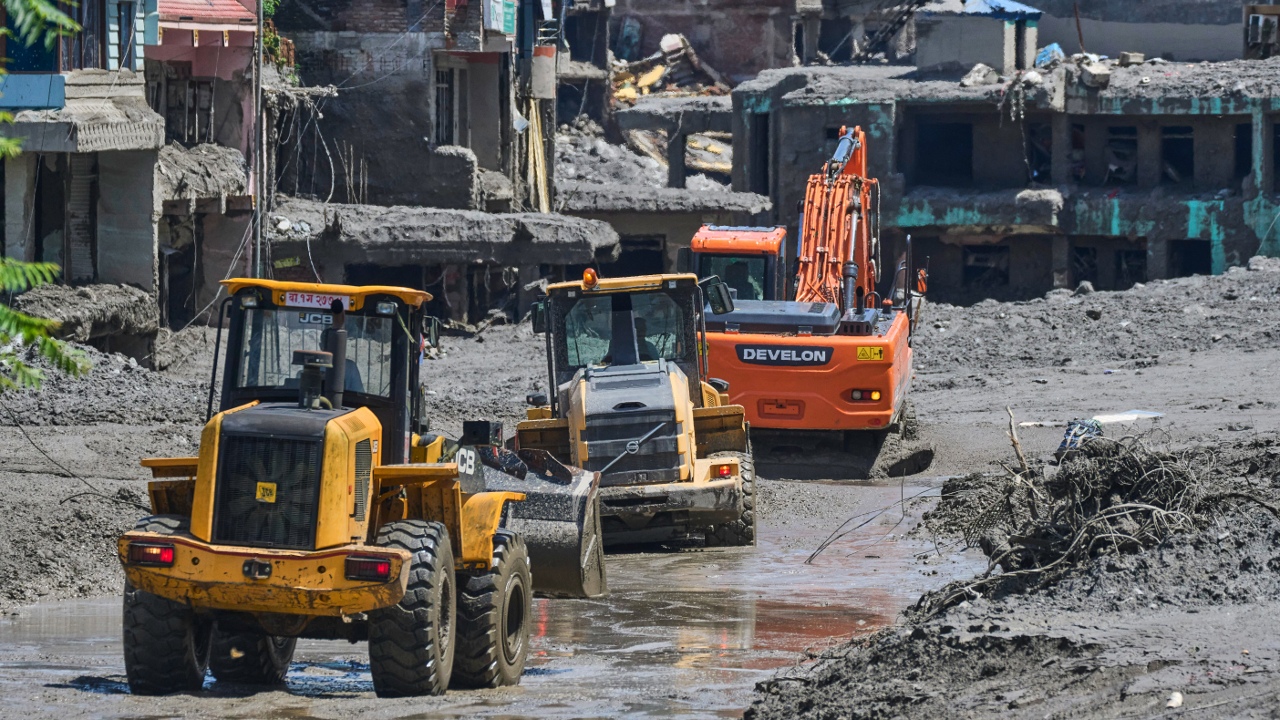
As the scale of the devastation became clear, the rescue effort shifted into high gear, a desperate race against time and the elements. The Nepalese army mobilized helicopters, launching flights to pluck survivors from rooftops and marooned hillsides, succeeding in rescuing more than a hundred people in a single day. The army personnel, often working with crude tools and sheer physical strength, dug through rubble and deep mud in search of any sign of life. However, the sheer magnitude of the missing—over 1,300 people—meant that the odds of finding more survivors dwindled with every passing hour. In an effort to provide some semblance of order in the heartbreak, Nepal Police began posting public lists of the missing, a heartbreaking roll call of names that included a significant number of foreigners. The region, a popular trekking and pilgrimage corridor linking Nepal to Tibet, had been packed with hikers, mountaineers, and religious pilgrims when the waters struck. Among the hundreds of missing, the lists included several dozen American citizens, sending shockwaves of panic and grief through families across the United States, who waited by their phones for any news from the remote disaster zone. Meanwhile, the physical devastation of the landscape itself impeded the rescue. Dozens of bridges were destroyed, cutting off entire villages, while nearly 25 miles of roads were severely damaged or completely washed away, hampering the movement of heavy machinery and aid convoys. The infrastructure that connected these isolated communities to the rest of the world had been erased in minutes, transforming the disaster site into a treacherous, inaccessible pocket of human suffering.
Paragraph 4: One Journalist’s Heartbreaking Search
Amidst the chaos of maps, rescue missions, and the frantic search for survival, the story of Nirajan Paudyal, a journalist based in Kathmandu, offered a deeply personal and harrowing perspective on the tragedy. Paudyal’s parents and other relatives lived in the village of Soley in Nuwakot district, a small community of roughly 25 homes that had stood for generations against the rugged terrain. When the flood hit, Soley was directly in the line of destruction. Video footage that emerged from the disaster showed raging floodwaters sweeping away vehicles and engulfing homes, a raw, unfiltered visual of the horror that had unfolded. Paudyal, consumed by a desperate need to know the fate of his family, traveled to the area on Thursday, navigating the ruined roads and walking for hours through the mud. What he found was a scene of total annihilation. Soley was “almost entirely destroyed,” he reported, his words heavy with grief. The houses that had once dotted the hillside were gone, replaced by a blanket of debris and silt. When asked about his parents, his voice carried the hollow weight of a man who had already braced himself for the worst. “There is no update till now. I fear there won’t be any update,” Paudyal said. His quote encapsulated the agonizing limbo faced by so many families in the region—a purgatory where hope and despair coexisted, where the silence from a missing loved one felt louder than the thunder of the flood itself. His search was not just a professional assignment; it was a heartbreaking pilgrimage to confront the possibility of unspeakable loss.
Paragraph 5: The Strain on Infrastructure and Survivors
Beyond the immediate casualties and the missing, the flood created a humanitarian crisis of immense proportions for those who managed to survive. Bishal Kumar Bhandari, the chairman of the Nepal Red Cross Society, reported that the relief operations were quickly transitioning from a search-and-rescue phase to “large-scale relief operations” to support the displaced. According to initial assessments, around 1,200 people had been displaced from at least three villages, forced to flee their homes with nothing but the clothes on their backs. These survivors gathered on higher ground, shelters cobbled together from tarpaulins and scraps of wood, lacking access to clean drinking water, food, and medical supplies. The destruction of key infrastructure worsened the situation; with roads washed out, helicopters became the only lifeline to isolated settlements. The disaster echoed a haunting precedent from the same region in August 2024, when high temperatures had caused a glacial lake to overflow, resulting in a flood that killed nine people and critically damaged a vital bridge linking Nepal and China. That incident was a warning shot; this current catastrophe, exponentially larger and deadlier, proved that the threat had not merely persisted but had escalated with terrifying speed. The repetitive nature of these geological traumas underscores a grim reality: the Himalayan valleys are becoming increasingly hazardous, and the systems of roads, bridges, and villages built within them are dangerously vulnerable to the violent whims of a rapidly warming planet.
Paragraph 6: The Broader Threat of a Warming Cryosphere
The tragedy in Nepal and Tibet is not just a local disaster, but a powerful, tragic symbol of a broader planetary crisis. The Himalayan ice sheet, often referred to as the “Third Pole,” is the largest reserve of freshwater outside the polar regions, feeding major rivers that supply water to nearly two billion people across Asia. Yet, this frozen reservoir is melting at an accelerating rate due to climate change. As the glaciers retreat, they leave behind massive, unstable glacial lakes, dammed by loose moraine material that can give way at any moment. Moreover, the processes of glacier warming can cause sudden ice and rock avalanches, as seen here, sending cascades of debris into populated valleys below. This region, one of the most densely populated mountain areas on Earth, is now sitting on a knife’s edge of unpredictable natural hazards. The international community, along with national agencies, must move beyond simply responding to these disasters and invest heavily in early warning systems, glacial lake monitoring, and climate-resilient infrastructure. As the search boats navigate the debris-choked rivers and families mourn the loss of whole generations, the message from the mountains is stark and clear: these floods are not freak acts of nature, but the predictable, dangerous consequences of an unmanaged climate crisis. The world must listen and act before the next glacier collapses, before the next wall of water rushes down the valley, and before more names are added to the list of those who are simply, tragically, gone.