


Inside Israel’s Arsenal of Terror: A Glimpse into the Captured Weapons of Hamas and Hezbollah
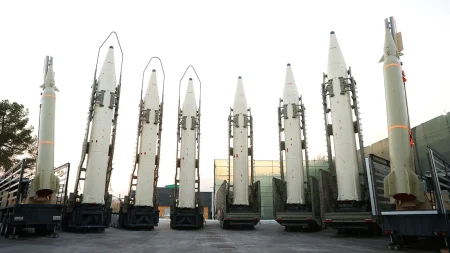
Deep in the heart of central Israel lies a facility that houses the remnants of war, a sprawling military base where the tools of terror have been collected, cataloged, and displayed for the world to see. This is the Tzrifin Base, a place that tells the story of October 7th and the multi-front war that followed through the physical evidence of the weapons used against civilians. The Israel Defense Forces granted rare access to this facility, revealing a vast collection of confiscated weaponry from across the globe. From Iranian ballistic missiles that targeted Tel Aviv to Russian-made rifles that were pointed at Israeli communities, the arsenal represents a coalition of adversaries united by their desire to destroy the Jewish state. The collection includes rockets, grenades, drones, sniper rifles, automated weapons, anti-tank launchers, and mortars, each with its own story of how it was captured on the battlefield or seized from terrorist strongholds.
What makes this collection particularly striking is the diversity of its origins. The Islamic Republic of Iran stands as the primary manufacturer and supplier, but the weapons also come from Russia, China, and homegrown production facilities in both Lebanon and Gaza. Perhaps most surprisingly, among the modern weaponry, there are relics from a darker era of history. A German World War II-era MG-34 machine gun bearing the markings of an eagle carrying a Nazi swastika was found in a Hezbollah compound in Lebanon. The sight of this weapon, nearly a century old, serving the cause of Iranian-backed terrorism in the Middle East, seemed almost surreal to those inspecting the collection. The IDF commander overseeing the captured equipment unit explained that these historical weapons were likely used for propaganda purposes, to boost morale among fighters who see themselves as continuing a legacy of hatred and violence.
The human cost of these weapons cannot be overstated. The Hamas terrorist movement, which has controlled Gaza since 2007, launched an unprecedented attack on southern Israel on October 7, 2023, killing over 1,200 people, including more than 40 American citizens. The attack also resulted in the taking of over 250 hostages, bringing the reality of terrorism directly into the homes of Israelis and their families worldwide. These weapons were not merely display pieces or symbols of resistance; they were instruments of murder and kidnapping. Motorcycles captured from Hamas terrorists were shown at the facility, including an Egyptian-made model that was used to transport hostages seized during the attack. The sight of these vehicles, ordinary in appearance yet extraordinary in their purpose, serves as a reminder that the tools of terror are often disguised as everyday objects.
The tactics employed by these terrorist organizations reveal a sophisticated understanding of modern warfare. The IDF revealed that Hamas and Hezbollah have mastered the use of dual-use technology, equipment that serves both civilian and military purposes. All-terrain vehicles designed for recreation and farming have been converted into mobile rocket launchers, capable of firing six anti-tank rockets from remote positions. One captured ATV was specifically designed to control roads from elevated positions in Lebanon’s rugged landscape, allowing fighters to stop almost any vehicle passing below. Motorcycles provided mobility for fighters moving through crowded urban areas, while drones served multiple purposes, from surveillance to noise-making decoys designed to divert Israeli defense resources. The tactical innovation displayed in these conversions speaks to the adaptability of terrorist forces and the challenge they pose to conventional military superiority.
The sheer scale of the arsenal is overwhelming. Hundreds of mortars were discovered in Lebanon alone, along with dozens of Iranian-produced cannons hidden in village homes, pointing out of windows toward potential targets. Russian-made AK-47 rifles, along with newer AK-103 and AK-104 variants, packed the storage facility. Sophisticated Austrian Steyr sniper rifles, along with Iranian replicas, were common among both Hezbollah and Hamas forces. The collection also included submachine guns from China and Russia, anti-tank launchers, and a highly decorated Turkish hunting rifle that had found its way into Hezbollah’s hands. The weapons infrastructure extended beyond firearms to include the trappings of a professional army: uniforms made in Syria, China, and Lebanon, helmets, anti-shrapnel vests, and medical kits. This was not the equipment of disorganized militias but rather well-supplied, well-funded forces with access to international weapons markets and state sponsors.
The human element of this collection goes beyond mere weapons identification. The commander of the Captured Equipment Evacuation Unit, Lt. Col. (res.) Idan Sharon-Kettler, speaks with a combination of professional expertise and personal commitment. His explanation of why Israel finds itself fighting these battles reveals the fundamental challenge facing the region. Even after ceasefire agreements, the Israeli military continues to discover weapons caches and military infrastructure in southern Lebanon. The November 2024 ceasefire agreement between Israel and Lebanon was supposed to address this issue, but Hezbollah’s continued presence and its commitment to Israel’s destruction complicates the path forward. The commander’s words reflect a deeper truth: if Israel does not work to cleanse Lebanon of military entities targeting Israeli civilians, no one else will. This sentiment captures the isolation felt by Israel as it faces threats from multiple fronts simultaneously.
The diplomatic dimension of this conflict is equally complex. A State Department official recently indicated that the U.S.-led effort to have Lebanon’s government disarm Hezbollah and facilitate a staged withdrawal of IDF troops from southern Lebanon would continue. The next round of talks is scheduled for early September in Rome, and while American officials express cautious optimism about the trajectory of negotiations, they acknowledge significant difficulties. Hezbollah is actively trying to sabotage the process, and both Israel and Lebanon face domestic political pressures that complicate decision-making. However, the very fact that the teams have sat together, communicated directly, and generated options represents a structural change in the region’s diplomatic landscape. The journey from October 7th to this moment has been marked by tragedy and resilience, and the collection at Tzrifin Base stands as a testament to the ongoing struggle to secure peace and security in a region marked by decades of conflict.