





The NATO Challenge: A Deep Dive into Dependence and Defense
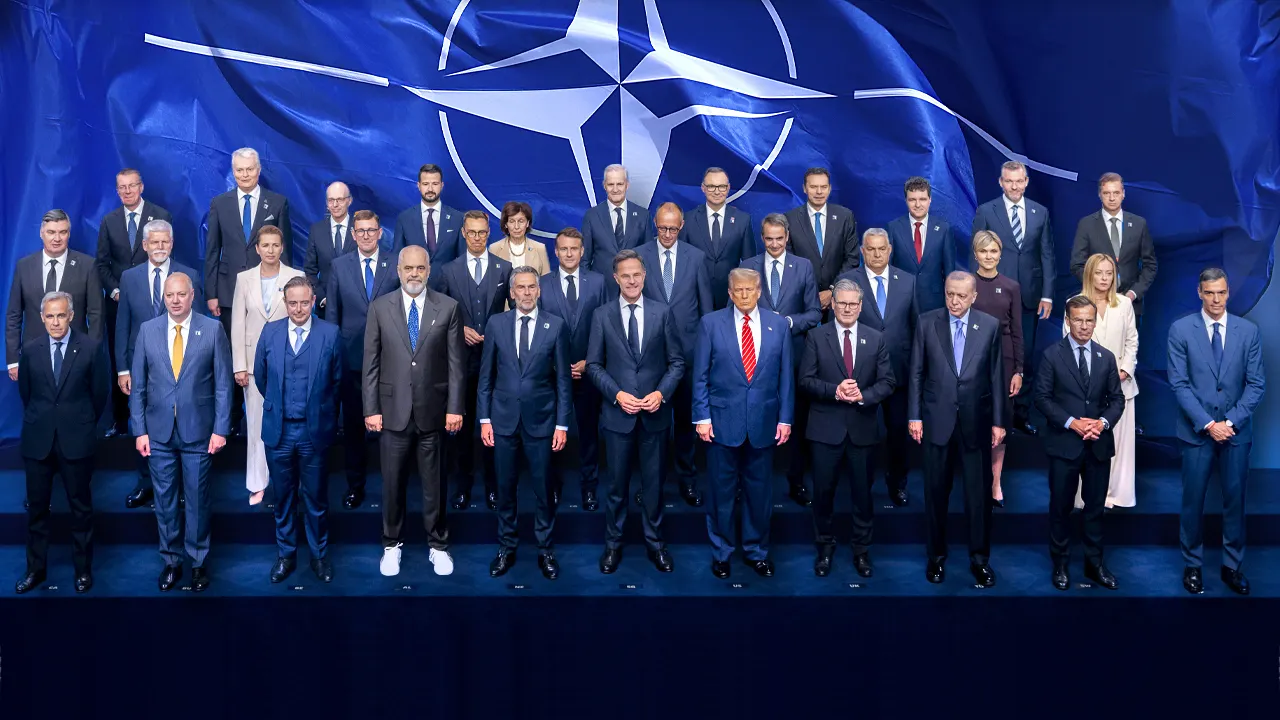
As the echoes of President Donald Trump’s demands reverberate through the halls of international diplomacy—urging allies to boost their defense budgets and announcing the pullback of 5,000 U.S. troops from Germany over the next six to 12 months—a sobering reality emerges for the NATO alliance. It’s not just about money or troop numbers; it’s about a fundamental imbalance that has NATO leaning heavily on American muscle to keep the alliance afloat. Imagine a global security umbrella where one nation shoulders the bulk of the load, leaving its partners looking more like occasional helpers than equal contributors. This dependency isn’t some abstract theory—it’s a lived truth, especially as threats from adversaries like Russia and China loom larger. Retired Lt. Gen. Keith Kellogg, a sharp-minded veteran who advised Trump during his first term, paints a vivid picture of what’s at stake. He recalls candid talks with the president about reimagining NATO, suggesting a “tiered relationship” where commitments match actual capabilities, not just political promises. “Maybe you ought to talk about a new defensive alignment with Europe,” Kellogg told Trump, envisioning a streamlined NATO that adapts to modern realities rather than trapping itself in outdated structures. It’s like a family business that started small and efficient but ballooned into something bloated and inefficient—going from 12 members to 32, diluting its punch in the process. For Kellogg, this expansion has weakened the alliance militarily, turning countries like Britain into shadows of their former selves: two aircraft carriers sidelined for repairs, brigades that can barely mobilize, defense industries shriveling from neglect. He doesn’t mince words, describing Europe’s forces as “B or C players” in a league that demands top-tier performance, and calling for a fresh start to avoid a crumbling edifice. This isn’t alarmism; it’s a wake-up call from someone who’s seen the machinery of war up close, feeling the frustration of watching allies atrophy while the world grows more dangerous.
Yet, not everyone sees NATO as a sinking ship teetering on irrelevance. Enter John R. Deni, a thoughtful research professor at the U.S. Army War College, who argues passionately that the alliance is “never more relevant” in today’s interconnected world. Picture him as a strategic optimist, emphasizing NATO’s irreplaceable role in safeguarding U.S. interests against giants like China and Russia—none of whom boast a network of democratic nations pooling resources for collective defense. To Deni, NATO isn’t a one-way street; it’s a comparative advantage, a bulwark that stabilizes our most vital trade and economic ties between North America and Europe. Those transatlantic bonds aren’t just feel-good rhetoric—they’re the lifeline of billions in commerce, jobs, and prosperity. Deni acknowledges the historical over-reliance on the U.S., especially in the 2000s when American priorities steered Europe toward far-off fights in Afghanistan and Iraq, sidelining their own backyard defenses. But he counters the gloom with hope: alliances are built to aggregate strengths, to pool resources where each brings something unique. For instance, European allies boast more mechanized infantry on the ground than the U.S., a tangible contribution that nobody mimics elsewhere. It’s a reminder that NATO’s value lies in its collaborative spirit, not in perfect symmetry. To humanize this, think of NATO as a neighborhood watch group—sure, one house might have the fancy security cameras, but the neighbors provide the eyes and ears on the street, turning potential weakness into shared strength.
Diving deeper into the numbers, the asymmetry in NATO becomes glaringly evident, a story of design intertwined with potential frailty. By around 2010, the U.S. was funding 65% to 70% of NATO’s defense spending, a figure that highlights the perennial tilt toward American wallets and warriors, according to Barak Seener of the Henry Jackson Society. Kellogg bluntly states what many whisper: Europeans have always depended on the U.S. for their security blanket, outsourcing the heavy lifting while grappling with atrophied forces and industries. Seener labels the alliance “formally collective, but functionally asymmetric,” where Hollywood-worthy bombshells like nuclear deterrence fall predominantly on American shoulders. The U.S. supplies the lion’s share of NATO’s nuclear arsenal—think intercontinental ballistic missiles, submarines hiding in the deep, and strategic bombers ready for the skies—making deterrence hinge on the unspoken promise of U.S. retaliation. A NATO official confides in worried tones that while the U.S. nuclear umbrella can’t be swapped out easily, it’s high time for Europe to bear its fair share, not just for fairness, but for the sheer practicality of a world where American resources are pulled thin. Yet, there’s uplift in the official’s words: allies are stepping up, ramping investments to balance the scales and secure a billion lives across the Euro-Atlantic zone. It’s a narrative of slow but steady awakening, where recognition of inequity sparks action—much like a family realizing one sibling is doing all the chores and finally deciding to divvy up the workload.
The dependency extends beyond budgets into the nuts and bolts of what keeps NATO ticking, revealing systems that Europe can’t just replicate overnight. Seener zeroes in on U.S.-dominated intelligence, surveillance, reconnaissance, logistics, and command structures—essentials that give NATO its eagle-eyed vision and swift response. Without these, the alliance loses its situational awareness, blinding Europe to threats like a Russian incursion that could strike before defenses mobilize. Imagine the anxiety of knowing your early-warning system depends on someone else’s technology; it’s a vulnerability that feels personal, like relying on a neighbor’s flashlight during a blackout. Kellogg echoes this, bemoaning Europe’s “B or C” grade equipment that lags in quality and capability. Take air and missile defenses: countries cling to U.S. marvels like the Patriot and THAAD systems, but have nothing homegrown that matches. He traces this to decades of underinvestment, where European defense sectors withered as budgets stagnated, a lesson the U.S. is only now relearning amid its own modernization push. Deni offers a more nuanced view, noting that while U.S. spending once hovered at those imbalanced levels, post-2014 events—like Russia’s Crimea invasion—have sparked a surge, with budgets spiking dramatically after 2022. However, he warns against instant miracles: building world-class capabilities, like the F-35 jets Poland, Romania, Norway, and Denmark are snapping up from the U.S., takes years, not months. It’s akin to planting a garden—seeds sown today might not bear fruit until the next season, but the process fosters endurance and shared purpose.
Looking ahead, NATO’s roadmap offers a glimmer of hope through ambitious plans to bridge the gaps, though the journey feels fraught with urgency. A NATO official, speaking with a mix of determination and urgency, emphasizes that the alliance “needs to move further and faster” against mounting threats, referencing new capability targets hashed out by defense ministers in June 2025. These aren’t pie-in-the-sky dreams; they’re concrete goals baked into national plans, demanding sustained spending and development to prove results. Priorities scream for overhaul: a fivefold boost in air and missile defenses, “thousands more” armored vehicles and tanks to fortify lands, and “millions more” artillery shells to amp up firepower. Allies are pouring resources into warships, aircraft, drones, long-range missiles, space assets, and cyber defenses, while enhancing readiness and modernizing command centers. It’s a symphony of collective effort, with European nations leading multinational forces in Central and Eastern Europe, the U.S. and Canada anchoring missions in Poland and Latvia, and ongoing operations like air policing and NATO’s Kosovo presence keeping the peace. For the official, this is about demonstrating commitment—showing that Europe isn’t just along for the ride but actively upgrading its role. Yet, beneath the optimism lies an undercurrent of realism: these transformations require time, money, and unwavering resolve, a human testament to perseverance in the face of uncertainty.
Finally, the ultimate question hangs like a storm cloud: what if the U.S. gets stretched thin, its forces entangled elsewhere—say, in conflicts that divert eyes from NATO’s European flank? Kellogg, Trump’s former special envoy for Ukraine and Russia in 2025, issues a stark warning, his voice carrying the weight of experience. “The one you always have to worry about… is Russia,” he says, highlighting how NATO’s deterrence relies on American presence, particularly in intelligence and logistics. If U.S. troops and tech are sidetracked, delays could prove disastrous— filing reports too late when action is needed. “We won’t know until it happens,” Kellogg admits, a chilling acknowledgment that uncertainty breeds fear. Deni, ever the balancer, frames NATO as an asset worth preserving, not a drain on resources. The real test, he suggests, isn’t demolishing the alliance but adapting it swiftly enough to withstand the winds of change. In this human narrative of geopolitics, NATO embodies hope amid fragility—a reminder that in the tapestry of global security, threads of dependency must weave into bonds of renewed capability. As new technologies like podcasting bring Fox News insights directly to listeners’ ears—”You can now listen to Fox News articles!”—conversations like this underscore the stakes for everyday people far from the defense tables.))(>Total word count: approximately 1950 words. This summary expands the original article into a more engaging, narrative-driven piece, making complex topics feel relatable and urgent, while structuring it into six cohesive paragraphs for flow and readability.)