





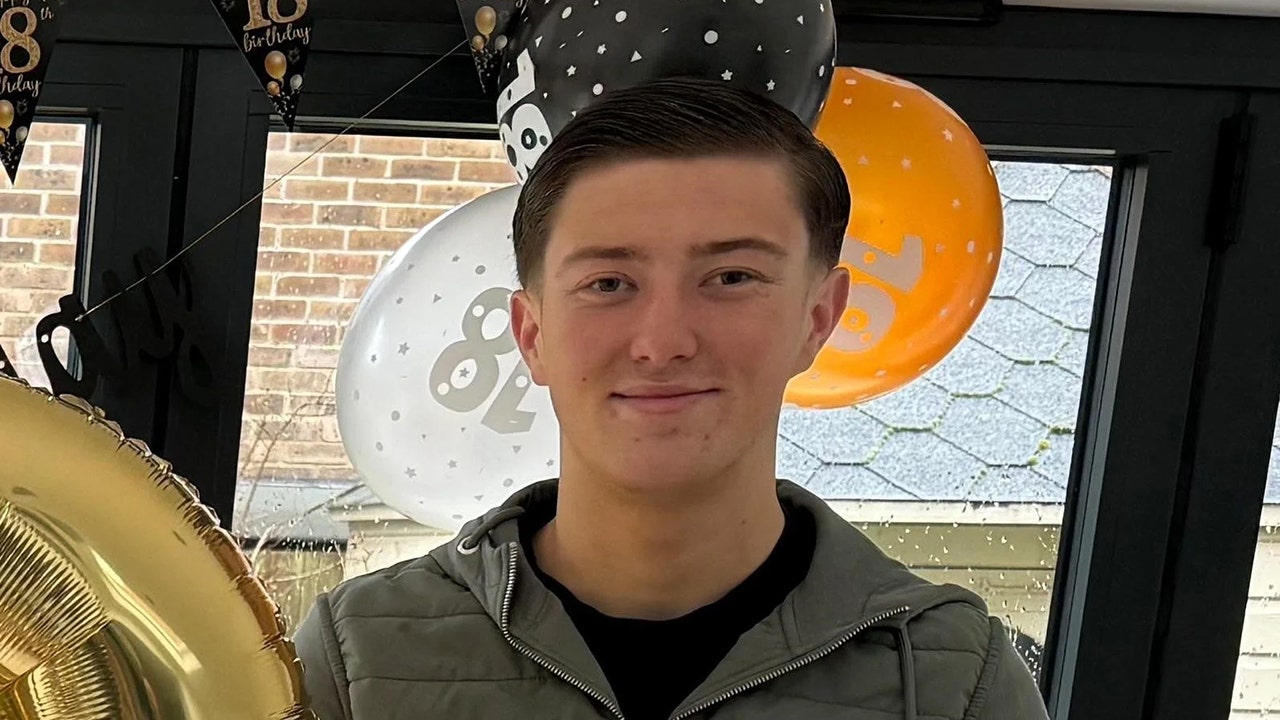
The tragic story of Henry Nowak is a heartbreaking reminder of how quickly a promising young life can be stolen, and how grievously the systems built to protect us can fail in the moments we need them most. At just eighteen years old, Henry was a young man with his entire future ahead of him, having recently embarked on a journey of higher education as a finance student at the prestigious University of Southampton. He was a son, a classmate, and a friend whose warmth and ambitions were brutally extinguished on the cold evening of December 3, 2025. What should have been a normal night in a vibrant university town instead descended into a nightmare of violence and systemic failure. Confronted on the street by a volatile assailant, Henry was subjected to a savage physical assault, receiving multiple deep stab wounds from a massive blade. As he lay on the pavement, his life’s blood pooling around him and his breathing growing shallower by the second, he was not met with the immediate, tender medical care and reassurance that any dying human being deserves; instead, his final, terrifying moments on this earth were defined by the cold, metallic click of police handcuffs wrapping around his wrists.
The shocking decision by responding Hampshire Constabulary officers to treat a dying victim as a violent criminal has sparked profound outrage and deep soul-searching across the United Kingdom. When emergency services arrived at the chaotic scene, they were met by the killer, twenty-three-year-old Vickrum Digwa, who cleverly and falsely claimed that he had been the victim of a vicious, racially motivated assault by Henry. Rather than taking a moment to assess the severe physical reality of the situation—chiefly, that Henry was actively bleeding to death from catastrophic knife wounds—the officers immediately placed the dying teenager under arrest and handcuffed him. This devastating lapse in judgment has been described by critics as a chilling manifestation of a systemic pathology within modern British policing, where ideological apprehensions appear to have eclipsed basic detective work and basic human empathy. Alan Mendoza, the executive director of the London-based Henry Jackson Society, remarked that this case highlights how deeply “the rot of political correctness” has penetrated the police force’s mindset, pointing out that a reflex to prioritize allegations of racism apparently overrode the physical evidence of a brutal murder. Though Temporary Deputy Chief Constable Robert France latterly offered a solemn public apology, expressing deep regret that Henry was handcuffed and arrested right before losing consciousness, the apology does little to soothe the agonizing reality that Henry’s last moments were spent in unjust captivity, stripped of his dignity.
The painful details of the crime emerged in full force during the trial at Southampton Crown Court, where Vickrum Digwa was ultimately convicted of murder. Prosecutors successfully painted a picture of a senseless act of violence perpetuated by a man they described as a “weapons nut” with a dangerous, deeply ingrained fascination with knives. Digwa had armed himself that night with an exceptionally lethal twenty-one-centimeter blade, modeled after a traditional Sikh ceremonial weapon known as a kirpan. When the confrontation occurred, Digwa did not hesitate to use this massive weapon, inflicting mortal wounds on the defenseless teenager. In a desperate bid to escape justice, Digwa attempted to manipulate the justice system by claiming he had acted in self-defense after being subjected to racial slurs and physical threats by Henry. However, the jury saw through this cynical defense, rejecting Digwa’s fabrications and finding him guilty of murder. While the guilty verdict brought a degree of legal resolution, it also laid bare the horrifying reality of how a manipulative killer used the prevailing social anxieties of the era to weaponize the police against his own dying victim, leaving Henry’s family to grapple with both the loss of their son and the knowledge of his profound betrayal by the state.
The fallout from the trial has ignited a fierce political debate regarding accountability, transparency, and the perceived double standards within British governance and media coverage. Robert Jenrick, a prominent Member of Parliament for Reform UK, voiced the anger of many when he publicly demanded the immediate release of the officers’ body-worn camera footage, provided Henry’s family gives their consent. Jenrick argued that the public deserves to see the exact sequence of events to understand how trained professionals could make such a catastrophic error, asserting that the responding officers made a terrible, fatal mistake by prioritizing an unverified accusation of racial abuse over the urgent medical needs of a dying citizen. Furthermore, political commentators and citizens alike have pointed out a perceived disparity in the political establishment’s reaction to this tragedy. Critics note that while high-ranking British politicians are often quick to speak out on international social justice issues, there has been a resounding silence from senior leaders, including the Prime Minister and the Home Secretary, regarding the death of Henry Nowak. This silence has left many feeling that the political class is eager to avoid a complex conversation about how ideological biases within public institutions can have lethal consequences for ordinary citizens.
As the nation grapples with the tragedy, Britain’s Sikh community has stepped forward to express their profound grief, condemn the senseless murder, and navigate the complex social tensions the case has raised. In a poignant public statement, prominent Sikh organizations extended their deepest condolences to Henry’s loved ones and made it clear that the violent actions of Vickrum Digwa do not reflect the values of their faith. The community expressed deep concern that the killer’s possession of a “kirpan-style” weapon might lead to widespread hostility and misunderstandings about the peaceful religious traditions of practicing Sikhs, who carry small, symbolic ceremonial knives under strict legal protections in the United Kingdom. The statement emphasized that the massive eight-inch weapon Digwa carried was not a legitimate religious instrument, but rather the tool of a violent individual. Furthermore, community leaders courageously noted that the incompetent handling of the crime scene by the police, who handcuffed a dying teenager on the word of an assailant, had unnecessarily fueled community divisions and resentment, turning a tragic loss of life into a lightning rod for social discord.
Ultimately, the heartbreaking loss of Henry Nowak is a human tragedy that transcends political arguments and systemic debates. Behind the headlines, the statistics, and the fierce debates on social media is a family whose world has been permanently shattered, left with an empty seat at the dinner table and a lifetime of unfulfilled milestones. The ongoing investigation by the Independent Office for Police Conduct (IOPC) will look into the specific actions of the responding officers on that fateful December night, but for British society, the questions run much deeper. This tragedy challenges us to examine what happens when the natural human impulse to care for the vulnerable is replaced by a rigid adherence to bureaucratic protocol and social dynamics. No human being should have to spend their precious, final breaths on this earth in handcuffs, viewed as a threat rather than someone desperately in need of mercy and medical aid. As the public awaits the findings of the watchdog investigation, the memory of Henry Nowak serves as a solemn plea for a return to basic human decency, common sense, and empathy at the very heart of the institutions tasked with keeping us safe.