





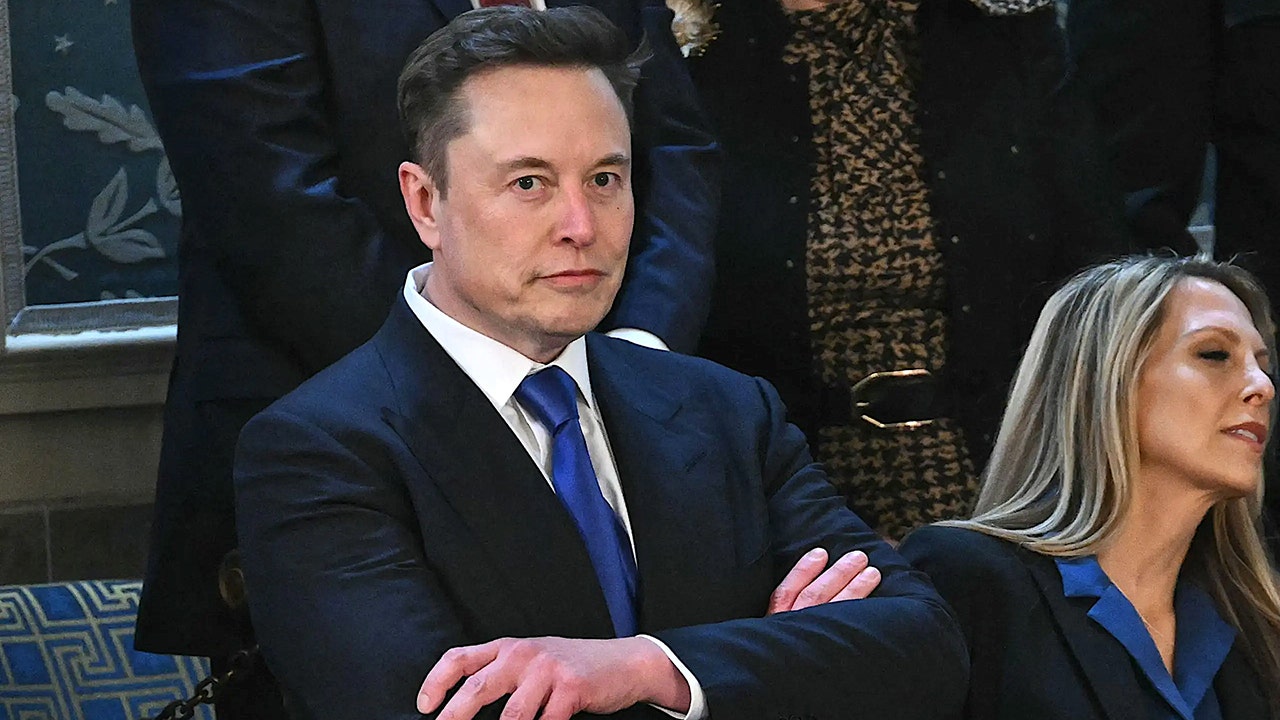
The intersection of global digital influence and raw, unresolved human suffering has once again thrust one of the United Kingdom’s most painful modern tragedies back into the international spotlight. When tech billionaire Elon Musk used his massive social media platform, X, to declare that the political class who turned a blind eye to the systematic exploitation of British children belong behind bars, he did not merely share a passing opinion; he reopened a deep, festering wound in the British national psyche. This explosive intervention was triggered by the release of a massive, citizen-funded independent report commissioned by Rupert Lowe, the Member of Parliament for Great Yarmouth and leader of Restore Britain. For years, the horrifying reality of “grooming gangs” in post-industrial English towns and cities—including Rotherham, Rochdale, Telford, Oxford, and Oldham—had been treated by successive governments as a series of isolated, historical anomalies. However, the deep-seated public fury surrounding these cases has never truly faded, fueled by the knowledge that countless young, vulnerable children were left at the mercy of organized abusers. This lingering anger is vividly illustrated by the extraordinary crowdfunding campaign that powered Lowe’s inquiry, which amassed over $1.1 million from more than 23,000 ordinary citizens who dug into their own pockets to demand answers. This was not a typical bureaucratic commission; it was a grassroots rebellion by everyday people who felt fundamentally betrayed by the very institutions sworn to protect them. The resulting 200-page report, meticulously drafted by barrister Graham Smith, stands as a devastating indictment of decades of systemic neglect, highlighting a societal failure where young girls were groomed, raped, and trafficked while the police, social services, and local governments repeatedly looked the other way, leaving a trail of shattered lives in their wake.
The findings of the Lowe report are as shocking as they are comprehensive, presenting a dark and unsettling narrative of institutional complicity that it describes as a “rotting stain” on the modern history of Great Britain. Rather than attributing these decades of abuse to mere administrative errors or staff shortages, the report takes the radical step of accusing public authorities of operating with either active or passive consent toward these predatory grooming networks. The document argues that a paralyzing culture of political correctness and a profound fear of being labeled racist created a protective shield for perpetrators, allowing them to operate with near-total impunity in broad daylight. To correct what it views as a catastrophic failure of the state judicial system, the report proposes a series of aggressive and uncompromising legal reforms that would completely reshape how child sexual exploitation is prosecuted in the U.K. Chief among these recommendations is a sweeping overhaul of national sentencing guidelines, proposing that organized child rape carry an automatic starting point of life imprisonment without easy recourse to parole. For foreign nationals convicted of participating in these group-based child abuse rings, the report demands immediate, non-negotiable deportation upon the completion of their sentences. Furthermore, it calls for the creation of a highly specialized unit within the Crown Prosecution Service dedicated solely to taking down grooming networks, alongside significantly enhanced legal protections for child witnesses who are often re-traumatized by the grueling trial process. Crucially, the authors of the report have issued a stark ultimatum to the British establishment: if the government fails to implement these dramatic measures and prosecute those responsible, the organizers of the inquiry are prepared to bypass the state entirely and launch historic private prosecutions against the specific public officials whose historical negligence allowed these abuses to continue unchallenged.
At the absolute center of this national controversy is the deeply sensitive and politically charged issue of offender demographics, a topic that has historically paralyzed British public discourse. The Lowe report directly addresses what it describes as the disproportionate representation of Muslim men, particularly those of Pakistani heritage, in organized grooming and child sexual exploitation rings. By analyzing localized patterns and extrapolating the data on a national scale, the report presents a staggering emotional benchmark, claiming that the true number of victims across the country could be as high as 250,000—a figure that, while legally unverified by central government authorities, highlights the terrifying potentially hidden scale of the crisis. While critics have occasionally accused such independent inquiries of bias, official state audits offer a sobering parallel. A landmark government-commissioned audit led by Baroness Louise Casey revealed a systemic pattern of institutional cowardice, explicitly stating that local authorities deliberately avoided asking difficult questions or recording demographic details out of an overwhelming fear of being accused of racism. Casey’s audit noted that for nearly two-thirds of identified perpetrators, ethnic data was simply never recorded, leaving a massive, inexcusable void in national statistics. Yet, even with these incomplete data sets, Casey concluded that the evidence from localized police force areas showed undeniable, disproportionate numbers of men from Asian ethnic backgrounds involved in group-based child exploitation. This official acknowledgment, alongside the identification of other perpetrator groups, including White British, European, African, and Middle Eastern individuals, proves that the failure was not just one of policing, but a profound moral collapse where adult authorities prioritized their own professional reputations and cultural sensitivities over the safety and bodily integrity of suffering children.
The sociological and political fallout of this report extends far beyond its specific legal recommendations, pointing to a fundamental breakdown in the social contract between the British public and their state institutions. This sentiment was echoed by Emma Schubart, a highly regarded research fellow at the U.K.-based think tank the Henry Jackson Society. While acknowledging that some of the report’s most dramatic national figures rely on statistical extrapolation and that its methodology deserves rigorous academic scrutiny, Schubart warned that the British government cannot afford to ignore the core questions the document raises regarding grooming gangs and institutional failures. In an insightful analysis, she pointed out that the most crucial revelation of the entire endeavor might not actually lie within the written pages of the report itself, but rather in the unique way it was brought to life. The fact that tens of thousands of everyday citizens felt compelled to fund an independent legal inquiry out of their own personal savings represents an unprecedented, systemic crisis of faith. It signals to policymakers that a vast portion of the British populace has lost all confidence in the government’s willingness or capacity to honestly investigate its own institutional crimes. For decades, the public has watched as government-led panels and official inquiries delivered soft, bureaucratic recommendations with little to no real-world accountability or criminal consequences for the officials whose failures facilitated these crimes. This citizen-funded initiative, therefore, serves as a powerful warning shot to the political class, demonstrating that when a state fails to provide justice, the people will eventually take it upon themselves to build their own systems of truth-seeking and accountability, regardless of how uncomfortable it makes the ruling establishment.
In response to this mounting wave of public outrage, the British government has struggled to demonstrate that it is finally taking the issue of child exploitation seriously, though its efforts are met with deep skepticism by weary communities. A spokesperson for the Home Office officially labeled the historical grooming gang scandal as one of the darkest and most shameful chapters in the nation’s history, expressing deep gratitude to the survivors whose immense courage has kept the fight for justice alive. To show concrete action, the government formally launched a statutory national inquiry into grooming gangs across England and Wales in April 2026, granting it full legal powers to compel testimony, seize institutional records, and hold failing public bodies to account. Home Secretary Yvette Cooper announced to Parliament that authorities had already identified upwards of 800 previously closed or neglected grooming cases for immediate, formal review, with expectations that this caseload would quickly surpass 1,000 backlogged investigations. Additionally, the government has promised a wave of new legislative measures, including mandatory reporting laws for professionals working with children, tougher aggravated sentencing options for grooming offenses, and strict new guidelines for collecting comprehensive ethnicity and nationality data. However, the political landscape remains highly polarized. Prime Minister Keir Starmer has consistently pushed back against political attacks regarding his past record, particularly during his tenure as the Director of Public Prosecutions. Starmer has fiercely defended his legacy, accusing his critics of weaponizing a national tragedy for partisan political gain and peddling misinformation, while insisting that under his legal leadership, the Crown Prosecution Service actively worked to reopen closed files and revolutionize how child sexual abuse cases were evaluated and brought to court.
This unresolved crisis has also evolved into an international diplomatic concern, drawing sharp rebukes from global allies and highlighting the universal stakes of child protection. Even the United States State Department previously entered the fray, issuing stern, high-profile warnings to the United Kingdom over its historic mishandling of these networks and lamenting the “unspeakable abuse” that thousands of children were subjected to before local authorities finally took action. For many observers, Britain now stands at a defining historical and moral crossroads. Critics like Rupert Lowe argue that the government’s newly established statutory inquiry is merely another stalling tactic—a long, drawn-out bureaucratic exercise designed to kick the issue into the long grass and delay immediate justice, much like the official handling of previous national scandals where true accountability arrived decades too late. The central challenge moving forward is not simply about producing more written reports or engaging in endless parliamentary debates; it is about rebuilding a shattered foundation of trust and ensuring that the safety of young people is never again sacrificed on the altar of political convenience or social cohesion. Ultimately, behind the dense legal jargon of the 200-page Smith report, the high-profile social media posts of global tech moguls, and the fierce debates in the House of Commons, lies a deeply human tragedy of stolen childhoods, broken families, and institutional betrayal. The true test for the United Kingdom will be whether its leaders can look past political self-preservation and implement a system of unflinching transparency and uncompromising justice, proving to its citizens that the protection of the innocent is, and will always be, the supreme law of the land.