





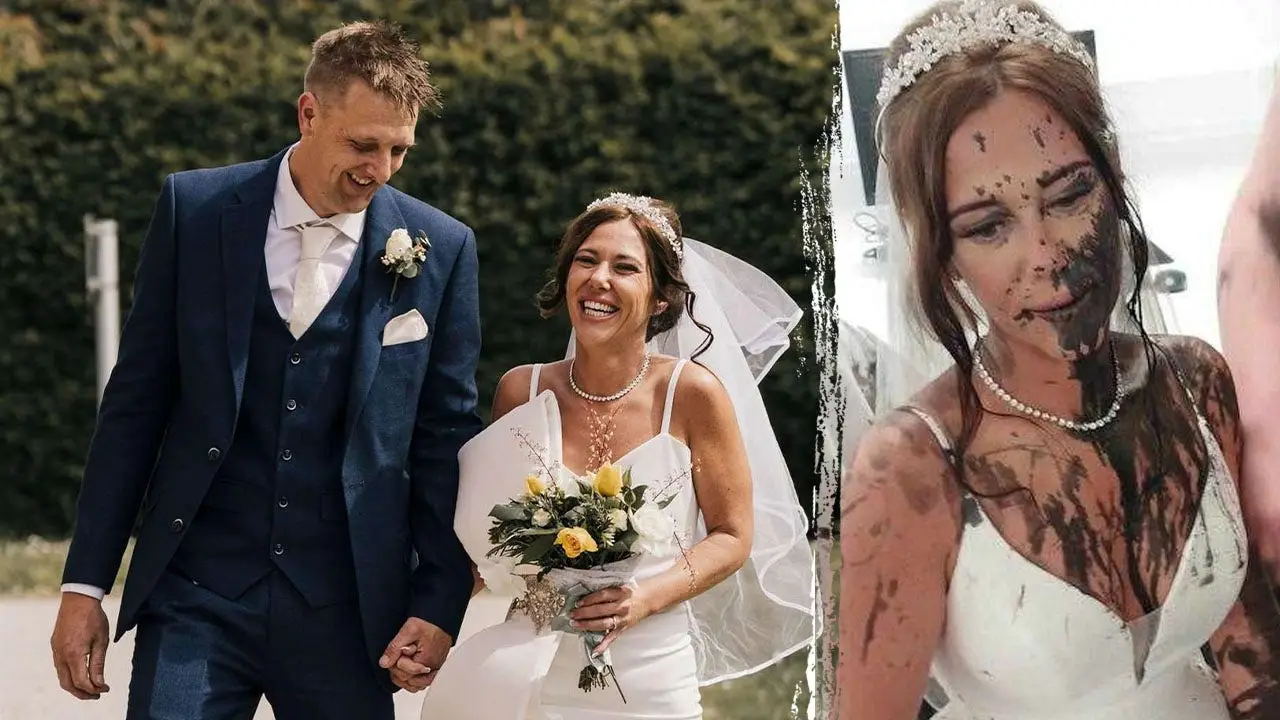
Gemma Monk, a 35-year-old mother of two from Maidstone, England, had always envisioned her wedding day as a magical culmination of her long journey toward love and happiness. For years, she and her childhood sweetheart, Ken Monk, had shared dreams of exchanging vows, nurturing their relationship since she was just 14, when Ken was introduced to her by her brother Ashley’s best friend. Ken had been there through thick and thin, standing by her side as she battled health scares, including a recent cancer diagnosis that had left her frail and fighting for her life. Determined to regain her strength, Gemma had shed significant weight, triumphing over the illness to earn a clean bill of health. The wedding, set for May 2024 at a serene venue overlooking a cream-colored carpet, was more than just a ceremony—it was a beacon of hope, a chance to celebrate unwavering love amidst personal victory. But as she walked arm-in-arm with her father toward the altar, paranoia crept in. A knot tightened in her stomach, whispers of nerves battling a deeper intuition. Little did she know, the shadows of family drama were about to shatter her fairy tale into a nightmare, forever altering the lens through which she viewed trust, family, and joy.
In the blink of an eye, chaos erupted just moments before the vows. Someone called out her name, a deceptive lure in the midst of carefree anticipation. Seconds later, Gemma felt a cold, viscous flood smother her—thick, black paint splashing across her bridal gown, her face, her dreams. The attacker slipped away, but not before Gemma recognized her own sister-in-law, Antonia Eastwood, wife to her brother Ashley. Fury ignited, and Gemma lunged, grabbing a fistful of hair in a desperate bid to confront the betrayal, but Antonia evaded her grasp, vanishing into the crowd. Left drenched and humiliated, Gemma collapsed into tears, her pristine attire now a canvas of malice. The wedding guests, stunned into silence, witnessed the bride’s despair unfold like a tragic scene from a movie. Yet, amidst the horror, Gemma’s inner resilience flickered. She retreated to a changing room, scrubbing away the evidence of violence with trembling hands, determined not to let the act define her day. An usher raced to fetch a borrowed dress, and in a flurry of empathy and improvisation, Gemma emerged renewed—not perfect, but unbroken. “I would have walked down the aisle in my knickers with black paint on my face if I had to,” she later reflected, her voice laced with fierce determination. The couple, partners for over two decades, forged ahead, binding their lives in matrimony despite the smear of family venom. But the scars ran deep, etching themselves into Gemma’s psyche, tugging at threads of mental health that had once been woven strong.
The aftermath of that fateful splash rippled through Gemma’s life like an unrelenting tide, eroding the foundation of her daily existence. Once a vibrant mental health worker, pouring her energy into helping others heal, she now grappled with a crippling depression that pinned her to bed on many mornings. Without the anchor of her two children and steadfast family, she confessed she might have succumbed to isolation, questioning her very worth. Dignity slipped away, replaced by haunting memories that robbed her of simple joys—things she once took for granted, like slipping into кожa comfortable routine or feeling confident in her skin. The attack, she revealed, warped her self-image, leaving her to doubt if she had somehow provoked this cruelty. Even testifying at the police station stirred waves of emotion, sobs interrupting her words as the trauma resurfaced. Friends and loved ones watched helplessly as Gemma battled what they described as an invisible war, her wedding album now a bittersweet relic mingling euphoria with anguish. Nights were filled with restless introspection, replaying the incident in her mind, wondering how family could descend into such spite. The planned honeymoon to the idyllic Maldives was canceled; Gemma lacked the emotional bandwidth, her spirit too bruised for escape. “I’ve lost who I used to be,” she lamented, her words echoing the profound grief of someone robbed of innocence. In quiet moments, she pondered the fragility of happiness, how one act of malice could unravel years of personal growth and familial bonds.
Delving into the roots of this feud unraveled layers of resentment that had simmered beneath the surface for years. Antonia Eastwood, 49, harbored grudges stemming from her own wedding, where she accused Gemma of minor transgressions like “trying to trip up” the proceedings, though Emma swore it was a misunderstanding. This petty dispute escalated into bans and bitterness, fracturing what was once a close-knit family tapestry. Antonia, married to Gemma’s brother Ashley, allowed jealousy and unresolved anger to fester, transforming sibling dynamics into a battlefield of passive-aggressive skirmishes. Gemma, having just conquered her cancer ordeal, never imagined her vulnerability would be exploited so callously by someone who knew her struggles intimately. It was as if the act was a calculated strike at her most triumphant hour, a blow meant to amplify humiliation. Antonia’s choice to strike not only defied sisterhood but also endangered health—black paint posing potential risks to skin and well-being in the aftermath of illness. Friends and observers marveled at the depth of familial dysfunction, questioning how love could sour into such calculated harm. For Gemma, this betrayal exposed ugly truths about alliances deemed eternal, forcing her to reevaluate hereditary ties and prioritize self-protection over reconciliation. The ordeal highlighted broader themes of envy in families, where celebrations should unite but can instead ignite old wounds, leaving lasting emotional scars that therapy might one day mend.
In the courtroom, justice cast a faint shadow over the pain inflicted. Antonia Eastwood faced charges of criminal damage, her actions deemed not merely impulsive but premeditated vandalism aimed at shattering a sacred rite. Judge Oliver Saxby delivered a stern verdict: a 10-month prison sentence, suspended for 12 months, coupled with 160 hours of grueling community service. “This was meant to be a special day for Gemma Monk and her family. Courtesy of your conduct, it turned into a nightmare,” the judge remarked, his words underscoring the gravity of wrecking such a pivotal moment. Gemma watched, a mixture of relief and outrage stirring within her—relief that accountability had been enforced, yet fury at the leniency. She believed the punishment fell short, pushing for at least 23 months to match the agonizing wait for closure. The sentence, while symbolic, offered little solace for the psychological toll, prompting Gemma to grapple with societal norms of punishment. Was this enough to deter future acts, she wondered, or did it merely perpetuate the cycle of family feuds? Supporters rallied around her, praising her courage in standing before the court, her testimony a poignant reminder of victim’s voices. Yet, beneath the legal resolution, Gemma harbored skepticism, feeling Antonia’s suspended sentence was a compromise on justice. This chapter closed with lingering doubts about fairness in a system that could only partially restore what malice had torn apart—dignity, trust, and the sanctity of her memories.
Looking back, Gemma’s resolve to proceed with the wedding stands as a testament to human spirit’s defiance against adversity. Despite the assault, she emerged from that changing room transformed, not ruined, borrowing another’s gown to step into eternity with Ken. Their vows, recited amidst the residue of chaos, symbolized unbreakable commitment forged in the fires of betrayal. Now, nearly two years later, Gemma continues to heal, though the depression lingers like a stubborn fog. She’s unable to work, her professional life paused as she nurtures her children and rebuilds her self-worth. The incident, she admits, challenged every facet of her identity, prompting deep reflections on forgiveness and the weight of grudges. “I will never accept her apology,” Gemma declared firmly, her words a boundary drawn in the sand of pain. Still, glimmers of hope emerge through therapy and support circles, where she shares her story to empower others navigating similar traumas. The experience has humanized her, turning personal tragedy into a narrative of resilience. Weddings, once epitomized by bliss, now carry for her a layer of caution, a reminder that even the closest ties can fray. Yet, in the quiet aftermath, Gemma clings to love’s enduring power—the kind shared with Ken, her children, and the family that rallied. This saga, heartbreaking yet inspiring, illustrates how one cruel act can redefine lives, urging empathy and vigilance in the bonds we cherish. Through it all, Gemma emerges not as a victim, but as a survivor, rewriting her story with every step forward.