



For decades, the southeastern coast of the Dominican Republic has served as a sanctuary for weary travelers seeking refuge from the frantic pace of modern life. Bayahibe, once a quiet, unassuming fishing village, has blossomed into a world-renowned tropical haven where the dense green of the jungle meets the tranquil, postcard-perfect turquoise of the Caribbean Sea. Visitors from every corner of the globe journey to this paradise to lose themselves in the rhythm of the waves, the warmth of the golden sun, and the luxury of the region’s premier resorts. On what began as a typical, sun-drenched Friday afternoon, the idyllic atmosphere at the Viva Wyndham Dominicus Beach Hotel was shattered. A sudden and devastating fire tore through the resort complex, transforming a dream vacation into a living nightmare for thousands of guests. In an instant, the gentle rustle of palm trees was replaced by the roar of flames and the screams of panicked tourists, leaving behind a scene of utter destruction and a profound sense of human loss that has rippled far beyond the island’s shores.
Among those who had traveled to Bayahibe seeking the rejuvenating embrace of the Caribbean was Francesca Valentino, a forty-six-year-old Italian national whose life was tragically cut short in the inferno. Francesca, like so many others flanking the resort’s pristine white sands, had envisioned her stay at the Viva Wyndham Dominicus Beach Hotel as a peaceful escape, a precious window of time to unwind and make lasting memories. Instead, her journey ended in heartbreak, leaving her family and compatriots to mourn a life lost too soon in a place meant for joy. The Dominican Republic’s Directorate of Out-of-Hospital Emergency Services (DAEH) confirmed her tragic passing, placing a somber face on a disaster that could have easily claimed even more lives. Alongside the loss of Francesca, at least nine other guests suffered injuries during the chaotic scramble for safety. Three of these individuals required urgent transportation to off-site medical facilities to treat severe injuries, while others were tended to by emergency responders on the scene, grappling not only with physical burns and smoke inhalation but with the acute psychological trauma of surviving a sudden catastrophe.
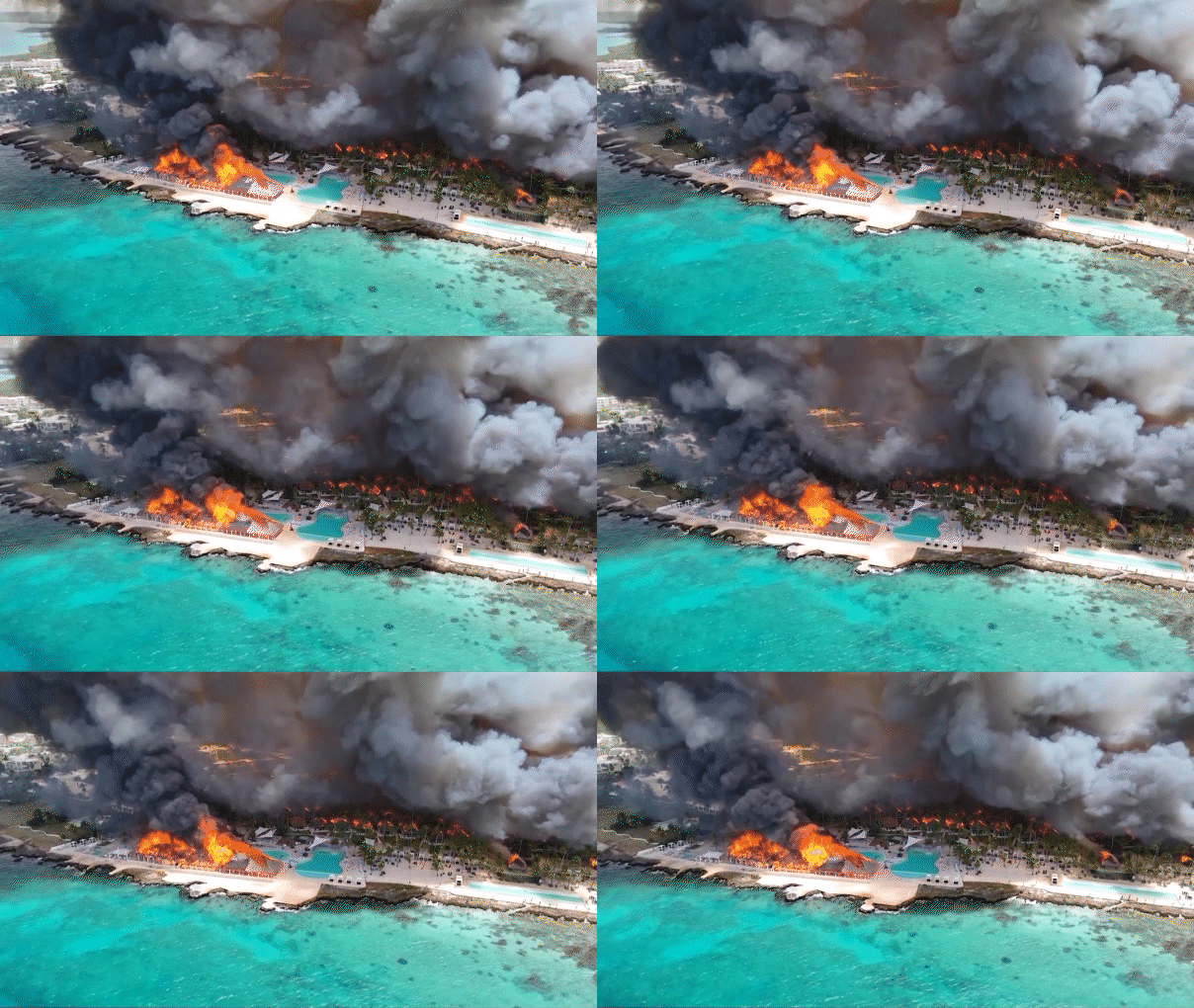
The sheer speed at which the fire consumed the resort was a terrifying testament to both nature’s volatility and the architectural vulnerabilities of tropical design. According to preliminary observations released by local authorities and reported by Reuters, the blaze was fueled by a devastating combination of highly flammable building materials and coastal weather conditions. Many of the resort’s picturesque, open-air structures featured traditional high-pitched roofs made of dried palm thatch—historically known as canas—which are beloved by architects and tourists alike for their authentic, rustic aesthetic and natural ventilation. However, when a spark caught the dry organic material, the steady, warm winds blowing off the Caribbean Sea acted as a massive bellows, whipping the small flame into an uncontrollable firewall within minutes. Witness accounts and aerial video footage captured a horrifying contrast: thick, suffocating plumes of charcoal-black smoke billowed high into the sky, casting immense, dark shadows over the vibrant turquoise waters that had, only moments before, been the centerpiece of a tranquil afternoon.
As the flames leaped from one palm-topped structure to another, a massive, coordinated rescue operation was launched by resort staff and provincial emergency teams. Faced with the rapidly advancing fire, authorities made the urgent and monumental decision to evacuate 1,690 tourists from the danger zone, a logistical feat of extraordinary proportions. Amidst the choking smoke and the crackle of burning timbers, families were ushered away from their rooms, many fleeing with nothing more than the swimsuits and summer clothes they wore. The evacuation required a seamless mobilization of emergency personnel, who worked tirelessly to guide stunned and weeping tourists through the burning complex to safety. To accommodate the sudden influx of displaced travelers, resort operators utilized their nearby sister property, the Viva Wyndham Dominicus Palace, which miraculously escaped the fire entirely untouched. While the physical relocation of nearly 1,700 people was executed successfully without further loss of life, the emotional toll on the survivors remained heavy, as they watched their sanctuary consume itself in ash.
In the quiet, sobering hours that followed the disaster, drone footage captured the stark reality of the aftermath, offering a jarring look at the destruction. The high-resolution aerial cameras panned over what had once been a bustling, vibrant hub of leisure, now reduced to a charred, skeletal wasteland of blackened concrete and smoldering wood. The drone could be seen hovering over the ruins, systematically spraying targeted streams of water onto the remaining hotspots to prevent any potential reignition. This modern, clinical response contrasted sharply with the ancient, natural materials that lay ruined below. Meanwhile, the Dominican Republic’s Emergency Operations Center (COE) quickly issued statements to reassure the public and protect the vital tourism industry that sustains the local economy, noting that general tourist activities in the broader Bayahibe area remained safe and unaffected. Yet, for those who walked among the smoldering ruins of the Viva Wyndham Dominicus Beach Hotel, the physical and emotional scars of the event were impossible to downplay, highlighting the delicate line between paradise and peril.
The tragedy at Bayahibe serves as a poignant reminder of the fragility of human life and the critical importance of safety protocols in the world’s most beautiful destinations. While the allure of natural, traditional materials like palm thatch will always remain a staple of tropical resort architecture, this event underscores the urgent need for balance between aesthetic authenticity and modern structural fire protection, such as fire-retardant treatments and advanced early-warning systems. As Wyndham Hotels and Resorts, local civil defense agencies, and international consulates continue to investigate the precise cause of the blaze, the thoughts of the global community remain with the victims. The loss of Francesca Valentino and the injuries sustained by her fellow travelers have cast a long, reflective shadow over the Dominican Republic’s sunny shores. In the weeks and months to follow, the charred structures of Bayahibe will undoubtedly be rebuilt, but the memory of that terrifying Friday will linger as a solemn call to protect, cherish, and safeguard every traveler who steps foot onto these paradise sands.