


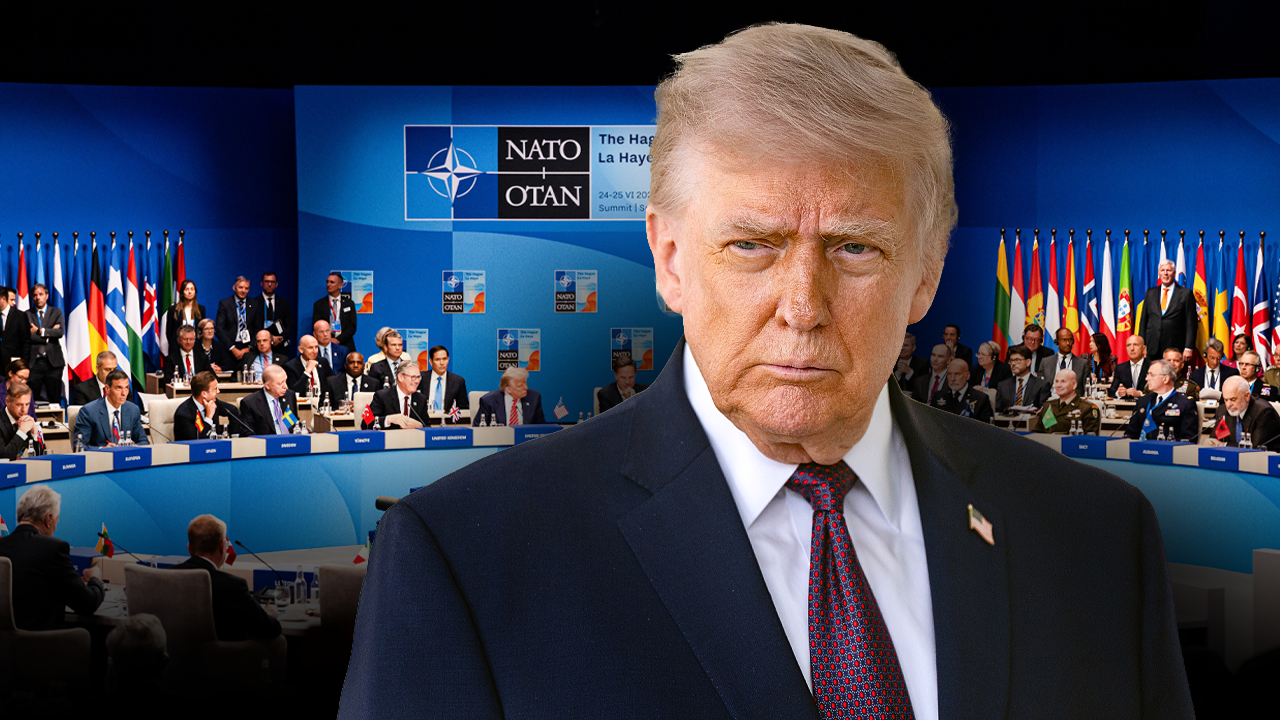
NATO has long been America’s shield against threats in Europe, but lately, it’s feeling more like a rickety bridge that everyone’s walking on, with the U.S. carrying most of the weight. Imagine this alliance as a big family reunion where everyone shows up for the photo op, promising to contribute, but only a few actually help set up the picnic or bring the dessert. That’s the picture former senior national security advisor Keith Kellogg paints in his candid chats with Fox News Digital. He’s a grizzled veteran, someone who’s seen the inner workings of global security up close, and he doesn’t mince words: NATO has grown into a “bloated architecture” that’s expanded from 12 members to 32, but without matching military muscle. Kellogg recalls telling President Trump during his first term that we might need a “tiered relationship” or even a “new NATO” to fix the imbalances. It’s not just talk—European allies are spending more on defense now, thanks to Trump’s push and quirks like cutting troops in Germany and hints of pulling back elsewhere. But beneath the headlines, Kellogg sees a glaring issue: years of pledges have led to atrophied defense industries, where places like the UK can barely field working brigades, and their two aircraft carriers are always in repair. It’s like having a fancy car but no gas in the tank—looks good on paper, but can’t get you where you need to go against foes like Russia.
Diving deeper into Kellogg’s world, he’s all about realism. Having served as Trump’s special envoy for Ukraine and Russia in 2025, he’s watched firsthand how NATO’s expansion has “diluted the impact.” It started with good intentions—bringing in more countries for broader deterrence—but ended up spreading resources thin. Kellogg, now co-chair of the Center for American Security at the America First Foreign Policy Institute, isn’t afraid to call out the truths others skirt. He told Fox News Digital that European forces are often “B or C players” in terms of equipment—solid, but not elite. Contrast that with the U.S., which leads in high-end tech like missile defense systems such as Patriot and THAAD, which Europe relies on without comparable alternatives. Kellogg attributes this lag to chronic underinvestment; even America is “relearning” the cost of letting defense industries slacken. His advice? Rethink the alliance’s structure alive. There’s frustration in his voice when he talks about the Brits barely deploying forces or how broader capabilities are hollow. It’s personal for him, as someone who advised a president frustrated by what he sees as unfair burdens. Kellogg isn’t saying ditch NATO, but transform it into something practical, not ceremonial—a new defensive alignment where everyone pulls their weight, especially as threats from Russia loom larger with instability in the Middle East adding to the mix.
Yet not everyone’s waving the white flag on NATO. Take John R. Deni, a research professor at the U.S. Army War College, who’s been in the trenches of military strategy for years. He admits the imbalance but frames it differently: “It has never been more relevant.” For Deni, NATO isn’t a drag—it’s a superpower edge. In a conversation with Fox News Digital, he breaks it down twofold. First, it’s our ace against rivals like China and Russia, who lack anything akin to this collective might. Second, it safeguards the massive economic ties between North America and Europe, ensuring our trade lanes stay smooth and secure. Picture it as insurance for the global economy: without NATO underwriting stability, investments could crumble under uncertainty. Deni points out that alliances are designed to pool strengths, and look at the ground forces—Europeans have way more mechanized infantry than Americans, giving us a leg up in boots-on-the-ground scenarios. Sure, in the past, like the 2000s, Europeans leaned too heavily on the U.S. for conventional defense while Washington focused on Afghanistan and Iraq. But Deni’s not pessimistic; he’s pragmatic. The picture is mixed today, with defense spending spiking post-2014 (especially after Russia’s Crimea invasion) and 2022’s wake-up calls. Purchases of U.S.-made marvels like F-35 jets by Poland, Romania, Norway, and Denmark show progress, even if full payoffs are years away. To Deni, NATO isn’t a liability—it’s an asset worth adapting, a testament to shared values in a turbulent world.
Reflecting on the broader context, this dependence on U.S. power isn’t new; it’s baked into NATO’s DNA since at least 2010, when America handled 65-70% of the spending. Think tanks like London’s Henry Jackson Society, through voices like Barak Seener, label it “formally collective, but functionally asymmetric.” It’s by design that allies share roles, aggregating strengths—one country’s navy might cover another’s land gaps. But asymmetry shines in high-stakes areas: Seener highlights how the U.S. shoulders disproportionate “high-end capabilities,” from intelligence to precision strikes. History plays a role too. Post-Cold War, as Washington urged Europeans to join distant wars, home defense got neglected, leaving gaps that persist. Now, with Russia flexing muscles in Ukraine and jets breaching airspaces, even NATO insiders are calling for balance. A NATO official, speaking anonymously to Fox News Digital, echoes this: the U.S. nuclear deterrent is irreplaceable, anchoring everything from ICBMs to bombers. But fairs fair—Europe must step up, and they’re starting, collaborating on better defense and security to ease the load. It’s a delicate dance: acknowledging America’s global role while building European punch to deter threats for a billion people across the Euro-Atlantic. This isn’t about blame; it’s about survival in an era where conflicts test alliances’ resolve.
Zooming in on the nitty-gritty systems, NATO’s operational backbone leans hard on Uncle Sam. Seener explains it starkly: without U.S. intelligence, surveillance, and reconnaissance, Europe loses the eyes and ears crucial for early warnings. Imagine Russia launching an attack—if NATO lacked that, it could be blindsided, defenses slow to mobilize. Logistics, command chains, even simple supply lines? All U.S.-heavy. Kellogg agrees, bemoaning Europe’s secondary-tier gear—nothing wrong with it, but not cutting-edge. Missile defense is a prime example; allies borrow U.S. systems, but homegrown ones lag, thanks to atrophied industries. This isn’t hypothetical; it’s a daily reality for commanders coordinating across borders. Deni tempers this by noting improvements, like rising budgets post-Crimea that are fostering capability gains, though deployment timelines stretch. European nations, from Poland to Canada, lead in Central and Eastern Europe, with air policing and Kosovo operations (KFOR) as proofs of shared effort. Yet, if the U.S. gets stretched—say, in a Pacific showdown—Italy, Spain, or Eastern flanks could buckle under Russian pressure. Kellogg’s warning is chilling: “We won’t know until it happens, and then you won’t be able to respond.” It’s the stuff of late-night what-ifs, but grounded in real geopolitics.
Looking ahead, NATO chiefs are signaling action, not just rhetoric. A June 2025 defense ministers’ meeting set ambitious targets to close gaps: a fivefold boost in air and missile defense, thousands more armored vehicles and tanks, millions of artillery shells, and amplified logistics, medical support, transportation, even space and cyber wheels. Allies are pouring into warships, drones, long-range missiles, and command upgrades, embedding these into national plans. A NATO official told Fox News Digital they’re “moving further and faster,” with sustained spending to hit metrics—it’s not lip service anymore. Multinational forces under European control in Poland and Latvia, alongside U.S.-Canadian frameworks, show momentum. But warnings persist: Kellogg urges vigilance against Russia’s risks, while Deni pushes for adaptive resilience. The alliance isn’t broken; it’s evolving, from Cold War relic to 32-member giant. Amid Trump’s rants and Europe’s awakenings, the question looms: can NATO shed its bloat and forge strength before threats erupt? For everyday folks like you and me, it means security in a chaotic world—trade flows, families connect across oceans, and yes, maybe even listening to Fox News articles on the go keeps us informed. In the end, NATO’s story is one of human grit: leaders haggling, soldiers deploying drones in the Arctic, diplomats clashing over jets. It’s not perfect, but for now, it’s holding, a reminder that alliances, like relationships, thrive on balance and shared burdens. Whether Kellogg’s “new NATO” or Deni’s tweaked version wins out, the goal’s universal—keep the peace for generations to come. And if you’re tuning in, remember: this is just part one; the saga continues. But hey, in a world of fake news debates and real missiles, isn’t it refreshing to see insiders hashing it out honestly? It makes you wonder—could we all stand to step up a bit more in our own lives?