






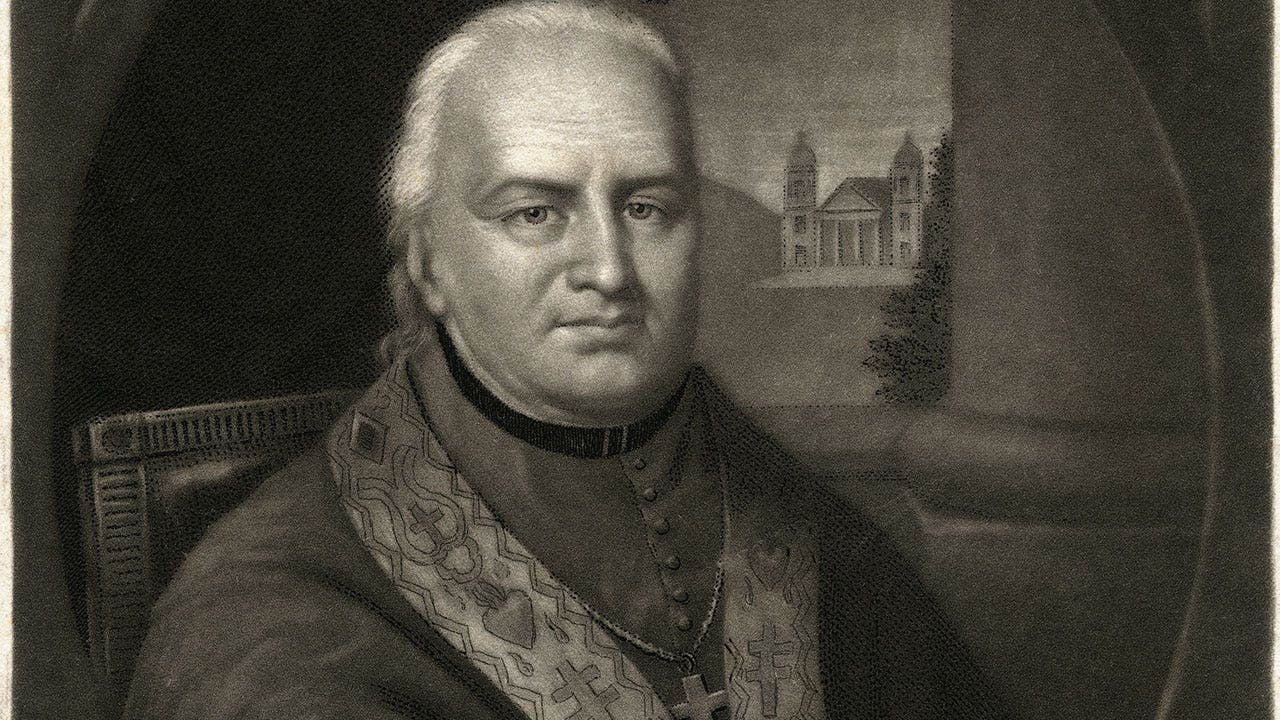
As the United States approaches the historic milestone of its 250th anniversary, a quiet sense of reflection is sweeping across the nation, prompting historians, citizens, and educators alike to look back at the fragile beginnings of the American experiment. Amid the grand narratives of military victories and constitutional debates, there exist small, intimate human exchanges that hold the key to understanding how our foundational ideals were forged. One such exchange, preserved in the climate-controlled vaults of the Library of Congress, took place in the spring of 1790 between President George Washington and John Carroll, the newly consecrated first Catholic bishop of the United States. Today, this yellowed, hand-written correspondence, resting quietly in the Manuscript Division just steps away from the bustling office of Dr. Kevin Butterfield, serves as a poignant reminder of a time when the young republic was forced to answer a fundamental, existential question: could a historically marginalized and deeply distrusted religious minority truly become equal, trusted citizens in this bold new world? At its core, the letter represents a vulnerable, courageous plea for belonging, written at a moment when the future of religious liberty was still a highly volatile and unproven concept.
To fully appreciate the gravity of Bishop Carroll’s letter, one must travel back to an era of profound suspicion, where being Catholic in the English-speaking world was often synonymous with treason. For generations under British colonial rule, Catholics had been subjected to extensive legal and social persecution, viewed with deep hostility by a Protestant majority that feared their spiritual allegiance to the Pope in Rome made them incapable of true loyalty to their neighbors or their government. In many colonies, Catholics were barred from voting, prevented from holding public office, forbidden from practicing their faith openly, and forced to swear sweeping oaths that explicitly rejected papal authority. John Carroll experienced this bitter sting of exclusion firsthand; as a young boy growing up in Maryland, he was forced to leave his family and sail across the Atlantic Ocean to Europe just to receive a basic Catholic education, as such schooling was strictly outlawed at home. Yet, rather than harboring resentment or dreaming of a return to the old European model of a state-dominated church, Carroll’s experiences instilled in him a radical vision: he believed that a society built on the complete separation of church and state would actually offer a safer, more spiritually authentic home for people of all faiths.
Armed with this conviction, Bishop Carroll seized a crucial opportunity in 1790 during George Washington’s inaugural year as president—a period Washington spent traveling the young nation to connect directly with the people and prove that this new federal government was not a distant tyranny, but a warm, responsive entity. Writing on behalf of the country’s infant Catholic population, and joined by prominent figures like his cousin Charles Carroll—the only Catholic signer of the Declaration of Independence—and Daniel Carroll, a framer of the Constitution, the bishop penned a masterfully strategic yet deeply heartfelt address. He did not beg for tolerance or ask for special political favors; instead, he appealed directly to Washington’s own memories of the battlefield, reminding the president of the raw, physical sacrifices made by Catholic soldiers during the long, bloody years of the Revolutionary War. Reading the original manuscript, one is struck by the powerful, poetic assertion that American Catholics had a “well-founded title to claim” equal rights of citizenship, pointing to “the price of our blood spilt under your eyes and of our common exertions for her defense.” It was an emotional and intellectual masterstroke, framing religious freedom not as a gift to be granted, but as a hard-earned debt of honor that had already been paid in full on the battlefields of freedom.
When George Washington sat down to draft his reply, he was acutely aware that he was not merely writing a letter, but setting a permanent moral compass for the future of the nation. Washington responded with the characteristic warmth and dignity of a commander who had watched men of all creeds suffer, bleed, and die under his leadership, writing back to thank American Catholics for the “patriotic part” they played in the glorious struggle for independence. More importantly, Washington used this moment to articulate a revolutionary definition of citizenship that bypassed the outdated, patronizing European concept of religious “toleration”—a term that implies a dominant group merely permitting a minority to exist. To Washington, and to the government he was actively building, religious freedom was a natural, unalienable right; as long as a person conducted themselves as a peaceful, law-abiding citizen, their theological beliefs were entirely their own business. By affirming that Catholics were already “realizing, instead of anticipating” the full, uncompromised benefits of the new government, Washington sent a clear, thunderous signal across the young states that religious tests had no place in the American soul, a principle he consistently championed throughout his presidency, even as individual state laws slowly caught up to the federal standard.
The survival of this extraordinary dialogue is no mere accident of history, but a testament to Washington’s deep, almost prophetic awareness that the everyday paperwork of the founding generation would eventually serve as the sacred scriptures of American democracy. Recognizing the historical value of his correspondence, Washington meticulously preserved his papers, leaving them to his nephew, Supreme Court Justice Bushrod Washington, before they were ultimately purchased by a grateful Congress in 1834 and transferred to the custody of the Library of Congress. Today, the original Carroll letter is carefully protected as one of approximately 77,000 priceless items in the George Washington Papers, occasionally brought out of its protective archives only under the most delicate circumstances to prevent the natural decay of the hand-laid paper and the iron-gall ink. Historians like Catherine O’Donnell emphasize that touching or viewing these physical documents connects us to the tangible, human reality of our past, showing that our national identity was negotiated by real, living people who had to consciously choose to overcome deep-seated prejudices in order to build a functional, pluralistic society out of a diverse and fragmented population.
Ultimately, as the nation prepares to celebrate its semiquincentennial, the 1790 exchange between Bishop John Carroll and President George Washington offers a healing and vital perspective for our modern, often fractured conversations about national identity. At a time when intense public debates rage over whether America’s true roots are exclusively Protestant, secular, or Judeo-Christian, this beautiful, 234-year-old correspondence reminds us that Catholic contributions were woven into the very fabric of the founding from the absolute beginning. The letter serves as an enduring human testament that America’s strength has never relied on forcing its citizens into a single, uniform spiritual mold, but rather on our collective willingness to honor those who stand shoulder-to-shoulder in service to the common good. More than just a quiet artifact resting in a dark archive, the voices of Carroll and Washington continue to echo through the centuries, challenging every generation of Americans to ensure that the radical, hard-won promise of true, equal citizenship remains vibrant, active, and fully extended to all who call this nation home.