


Last summer, Indiana Fever star Caitlin Clark caused quite a stir with her noticeably beefier build after a relentless rookie season in the WNBA. Picture this: a young talent like Clark, fresh out of college and lighting up the league with her shooting, but getting hammered by defenders who were out for blood. It was brutal, with bruises and bumps becoming her unwanted souvenirs. She knew she had to level up, so she hit the gym hard, pumping iron to add muscle mass that would let her absorb hits without crumbling. It was a smart move—sort of like armoring up for a contact sport, turning her slender frame into something more resilient. Fans noticed, and it paid off; she looked unstoppable, ready to dish out punishment as much as take it.
Clark wasn’t shy about it; she openly talked about grinding in the weight room to prepare for the physicality of the game. Defenders had chipped away at her during her debut year, leaving her sore and strategic. By bulking up, she aimed to bounce back stronger, proving that under that long-range shooter exterior was a fighter willing to evolve. It was inspiring, really—a reminder that even superstars like her aren’t immune to the grind. Her transformation wasn’t just cosmetic; it signaled a shift in how she approached the court, making her a tougher matchup for anyone daring to foul her hard.
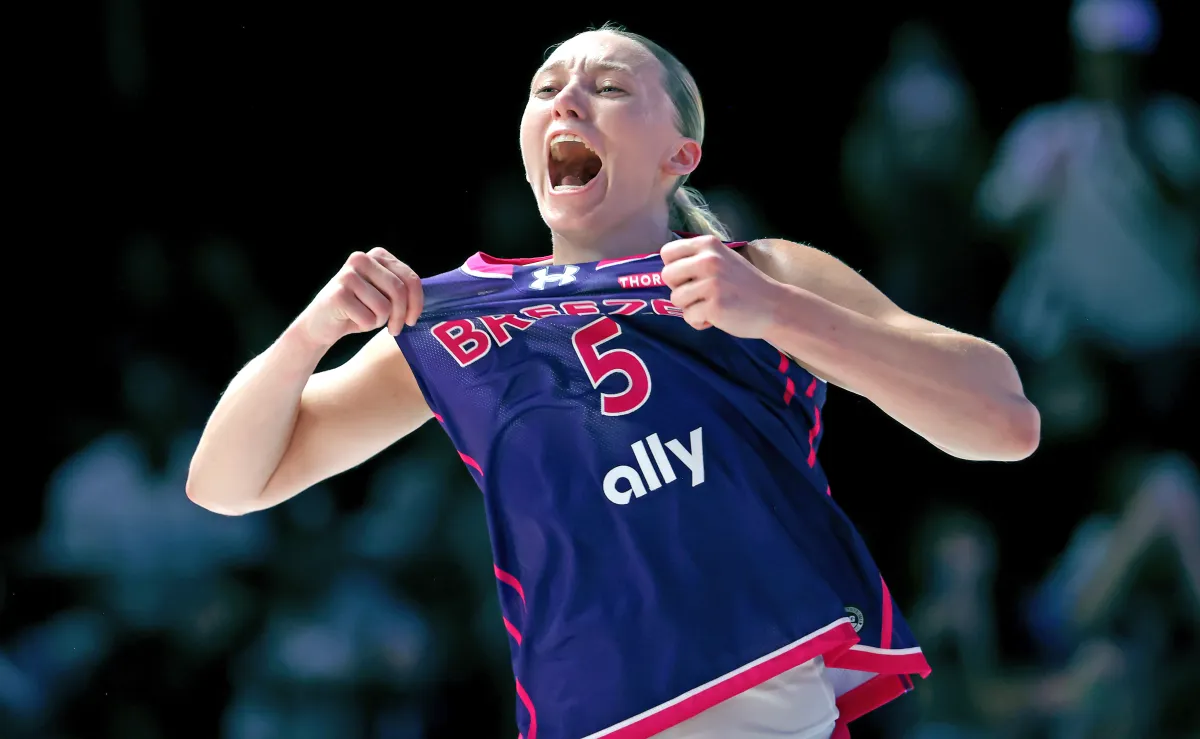
Now, enter Paige Bueckers of the Dallas Wings, who seems to be channeling Clark’s playbook. Though not pummeled as viciously as Clark in her rookie season, Bueckers still got her fair share of bumps and grinds adjusting to the WNBA’s bruising style. Think of it as initiation rites—everyone in the league knows the WNBA means business, with roadblocks at every pass and rebound. So, like Clark, she committed to an offseason packed with weight training, focusing on durability rather than just skill. It was her way of saying, “I’m not going to let the physicality define me; I’ll define it.”
By January, Bueckers was already sharing her journey with Unrivaled reporters, reflecting on how those gym sessions were key to weathering the league’s demands. “Getting in the weight room this offseason and having a healthy offseason where I could grind and get better,” she said, emphasizing how it boosted her readiness for the “uninhibited league and just how physical it is.” It’s humanizing, right? Bueckers, with her quick instincts on court, was turning proactive, bulking up to match the intensity. Her physique drew eyes, making people wonder just how much extra muscle she packed on—enough to make her stand out as a force, not just a scorer.
Wings coach Joe Fernandez didn’t hold back on his praise, dropping hints to the entire WNBA that a stronger Bueckers was a game-changer. “I think it’s going to be great for her going down the stretch in the fourth quarter,” he told reporters, highlighting how she’d power through contact and finish at the rim with ease. It’s high praise, portraying Bueckers as a dedicated pro who invests deeply in her craft. Her physique, he implied, wasn’t flashy for show; it was strategic, a testament to her smarts and connections with teammates. In the WNBA, where stars like her can shine brightest in clutch moments, this bulk-up could elevate her from good to unstoppable.
As a rookie, Bueckers had already dazzled with her stats: 19.2 points, 5.4 assists, 3.9 rebounds, and 1.6 steals per game in 36 appearances, earning Rookie of the Year. But her evolution hints at even bigger things ahead. Clark’s precedent proves that physical tweaks can redefine a player’s impact, and Bueckers is on that path, blending her speedy guard style with newfound strength. It’s exciting for fans—watching young stars like these grow, not just in skill, but in body and mind too. The WNBA’s future looks tougher, fiercer, and full of storylines worth following.