







For many Black and Latina women in the United States, navigating the modern healthcare system is not merely a challenge of managing physical wellness; it is an active, exhausting struggle against a deeply broken system where medical bias and economic precarity collide. These women face a disproportionately high risk of medical misdiagnosis, an alarming vulnerability that sets off a cascading crisis of spiraling medical debt, physical suffering, and emotional trauma. According to advocates, healthcare professionals, and patients alike, the intersection of racial prejudice and systemic inefficiency in medical treatment is actively driving vulnerable families into financial ruin. Analytical findings from legal services firm High Rise Financial reveal that Black and Latina women are 20 to 30 percent more likely to be misdiagnosed than white women in the United States. This statistical disparity translates directly into late or omitted diagnoses of life-threatening conditions, including cardiovascular disease, stroke, and aggressive forms of cancer, while Black women are also disproportionately and incorrectly diagnosed with complex psychiatric conditions like schizophrenia. Furthermore, these disparities manifest in longer emergency room wait times, significantly higher mortality rates in emergency departments, and an alarming lower rate of hospital admissions following emergency medical crises. Rather than being treated as anomalous errors, these systemic failures reflect deep-seated inequalities. As Jared Walker, the founder of the medical debt advocacy nonprofit Dollar For, clearly states, this crisis is not a reflection of individual personal failure, but rather a profoundly devastating failure of public policy that leaves marginalized women to carry the physical and financial burdens of a fractured system.
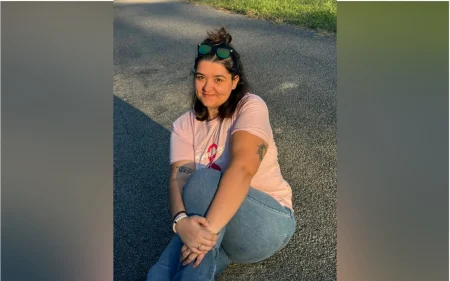
The financial and physical toll of these recurring misdiagnoses is illustrated by the lived experiences of women like Patricia Frausto-Rodriguez, a 50-year-old Ventura County resident whose decades-long health journey has been defined by systematic medical dismissal. At just 19 years old, living in Los Angeles, Frausto-Rodriguez was treated with a aggressive series of cortisone injections for what doctors insisted were broken ribs, completely ignoring her medical history and her own suspicion that her symptoms pointed to a severe gallbladder condition—an illness that disproportionately affects Latina women globally. The inappropriate cortisone treatments suppressed her immune system, triggering an agonizing, life-altering case of shingles on her ear and head that caused near-continuous nerve pain for almost a year. Decades later, she describes that suffering as incomparably worse than childbirth or passing golf-ball-sized gallstones, noting that she lost years of her young adulthood to the debilitating physical aftermath of that initial error. Later in life, her medical encounters continued to be characterized by dismissive attitudes, such as when clinicians repeatedly brushed off her vitiligo as mere “sunspots” before finally granting her an accurate diagnosis. This pattern of misdirection, excessive testing, and delayed care created a financial burden that took her years of hard labor to resolve, leaving her with lasting medical debt that continues to threaten her financial security and her hope of eventual retirement. Her experience is mirrored by other women of color, like Jessica Gotera of Memphis, Tennessee, who found herself repeatedly cycling through expensive emergency room visits due to recurring misdiagnoses, including a severe case of cellulitis where she was left in agonizing pain to clean and dress her own wounds because hospital staff neglected her care.
This profound sense of being systematically ignored in medical settings is a reality echoed by families across the country, where motherly advocacy is often met with cold indifference. Klitoni Robinson, a 46-year-old mother living in Alabama, describes a draining sense of invisibility when seeking care for her half-Black, half-Latina children, explaining that when they ask for medical help, they are frequently treated as if they are exaggerating their pain or simply seeking attention. This systemic dismissal nearly cost her 22-year-old daughter, Alyssa, her life. For months, Alyssa suffered from severe gastrointestinal distress that doctors repeatedly diagnosed as a common stomach flu, offering no deeper investigation even as she lost a dramatic amount of weight and her hair began to fall out. Only after relentless maternal advocacy did doctors finally perform a colonoscopy and endoscopy, discovering eleven active ulcers in her small intestine, which eventually led to a diagnosis of Crohn’s disease over a year and a half after her symptoms first began. The delayed diagnosis and subsequent hospitalizations, combined with her son’s separate health complications, left Robinson with more than $20,000 in crippling medical debt. In a region where balancing basic, daily household expenses is already a challenge, trying to find additional money to satisfy aggressive medical collectors has proven nearly impossible, turning what should have been a period of family recovery into a stressful struggle to survive.
To understand why Black and Latina women are so frequently misdiagnosed and financially penalized, one must look closely at the systemic exclusion built into the foundation of scientific research and clinical trials. Tiffany Whitlow, the co-founder of the healthcare technology firm Acclinate, explains that this disparity stems from deep-rooted historical exploitation and a massive trust gap. Decades of unethical medical practices—such as the Tuskegee Syphilis Study, which left infected African American men untreated to observe the natural progression of the disease, and the non-consensual harvesting of Henrietta Lacks’ cervical cells—have created a well-justified skepticism toward the medical establishment within communities of color. However, as Whitlow points out, the modern problem is further compounded because providers often simply fail to invite Black and Latina women to participate in clinical trials, meaning that many drugs on the market are approved without proper evaluation of biological variations across diverse demographic populations. This lack of representation creates a dangerous cycle where prescribed medications are less effective, leading to further diagnostic confusion and additional medical expenses. Whitlow experienced this firsthand when her infant son was hospitalized with severe asthma and prescribed Albuterol, the standard treatment of choice. Only later did she discover that clinical studies show Albuterol is significantly less effective for African American and Puerto Rican children. As a young mother, she spent vital income on transportation, emergency visits, and expensive medications that did not manage her child’s illness, caught in a terrifying cycle of debt while paying for treatments that were essentially medical guesswork.
The reality of medical debt extends far beyond those who experience misdiagnosis, acting as a constant economic threat for families across the United States. Even when patients receive accurate care, the financial structure of American medicine demands a heavy toll, with the average family spending approximately 11 percent of their annual income on premiums and out-of-pocket expenses. Today, one in three Americans reports making severe sacrifices, such as skipping meals or foregoing basic utilities, to pay off medical bills—a burden that becomes much heavier when a diagnosis is delayed or missed entirely. For Linon Bernard, a 55-year-old single Haitian immigrant mother raising her three children in Windermere, Florida, the threat of medical debt has cast a shadow over her family’s safety. While she does not feel she was personally dismissed due to her background, keeping up with medical bills while working to survive in a new country has left her with a constant fear of financial ruin. The pressure of these bills has forced her to hesitate to seek medical attention, even when experiencing clear symptoms of aging that warrant care. This fear is magnified by changes to safety-net programs like Medicaid and Medicare, which were altered under sweeping legislative tax changes. For vulnerable individuals in Bernard’s position, any reduction in public coverage is not just a policy adjustment; it is a direct threat to their survival, further isolating low-income families from the care they desperately need.
As economic pressures like the rising cost of living, housing, food, and childcare continue to squeeze household budgets, the vulnerability of underserved communities will only grow. The expiration of critical subsidies under the Affordable Care Act, combined with tightening Medicaid eligibility requirements, has left families with little to no financial safety net when a medical emergency strikes. When a major medical bill arrives, households are forced to make impossible trade-offs under extreme stress. Adding to this distress, advocacy organizations like Dollar For point out that many hospitals fail to clearly inform patients about the existence of state-mandated financial assistance policies, leaving families completely unaware that they might qualify for debt forgiveness or reduced payment options. This lack of transparency forces countless families to choose between paying for their prescription drugs or keeping their lights on, exposing a system that leaves patients to navigate complex billing networks while managing severe health crises. Ultimately, the high rate of misdiagnoses and the resulting financial distress faced by Black and Latina women across the United States cannot be written off as individual misfortune or financial mismanagement. It is the visible result of an unequal, commercialized healthcare market that prioritizes administrative efficiency and profit over human life, illustrating the need for systemic reform to ensure that a person’s background, race, and gender do not determine their physical survival and economic security.