



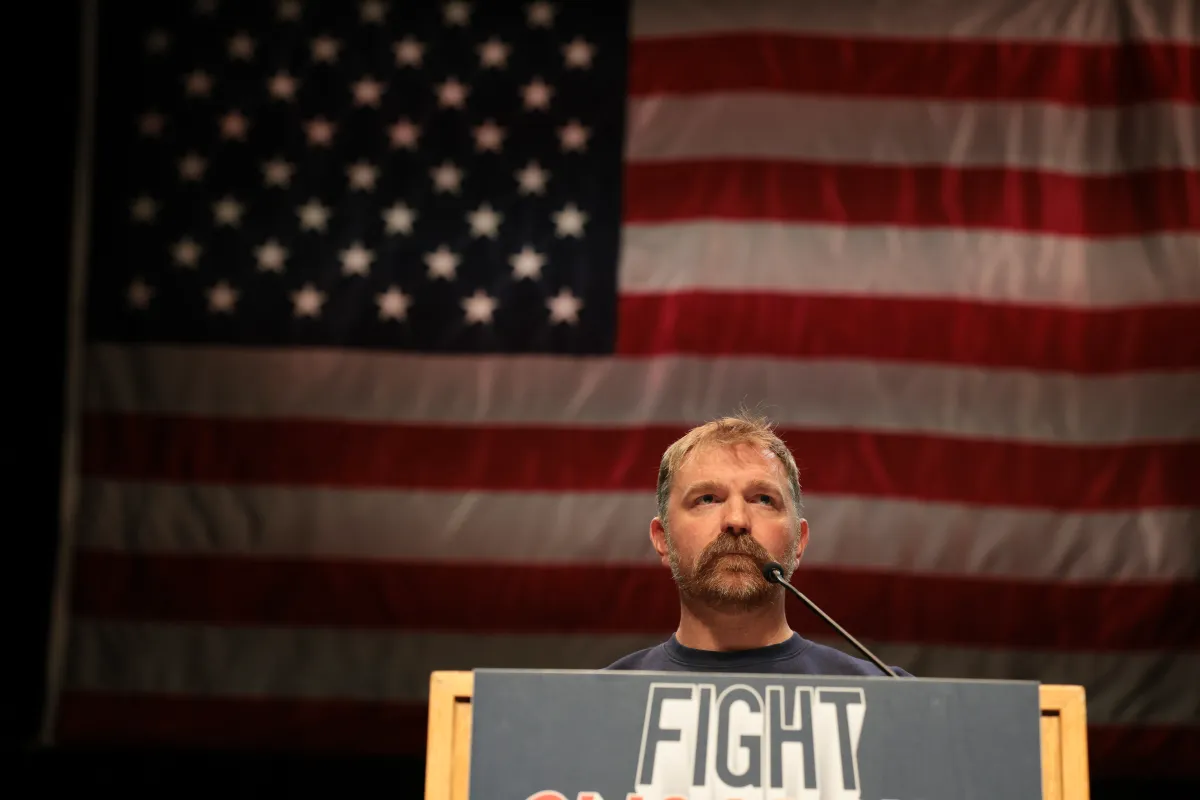
The Democratic campaign to unseat long-serving Republican Senator Susan Collins in Maine has been thrown into deep turmoil following a devastating new sexual assault allegation against the Democratic nominee, Graham Platner. Reported first by Politico, Maine resident Jenny Racicot has accused Platner of forcing his way into her home while intoxicated in late 2021 and sexually assaulting her, despite her repeated objections. The two had previously been involved in an on-and-off relationship. While Platner has vigorously denied the accusation, calling it “troubling, serious, and false,” he also publicly acknowledged the heavy “political reality” of the situation. In a video statement on X, he admitted he is actively reflecting on the best path forward for his party, his supporters, and the ultimate goal of defeating Collins—leaving the door open to a potential withdrawal before the state’s official July deadlines.
This bombshell is only the latest in a series of highly damaging controversies that have plagued Platner’s candidacy. Prior to Racicot’s allegation, The New York Times reported on accusations of physically threatening behavior from a former partner, Lyndsey Fifield, which Platner dismissed as politically motivated. Additionally, The Wall Street Journal revealed that Platner’s wife had warned campaign aides about explicit text messages he had sent to other women during a private vetting process. Beyond his personal life, Platner has had to answer for a controversial chest tattoo resembling a Nazi SS symbol—which he apologized for and promised to remove—and old, derogatory Reddit comments disparaging rural white voters. While the candidate previously shrugged off these past missteps as the foolishness of a retired “s*** poster,” the cumulative weight of these scandals has many Democrats convinced that his political survival is no longer viable.
Under Maine election law, the Democratic Party has a brief window to regroup if Platner decides to pull out. If he formally withdraws by 5 p.m. on July 13, the state party is legally permitted to select a replacement nominee, with a final deadline of July 27 to submit the new name. Political analysts argue that replacing Platner represents the Democrats’ strongest chance of victory. Political scientist Dan Shea of Colby College noted that even before this latest scandal, many moderate voters who are dissatisfied with Susan Collins simply could not stomach Platner. Interestingly, prediction markets like Kalshi and Polymarket actually showed a spike in Democratic victory margins following the news, suggesting that investors and voters alike anticipate a stronger, scandal-free candidate taking over the ticket.
Should Platner step aside, Maine Democrats boast a remarkably deep bench of potential contenders. Among the most prominent progressive alternatives is Troy Jackson, the former Maine Senate President, who ran a strong gubernatorial primary campaign and boasts an endorsement from Senator Bernie Sanders. Recent polling suggested Jackson would actually lead Collins by five percentage points, whereas Platner trailed her by four. Another formidable option is Nirav Shah, the highly visible former director of the Maine CDC during the pandemic, who finished second in the gubernatorial primary and appeals directly to the state’s moderate base. Additionally, Secretary of State Shenna Bellows, who recently made national headlines regarding Donald Trump’s ballot eligibility, remains a household name, though her landslide loss to Collins in 2014 might give party strategists pause.
The party could also look toward other experienced figures, though their willingness to jump into a late-stage race remains uncertain. Retired Congressman Jared Golden has the unique credentials of winning consistently in Maine’s conservative Second District, but he has expressed no interest in return to public office. Meanwhile, Sara Gideon, the 2020 nominee, still holds nearly $2.7 million in campaign funds, though rerun campaigns are notoriously difficult to sell to voters. Incumbent Governor Janet Mills is another recognizable option, though her personal favorability ratings have slipped, and she previously suspended her own Senate bid due to fundraising challenges. Other primary contenders like Jordan Wood and Dan Kleban could also emerge as dark-horse consensus choices.
Ultimately, political scientists agree that defeating Susan Collins in a state she has represented for decades was always going to be an uphill battle, but it remains achievable if the Democratic electorate is properly energized. While Collins’ team would undoubtedly prefer to run against a damaged Platner, a clean campaign under a well-liked replacement could rejuvenate the party’s base. As Platner and Democratic leadership weigh their options in the coming days, the decision will not only shape the future of Maine representation but will also heavily influence the national battle for control of the United States Senate.