


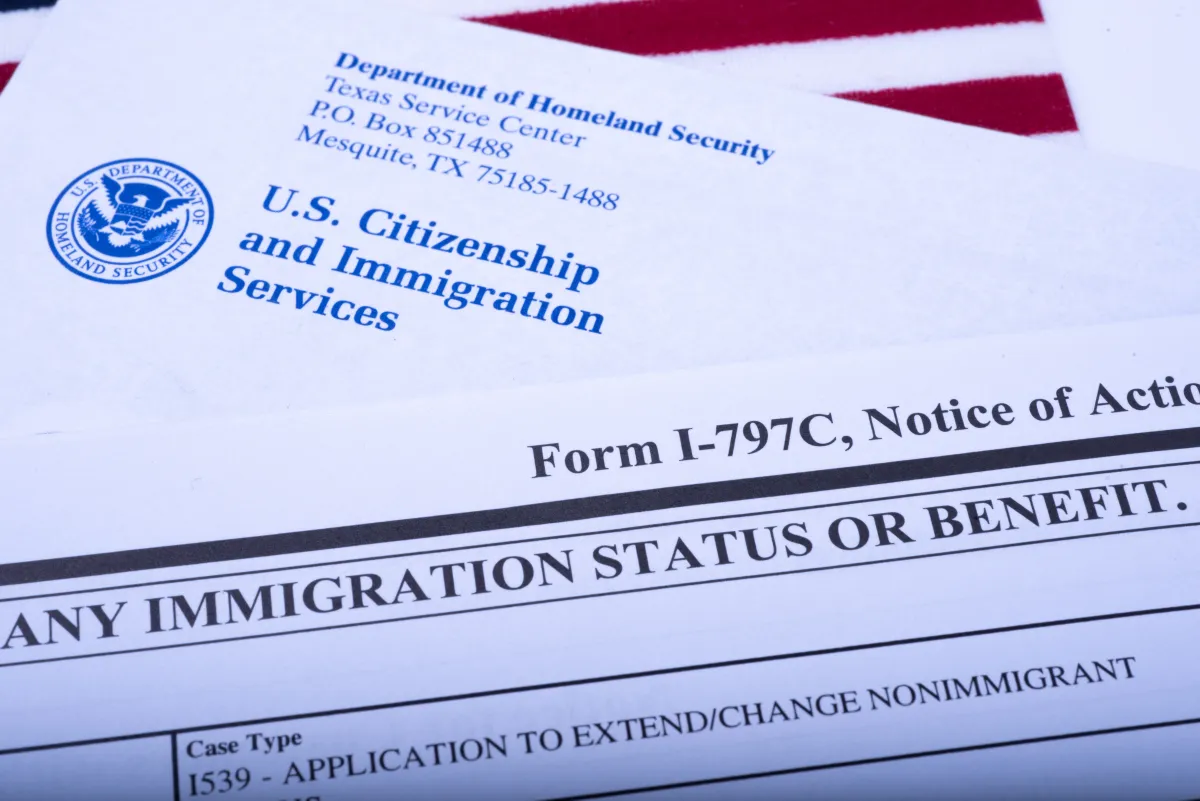
For hundreds of thousands of foreign professionals living in the United States, a peaceful weekend was abruptly shattered by an administrative thunderbolt that threatened to uproot their hard-earned American lives and cast their futures into total disarray. The collective anxiety began with the release of a sweeping policy memorandum from the Trump administration on a Friday, which proposed to drastically overhaul how temporary visa holders obtain permanent residency, commonly known as a green card. For decades, transitioning from temporary nonimmigrant status—such as an H-1B, L-1, or student visa—to a permanent green card was treated as an orderly, domestic administrative process completed entirely within U.S. borders. The new directive threatened to dismantle this status quo, turning domestic adjustments into rare exceptions and requiring the vast majority of applicants to leave their families, homes, and jobs in the U.S. to navigate risky consular processing in their home countries. Recognizing the immediate, widespread panic and the potential economic paralysis this could trigger across vital industries, U.S. Citizenship and Immigration Services (USCIS) spokesperson Zach Kahler sent a crucial email to Newsweek on Sunday to clarify the agency’s positioning. While defending the administration’s return to what it views as Congress’s original legislative intent, Kahler explained that the agency is merely “reasserting” its core interpretation of the law while offering a potential lifeline to vital high-skilled professionals. Under this clarified guidance, foreign nationals whose applications present clear economic benefits or otherwise align with the national interest will likely be permitted to continue on their current path toward domestic status adjustment. However, those whose roles do not meet these subjective and yet-to-be-defined standards must navigate individualized scrutinies and face forced departure to complete their residency applications abroad. This shift represents one of the most profound and disruptive structural changes to immigration enforcement in modern history, transforming a once-predictable bureaucratic journey into a stressful gamble.
To understand why this sudden policy change has sent such profound shockwaves through the legal immigrant community, one must look at how the green card pathway has traditionally functioned as a stabilizing force for both foreign workers and American society. For generation after generation, foreign nationals who entered the country legally as high-achieving university students, specialized corporate transferees, or essential healthcare providers have built entire lives under the assumption that compliance with immigration law would lead to a seamless, domestic path to permanent residency. Living on temporary visas—such as H-1B specialty occupation permits, L-1 corporate transfer visas, F-1 student visas, or other nonimmigrant classifications—these individuals have bought homes, enrolled their children in local schools, paid taxes, built local friendships, and integrated deeply into cumulative American communities. Historically, adjusting status domestically was a routine, highly predictable administrative process that allowed these lawful residents to remain in the country with their employers and families, maintaining social stability and economic productivity while their applications slowly worked their way through the massive USCIS backlogs. The administration’s aggressive new stance recharacterizes this routine administrative bridge as an unauthorized shortcut, claiming that Congress never intended temporary nonimmigrant visas to serve as an automatic, domestic stepping-stone to permanent residency. By declaring that consular processing abroad is now the default requirement for green card applicants, the government is fundamentally redefining the relationship between temporary legal status and permanent belonging. This dramatic reinterpretation treats domestic adjustment of status as an extraordinary privilege reserved only for the elite, leaving hundreds of thousands of law-abiding nonimmigrants facing the terrifying prospect of having to uproot their established American lives and journey back to their nations of origin just to request permission to return to the place they have come to call home. This upending of a multi-decade precedent fundamentally shifts the burden of proof, converting a stable administrative step into a high-risk gamble where a single consular appointment could permanently fracture a family’s American dream.
The newly introduced distinction between who will be allowed to remain in the United States during this transition and who will be forced to depart hinges on highly subjective and untested criteria: whether an applicant’s continuous presence offers an “economic benefit” or directly serves the “national interest.” These terms, while common in certain high-level visa categories, have never been applied so broadly to filter routine green card applications, creating an agonizing vacuum of operational and legal uncertainty for both employers and employees. Under the clarified guidelines, the operational backbone of the American knowledge economy—highly skilled H-1B visa holders working in pivotal sectors like technology, software engineering, defense research, finance, and advanced healthcare—find themselves in a frantic race to prove their essential worth to federal adjudicators. In his clarification to Newsweek, USCIS spokesman Zach Kahler noted that those with applications providing such benefits will “likely be able to continue on their current path,” but the precise criteria for evaluating these benefits remain completely undefined and shrouded in bureaucratic mystery. Without concrete, objective benchmarks, immigration lawyers, corporate HR departments, and anxious employees are left guessing what constitutes a sufficient “economic benefit” to avoid forced departure. This lack of regulatory clarity places an immense burden of proof on both employers and foreign nationals, who must now draft complex legal briefs to defend their right to stay. Adjudicators are left with unprecedented discretionary power to determine the fate of families based on localized interpretations, creating a highly fragmented system where two professionals with identical qualifications could face entirely different outcomes based on the subjective mood of a single visa officer or the specialized niche of their corporate employer. This arbitrary framework strips away the predictability that is essential for long-term economic planning and personal stability. As a result, companies find themselves incapable of reassuring their prized foreign talent, and workers are left in a state of perpetual psychological distress, wondering if a lifetime of scholarly and professional achievements will be deemed mathematically insignificant by a government administrator.
The human, social, and operational costs of forcing legal nonimmigrant workers to return to their home countries for consular processing are staggering, threatening to inflict deep wounds on both American families and the broader domestic economy. For many applicants, particularly those originating from countries like India and China that face astronomical, decades-long backlogs for green cards, being forced to travel abroad introduces catastrophic travel risks. Consular offices in these countries are already chronically overwhelmed, plagued by severe staffing shortages and lengthy appointment wait times that can stretch for months or even years. Under these new rules, a software development lead, a crucial researcher, or a critical care physician who travels back to their home country to complete green card processing could find themselves stranded overseas indefinitely, unable to secure an interview slot or trapped in endless administrative reviews. For families, this policy threatens to cause heart-wrenching, prolonged separations, as spouses and children who may have spent their entire conscious lives in the U.S. could be forced to choose between remaining behind in limbo or disrupting their educations to accompany their parents abroad. From a corporate perspective, the sudden departure and potential stranding of key personnel could trigger massive operational disruptions, forcing American companies to delay critical projects, lose competitive advantages, or even relocate entire divisions overseas to retain their vital global talent. Industry leaders warn that this policy does not protect local labor markets but instead starves domestic companies of the stable, highly specialized labor force needed to sustain global technological leadership. Ultimately, this creates an environment of operational chaos where long-term business continuity is replaced by a day-to-day survival strategy against unpredictable federal mandates. The domestic corporate landscape, once built on the seamless inclusion of global talent, now faces a structural bottleneck that penalizes businesses for investing in foreign professionals, leaving American innovation vulnerable to stagnation at a time when global competitiveness is more intense than ever before.
To fully grasp the severity of this policy shift, one must appreciate the sheer complexity and intense competition inherent in the H-1B visa program itself, which serves as the primary gateway for global talent entering the United States. Far from being an easy or unregulated entry point, the H-1B program is a highly restricted, employer-driven mechanism governed by strict statutory caps and rigorous federal oversight. Every year, the program is limited to a total of 85,000 new visa slots, with 20,000 of those specifically reserved for individuals holding Master’s degrees or higher from American universities. Because the demand for these visas consistently and overwhelmingly outstrips the statutory limits, USCIS utilizes a highly competitive, randomized lottery system each spring, turning the dreams of thousands of brilliant global scholars and professionals into a game of pure chance. To qualify for this lottery, an applicant must secure corporate sponsorship for a role that meets the demanding definition of a “specialty occupation,” meaning the position must strictly require at least a bachelor’s degree in a highly specialized field. Furthermore, sponsoring employers are subject to stringent, legally binding obligations monitored by the federal government; they must prove they are paying the foreign worker the local prevailing wage for that occupation to prevent any downward pressure on American salaries, and they must undergo a rigorous labor condition application process with the Department of Labor before they can even petition USCIS. For workers who have already braved this grueling, expensive, and stressful gauntlet to contribute their intellectual capital to the United States, the administration’s new policy feels less like a fair system of law enforcement and more like a betrayal of the grand bargain they struck with the country when they arrived. They have jumped through every legal hoop, paid thousands of dollars in fees, satisfied every structural requirement, and yet they are still being treated with systemic suspicion, finding themselves cast as outsiders who must repeatedly justify their physical presence on American soil.
Ultimately, this policy pivot signifies a profound philosophical shift in how the United States conceptualizes its immigration system, moving away from a modern framework of integration and economic competitiveness toward a restrictive and adversarial model of enforcement. By reframing the domestic path to permanent residency as an “extraordinary exception” rather than a logical, orderly progression, the administration is transforming temporary visa holders from valued future citizens into a transient workforce that is perpetually disposable. The psychological impact on the immigrant community is profound; highly trained professionals who have poured years of hard work, emotional energy, and financial resources into building their lives in America are left feeling unwelcome and precarious, realizing that their legal status can be fundamentally rewritten by executive decree overnight. Families are left to live in the shadows of constant anxiety, looking toward a future where a routine career step could easily become a one-way ticket to administrative exile, splitting parents from children and uprooting stable micro-communities. As immigration advocates, corporate legal teams, and policy researchers prepare to challenge these new rules in federal courts, the global reputation of the United States as the premier destination for the world’s brightest minds hangs in a delicate balance. If the path to permanent residency remains defined by geographic exile, long family separations, and bureaucratic hostility, the world’s top innovators, scientists, and academics may simply choose to take their talents to more welcoming nations, leaving America to contemplate a future where its greatest historical competitive advantage—its status as a beacon of global talent—has been systematically dismantled by its own foreign policies. This transition risks hollowing out the very spirit of the American Dream, replacing the promise of a fair journey toward integration with an unpredictable gauntlet that alienates those who wish to build, innovate, and contribute to the nation’s future prosperity.